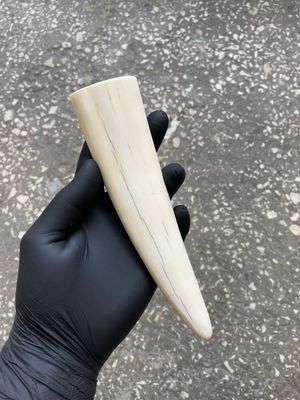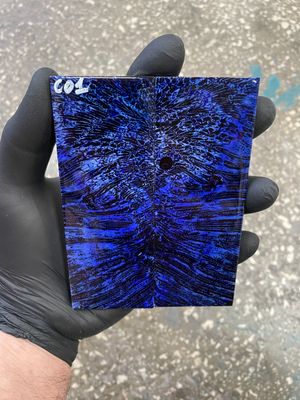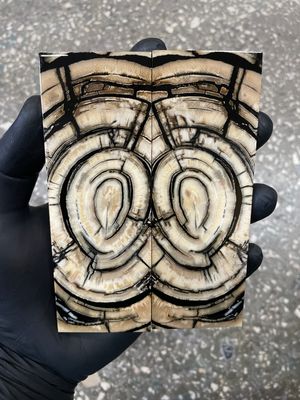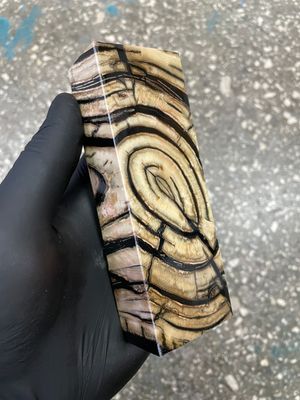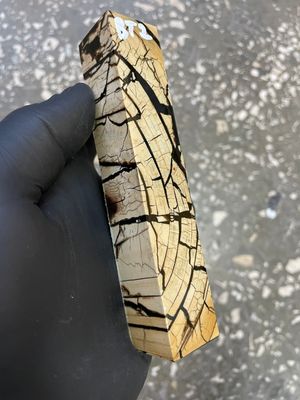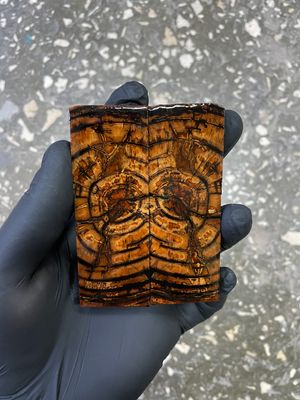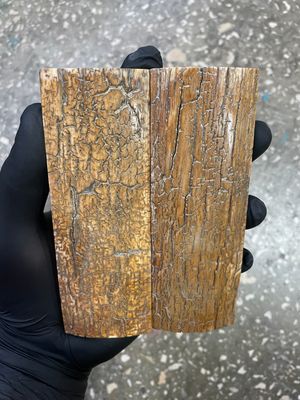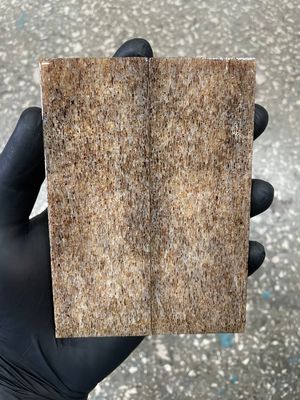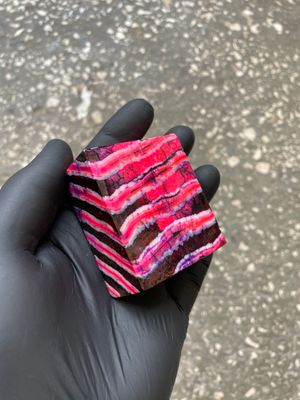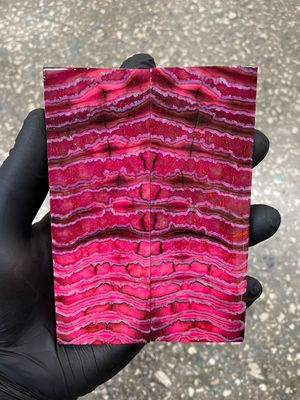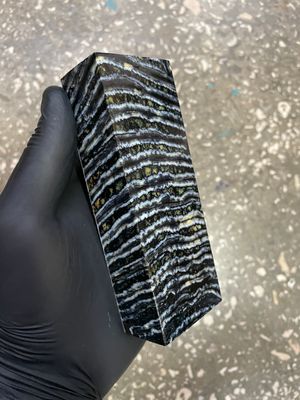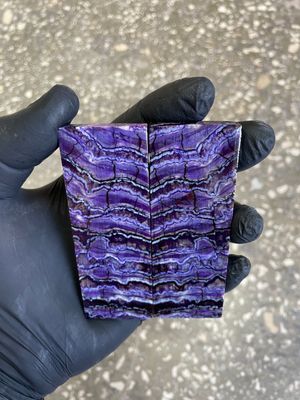
Is Mammoth Ivory Legal? A Complete Guide to Mammoth Ivory Laws in the USA and Worldwide
08.25.2026
Mammoth tooth and mammoth ivory are highly sought-after materials for custom knife handles, jewelry, scrimshaw, collectibles, and other specialty projects. But one question comes up frequently:
Is mammoth tooth legal to own, buy, sell, and ship?
The short answer is:
In the United States, mammoth ivory and fossil mammoth material are generally not regulated by federal endangered-species laws because the woolly mammoth (Mammuthus primigenius) is extinct. However, state laws, land-collection laws, and international import/export regulations can significantly restrict the possession, sale, or transportation of mammoth material.
This distinction is extremely important. Something can be legal under U.S. federal law but illegal to sell in a particular state.
In this guide, we explain the major rules surrounding mammoth tooth and mammoth ivory and what buyers, collectors, knife makers, and sellers should know before purchasing or shipping these materials.
Is Mammoth Ivory Legal in the United States?
Generally, yes under U.S. federal law.
The woolly mammoth has been extinct for thousands of years and is not an endangered living species. Mammoth ivory is therefore fundamentally different from modern elephant ivory, which is heavily regulated under the Endangered Species Act, CITES, and other wildlife laws.
The U.S. Fish & Wildlife Service has specifically distinguished fossil ivory from modern marine-mammal ivory and states that fossil ivory can include mammoth, mastodon, and other fossil materials.
CITES also does not currently regulate the woolly mammoth as a listed living species. A CITES document discussing a proposal to list Mammuthus primigenius explains that the woolly mammoth is long extinct and that extinct species are normally not regulated under CITES. The proposal to place mammoth on CITES Appendix II was ultimately not adopted.
This is why mammoth ivory is generally available commercially in the United States, unlike elephant ivory.
But federal legality is only part of the story
The important distinction is:
Federal law ≠ state law.
Individual states can enact stricter laws regulating or prohibiting ivory sales, and some states specifically include mammoth ivory in their legal definition of "ivory."
The Association of Applied Paleontological Sciences maintains a regularly updated reference list of U.S. states with fossil-ivory restrictions and proposed legislation.
Mammoth Ivory vs. Elephant Ivory
One of the most common sources of confusion is treating mammoth ivory and elephant ivory as the same thing legally.
They are not.
Mammoth ivory
• Comes from an extinct species
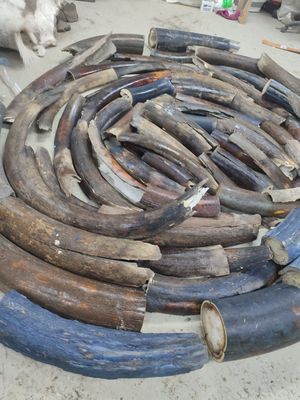
• Usually recovered as fossil material from permafrost or other geological deposits.
• Not listed as an endangered living species under CITES
• Not regulated by the federal Endangered Species Act in the same way as elephant ivory
• May nevertheless be regulated by state or foreign laws.
Elephant ivory
• Comes from living elephant species
• African and Asian elephants are protected under U.S. federal law and CITES
• International commercial trade is heavily restricted or prohibited
• U.S. domestic sales are also subject to significant federal and state restrictions.
The reason some jurisdictions regulate mammoth ivory together with elephant ivory is not because mammoths are endangered. One major concern is misidentification or fraudulent labeling.
Illegal elephant ivory can potentially be represented as mammoth ivory, which is why some states have chosen to regulate both materials.
Can You Own Mammoth Tooth or Mammoth Ivory?
In most of the United States, lawfully acquired mammoth material can generally be privately owned.
The U.S. Fish & Wildlife Service specifically states that mammoth or mastodon ivory that was lawfully collected with the landowner's permission can be owned, bought, and sold by non-Native individuals.
However, the key phrase is:
lawfully acquired.
Ownership does not make an illegally collected fossil legal.
This becomes particularly important when the material was originally collected in the wild.
Can You Collect a Mammoth Tooth Yourself?
This is where many people make a serious mistake.
Finding a mammoth tooth or tusk does not automatically mean that you are legally entitled to remove it and sell it.
The legality depends on where the specimen was found.
Private land
In general, fossil ivory may be collected on private land with the permission of the landowner, subject to applicable state and local laws.
The U.S. Fish & Wildlife Service specifically notes that fossil ivory may be collected on private lands with the landowner's permission.
Federal and state public land
The rules can be very different.
The U.S. Fish & Wildlife Service warns that fossil ivory and paleontological materials may not be collected from state or federal public lands except where specifically authorized by applicable law or permit.
Therefore, finding a mammoth tooth while hiking on public land does not automatically give the finder the right to take it home.
Depending on the location, the specimen may belong to the government or may be subject to scientific, archaeological, paleontological, or other collection regulations.
Simple rule:
Private land + landowner permission ≠ public land.
Always check the regulations applicable to the specific property before collecting fossils.
Can You Sell Mammoth Ivory in the United States?
In many states, yes.
At the federal level, mammoth ivory is generally not subject to the same commercial prohibitions that apply to modern elephant ivory.
However, several states have adopted much stricter ivory laws.
This is one of the most important points for anyone selling mammoth tooth, mammoth tusk, mammoth scales, or finished knife handles.
States With Restrictions on Mammoth Ivory
State laws have changed over time, and not every state treats mammoth ivory in the same way.
Some jurisdictions have specifically included mammoth ivory within their definition of ivory.
California
California is one of the clearest examples.
California Fish and Game Code §2022 defines "ivory" broadly. The definition includes teeth or tusks from elephant, hippopotamus, mammoth, mastodon, walrus, warthog, whale, and narwhal, including raw and worked ivory and products containing ivory.
The law generally prohibits purchasing, selling, offering for sale, possessing with intent to sell, or importing with intent to sell covered ivory.
California's Department of Fish and Wildlife explicitly states that its law covers elephant, mammoth, and mastodon ivory.
Therefore, ordinary commercial sales of mammoth ivory are not generally permitted in California.
This is a particularly important distinction for knife makers and material suppliers.
New York
New York also treats mammoth ivory differently from the federal government.
The New York Department of Environmental Conservation explicitly states that although mammoth is extinct and not regulated by the federal Endangered Species Act, New York treats mammoth ivory essentially the same as elephant ivory for enforcement purposes.
New York therefore has specific restrictions concerning the sale, purchase, and distribution of mammoth ivory.
The state also has a dedicated regulatory framework for the sale of elephant and mammoth ivory.
For anyone selling mammoth material to a New York customer, New York law must be checked independently rather than relying on federal law.
Other States
California and New York are not the only jurisdictions that have addressed fossil ivory.
The AAPS/JPS fossil-ivory reference lists states that have enacted ivory restrictions affecting fossil ivory or considered legislation concerning mammoth ivory. Its list has included jurisdictions such as California, Hawaii, Illinois, Nevada, New Hampshire, New Jersey, New York, Vermont, and others, while distinguishing states whose laws focus only on living elephants.
Because state legislation changes, an older internet list should not be treated as a definitive current legal database.
Before buying or selling mammoth ivory commercially, always check the current law of the state where the transaction, shipment, possession, or delivery will occur.
Why Would a State Ban Mammoth Ivory If Mammoths Are Extinct?
This is an important question.
The reason is generally not conservation of mammoths.
The primary concern is enforcement of elephant-ivory laws.
Mammoth and elephant ivory are both made primarily of dentine and can look very similar. Although specialists can distinguish them using characteristics such as Schreger lines and scientific testing, identifying worked ivory can sometimes require forensic examination.
California, for example, has developed forensic methods capable of distinguishing elephant, mammoth, and mastodon ivory.
The concern is that an illegal elephant-ivory product could be falsely described as mammoth ivory.
For that reason, some lawmakers have preferred a broader definition of "ivory" rather than requiring law-enforcement officers to determine the species of every item at the point of sale.
Can Mammoth Ivory Be Distinguished From Elephant Ivory?
Yes.
Mammoth and elephant ivory have recognizable structural differences.
One of the most commonly discussed characteristics is the pattern of Schreger lines visible in cross-section.
Mammoth ivory generally has a more acute Schreger-angle pattern than modern elephant ivory. AAPS notes the commonly cited difference of approximately 90 degrees for mammoth versus approximately 115 degrees for extant elephant ivory.
You can read more about this in this article on my website: https://fossilusa.com/how-to-identify-mammoth-ivory
However, visual inspection is not always sufficient for legal purposes.
Modern forensic laboratories can use additional analytical methods, including DNA-based testing, to identify the source species.
The U.S. Fish & Wildlife Service operates a wildlife forensics laboratory specifically used to identify ivory and other wildlife materials.
This is one reason documentation and a clear chain of provenance can be extremely valuable when dealing with high-value fossil ivory.
Do You Need a CITES Permit for Mammoth Ivory?
Generally, no CITES permit is required simply because the material is mammoth ivory.
Woolly mammoth is not currently listed under CITES in the same way as elephants.
CITES documentation discussing mammoth specifically explains that the species is extinct and that the proposal to list it under Appendix II was not adopted.
However, this does not mean that international shipments of mammoth material are automatically unrestricted.
The country of export and the country of import can have their own rules.
International Shipping Is More Complicated
International trade is where a simple "mammoth ivory is legal" statement can become misleading.
Every international transaction potentially involves at least two legal systems:
1. The law of the country where the material is located.
2. The law of the destination country.
There may also be customs, cultural-property, paleontological, or wildlife regulations.
Russia and Siberian Mammoth Ivory
Russia is particularly important because a large amount of commercially available woolly mammoth material originates from Siberia.
Russian regulations can impose documentation and export requirements on fossil mammoth material.
Russian environmental authorities have specifically addressed export documentation for paleontological materials, including mammoth tusk fragments, and require the appropriate supporting documentation for export.
Russian and Yakutian authorities also regulate the collection and use of mammoth remains, including issues concerning paleontological material and cultural or scientific value.
Historical Russian export rules have specifically addressed mammoth tusks and parts, including requirements concerning collection permits and expert conclusions.
Therefore:
A mammoth tusk being legal to own in Russia does not automatically mean it can be exported from Russia without documentation.
The legality of the original collection and the legality of export are separate questions.
What About the European Union?
The European Union has strict wildlife-trade rules, particularly concerning elephant ivory.
The EU implements CITES through its wildlife-trade regulations and has adopted additional restrictions concerning elephant ivory.
However, woolly mammoth is not an endangered living species listed in the same manner as elephant species.
CITES documentation concerning mammoth ivory has stated that trade in mammoth ivory is not prohibited under EU CITES rules simply because it is mammoth ivory.
Nevertheless, individual EU countries may have additional requirements concerning fossils, cultural property, customs declarations, or documentation of legal acquisition.
Therefore, an EU shipment should always be evaluated according to the specific destination country, not simply the general statement "EU allows mammoth ivory."
What About the United Kingdom?
The United Kingdom has some of the world's strictest rules concerning elephant ivory.
The UK government has also examined the possibility of extending controls to other forms of ivory, including mammoth ivory. Mammoth was specifically included in the UK's governmental review of non-elephant ivory.
This illustrates an important principle:
Laws can change.
A country that currently permits mammoth ivory may introduce additional restrictions in the future.
Can Mammoth Tooth Be Used for Knife Handles?
In jurisdictions where mammoth ivory can legally be sold, yes.
Mammoth tooth and tusk are widely used as premium materials for:
• custom knife handles
• knife scales
• pocket knife scales
• bolsters
• spacers
• jewelry
• scrimshaw
• collectible objects
• artistic carvings
• display pieces
However, the legal status depends on the jurisdiction.
A knife maker should not assume that a finished knife is automatically exempt from an ivory restriction simply because the ivory is mammoth.
Some laws regulate not only raw ivory but also worked ivory and finished products containing ivory.
California, for example, expressly includes worked ivory and products containing ivory in its definition.
Why Provenance Matters
One of the biggest risks in the ivory trade is misidentification.
A legitimate mammoth-tooth or mammoth-tusk product should be accurately represented.
A seller should never describe elephant ivory as mammoth ivory simply because mammoth ivory is less restricted.
The U.S. Fish & Wildlife Service has used forensic techniques to distinguish mammoth and elephant ivory, and wildlife investigators specifically recognize the possibility of ivory being misrepresented.
For this reason, reputable sellers should clearly identify the material they are selling and retain records supporting that identification.
Is Fossil Mammoth Tooth the Same as Mammoth Ivory?
Not necessarily.
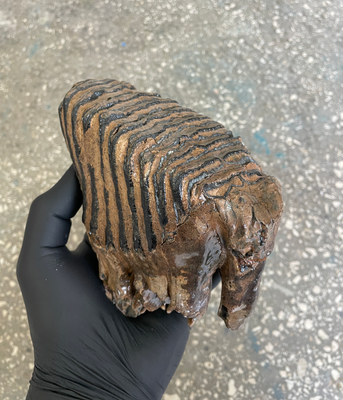
The word ivory is commonly used for the dentine material from mammoth tusks and teeth, while "mammoth tooth" may refer specifically to a molar or tooth fragment.
From a legal perspective, however, you cannot assume that calling something "mammoth tooth" rather than "mammoth ivory" changes the law.
Some state laws define ivory broadly enough to include mammoth teeth or tusks and pieces thereof.
California is a clear example: its statutory definition covers a tooth or tusk from a mammoth and includes pieces and products containing it.
Therefore:
Changing the product description from "mammoth ivory" to "mammoth tooth" does not necessarily avoid an ivory law.
The actual material and the applicable statute matter.
Is Mammoth Tooth Legal to Buy Online?
In many parts of the United States, yes.
However, an online purchase creates an additional issue:
Where is the buyer located, and where is the material being shipped?
A seller located in a state where mammoth ivory is legal may still need to consider restrictions applicable to the destination state.
For example, a transaction involving mammoth ivory and a California customer can be subject to California's much stricter ivory rules even though federal law does not prohibit mammoth ivory.
Therefore, online sellers should not rely solely on the laws of their own state.
Why Some Online Sellers Do Not Ship Mammoth Ivory Everywhere
There is a practical reason some fossil and knife-material dealers restrict certain destinations.
A seller may decide not to ship mammoth ivory to jurisdictions where the law is unclear, restrictive, or difficult to verify.
This is especially understandable for:
• high-value tusks
• large fossil specimens
• raw ivory
• worked ivory
• international shipments
Shipping restrictions are not necessarily evidence that mammoth ivory itself is illegal everywhere.
They may simply reflect the seller's compliance policy.
What Does "Legal Mammoth Ivory" Actually Mean?
For a mammoth tooth or tusk to be considered safely tradeable, several separate questions should be considered:
Question 1 - Is the species legal?
Woolly mammoth is extinct and not currently protected as an endangered living species under CITES.
Question 2 - Was the specimen legally collected?
The place where the mammoth material was originally found matters.
Question 3 - Was it legally exported?
The country of origin may require export documentation.
Question 4 - Can it legally be imported?
The destination country may impose its own restrictions.
Question 5 - Can it legally be sold in the destination state?
This is particularly important in the United States because state ivory laws can be stricter than federal law.
Question 6 - Can the material be correctly identified?
For high-value pieces, reliable species identification and provenance documentation can be extremely important.
What Knife Makers Should Know
Custom knife makers frequently use mammoth tooth and tusk because each piece has a completely natural pattern that cannot be reproduced.
But knife makers should remember that the legality of the finished knife can depend on the jurisdiction where the knife is sold, shipped, or possessed.
If you are making a knife for a customer in another state or country, do not assume that the law applicable to your workshop is automatically applicable to your customer.
For international orders, check the destination country's rules before shipping.
Final Takeaway
Mammoth tooth is not the same legal category as elephant ivory.
Because the woolly mammoth is extinct, mammoth ivory is generally outside the federal endangered-species restrictions that apply to modern elephant ivory in the United States.
However, state laws can be much stricter. California is a clear example, while New York has also specifically addressed mammoth ivory under its ivory regulations. International shipments can introduce additional export, import, customs, paleontological, and cultural-property requirements.
The safest approach is therefore simple:
Know where the material came from, make sure it was legally acquired, identify it accurately, keep documentation, and check the laws of the state or country where the material is being sold or shipped.
At FossilUSA, we believe that rare fossil materials should be sold with accurate descriptions and transparent information. Mammoth tooth and mammoth tusk are fossil materials with thousands of years of history, and responsible sourcing and documentation are an important part of protecting both buyers and sellers.
Important Legal Disclaimer
This article is provided for general informational purposes only and is not legal advice. Wildlife, fossil, customs, import/export, and ivory laws can change and may vary by state, country, locality, and individual circumstances.
Before buying, selling, collecting, importing, or exporting mammoth material, verify the current requirements with the appropriate government authority or a qualified attorney familiar with wildlife and paleontological laws.
For U.S. wildlife-import/export questions, the U.S. Fish & Wildlife Service is the appropriate federal authority. For state transactions, consult the wildlife or environmental agency of the relevant state.
Laws and regulations referenced in this article were reviewed in August 2026.
Frequently Asked Questions
Is mammoth tooth legal in the USA?
Generally yes. Mammoth material is not regulated federally in the same way as elephant ivory, but individual states may impose additional restrictions.
Is mammoth ivory legal in California?
California's definition of ivory specifically includes mammoth. Commercial purchase, sale, offer for sale, possession with intent to sell, and importation with intent to sell are generally prohibited except for specific statutory exceptions.
Is mammoth ivory legal in New York?
New York regulates mammoth ivory and has specifically stated that mammoth ivory is treated similarly to elephant ivory for enforcement purposes.
Do I need a CITES permit for mammoth ivory?
Generally, no CITES permit is required merely because material is from an extinct woolly mammoth. Mammoth is not currently listed under CITES as an endangered living species. However, national import/export rules can still apply.
Can I collect a mammoth tooth from public land?
Do not assume that you can. Federal and state public lands can have strict rules concerning fossil collection. The U.S. Fish & Wildlife Service states that fossil ivory may not be collected from state or federal public lands except as authorized by applicable regulations or permits.
Can I sell mammoth tooth online?
In many U.S. jurisdictions, yes, provided the material was lawfully acquired and the transaction complies with applicable state and federal law. Destination-state restrictions must also be considered.
Is mammoth tooth the same as elephant ivory?
No. Mammoth tooth and tusk come from an extinct mammoth species, while elephant ivory comes from living elephant species. Their legal treatment is therefore different under federal law, although some states regulate both.
Can mammoth ivory be identified scientifically?
Yes. Physical characteristics such as Schreger-line patterns can help distinguish mammoth from elephant ivory, and forensic laboratories can use more advanced analytical methods when necessary.
Is Russian mammoth ivory legal?
Lawful ownership and international export are separate questions. Russia has regulations concerning the collection and export of mammoth paleontological material, and appropriate documentation may be required.