
Stabilized Fossil Coral Knife Scales: Complete Guide for Knife Makers
09.14.2026
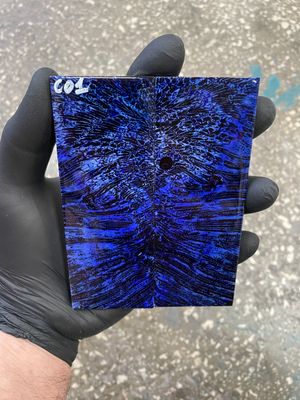
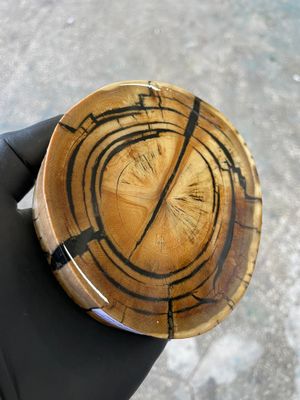
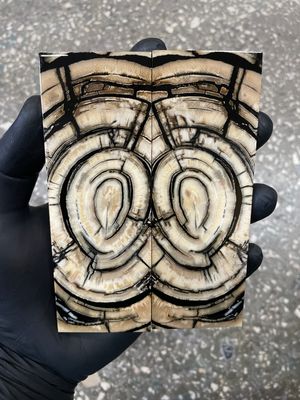
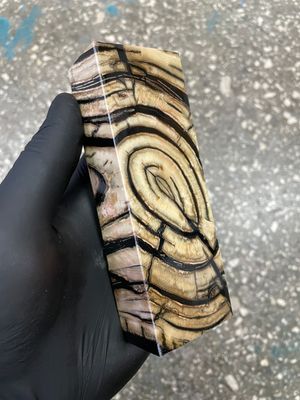
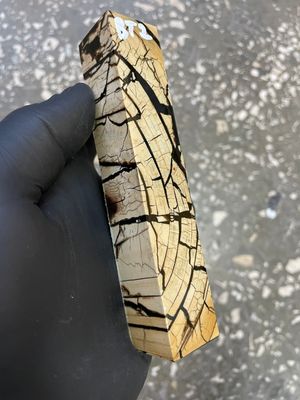
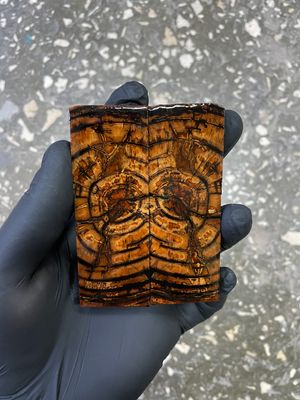
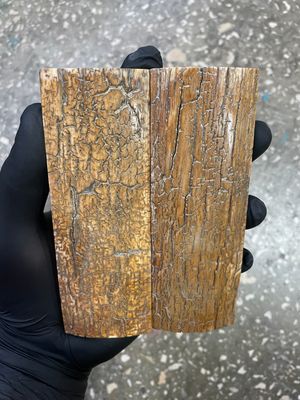
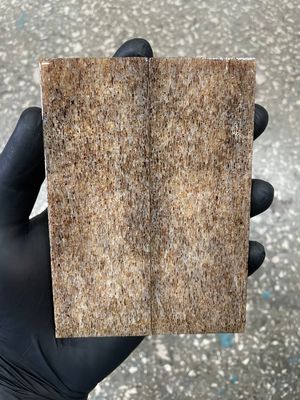
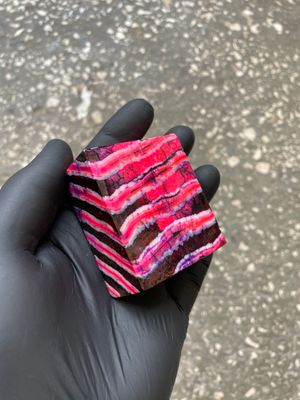
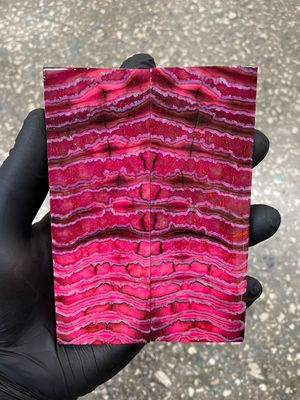
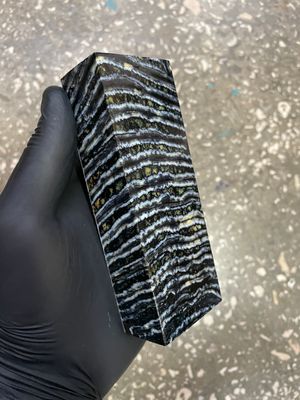
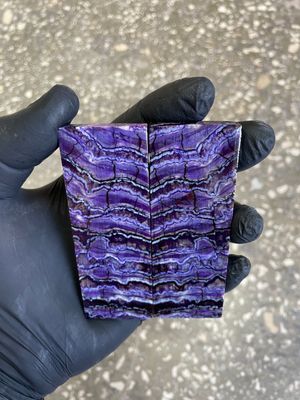
Stabilized fossil coral is one of the most unusual natural materials available to custom knife makers. Its intricate organic patterns, natural pores, branching structures, and color variations can create a knife handle unlike anything made from conventional wood or synthetic materials.
Every piece is different. Cut through the same piece of coral at a slightly different depth or angle, and an entirely new pattern may appear.
But fossil coral also has an important characteristic every knife maker should understand before working with it:
Even after stabilization, coral remains a naturally brittle material.
Stabilization significantly improves its strength and workability, but it does not turn coral into plastic, G10, Micarta, or stabilized wood.
This guide explains what fossil coral is, why it is stabilized for knife making, why natural internal voids may remain after stabilization, how to cut and drill coral knife scales, and what makers should consider before choosing this unique material for a custom knife handle.
What Is Fossil Coral?
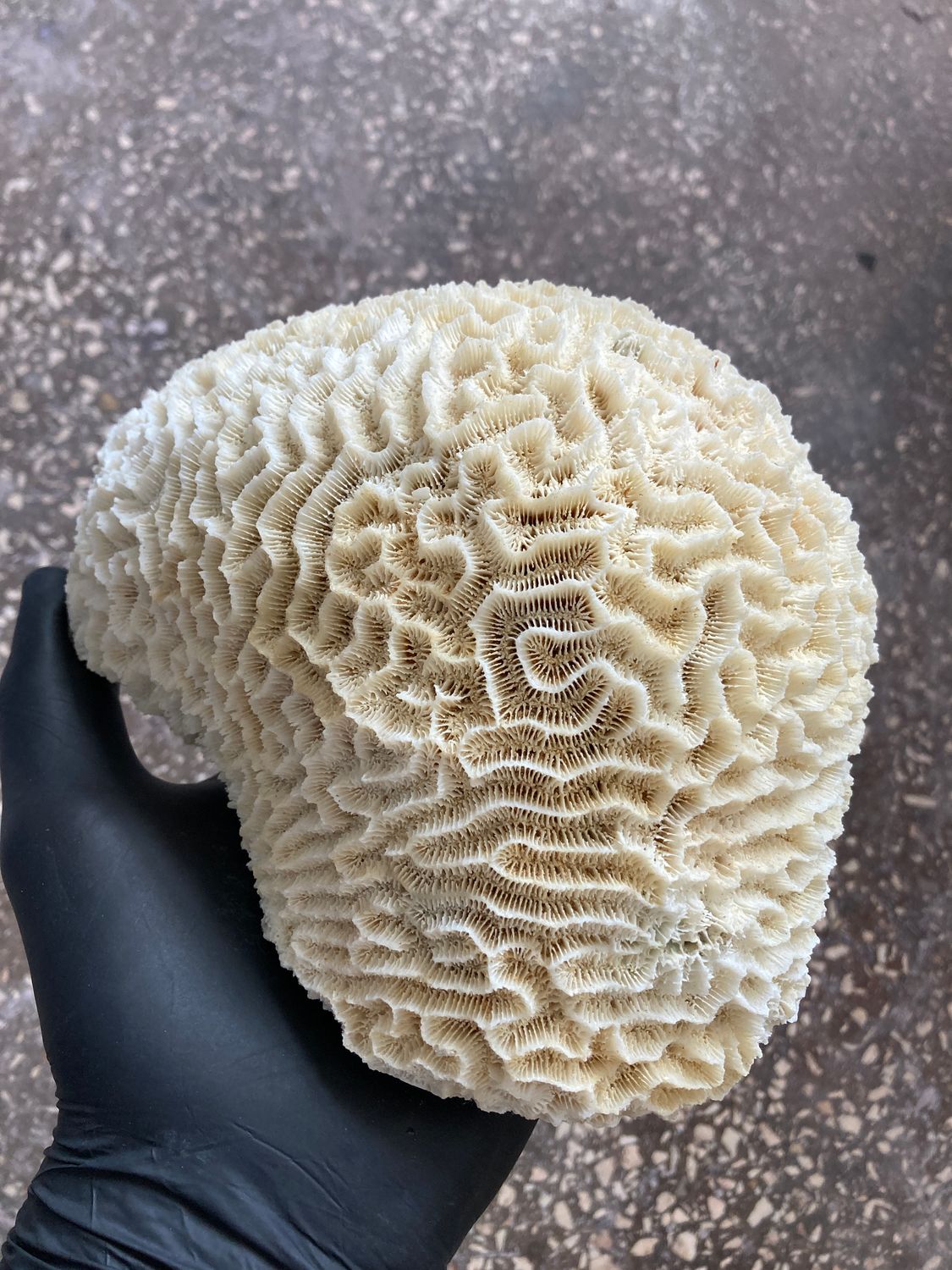
Fossil coral is ancient coral whose original biological structure has been preserved through geological processes.
Over long periods of time, the original material undergoes mineralization while the distinctive structure of the coral can remain visible.
This is very different from living coral found in modern reef ecosystems.
The material used for our stabilized coral knife scales is fossilized material — not living coral harvested from a modern reef.
That distinction is important both environmentally and legally.
International trade in many modern coral species is regulated under CITES and national wildlife laws. Fossil specimens of several major CITES-listed coral groups, including stony corals (Scleractinia), are specifically annotated as not being subject to the provisions of the Convention.
However, regulations and identification requirements may vary between jurisdictions, so international buyers should always check the applicable import requirements in their country.
Does Using Fossil Coral Harm Modern Coral Reefs?
The fossil coral we use does not come from living modern coral reefs.
It is already fossilized geological material that is commercially available as raw material.
No living coral is harvested from a reef to produce our knife scales.
This is an important distinction because the word "coral" can describe very different materials — from living reef organisms to ancient fossilized material.
At FossilUSA, we use fossil material for our stabilized coral knife scales.
Why Use Fossil Coral for Knife Handles?
If coral is naturally brittle, why use it for a knife handle at all?
The answer is simple:
Because few natural handle materials can produce the same visual effect.
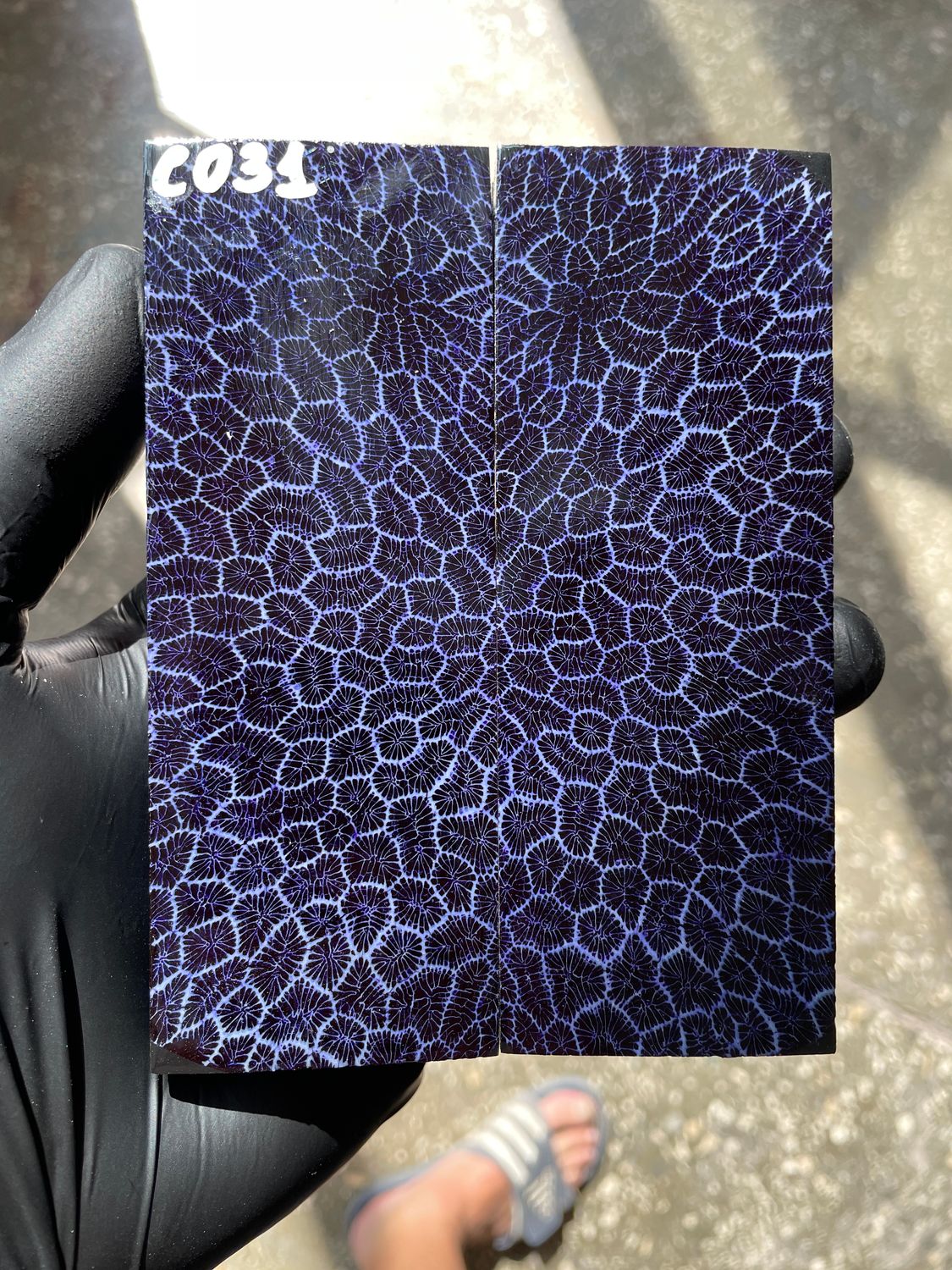
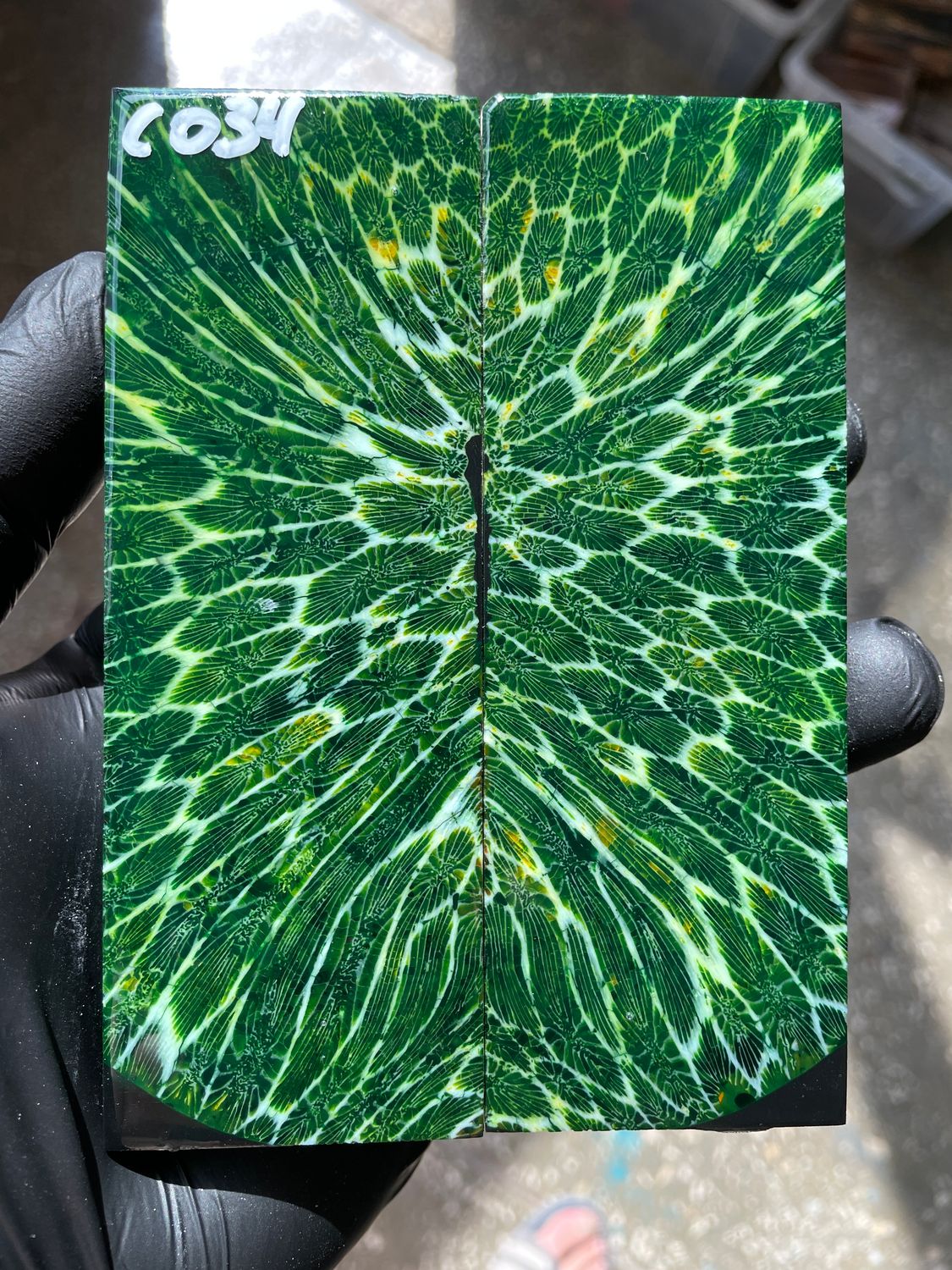
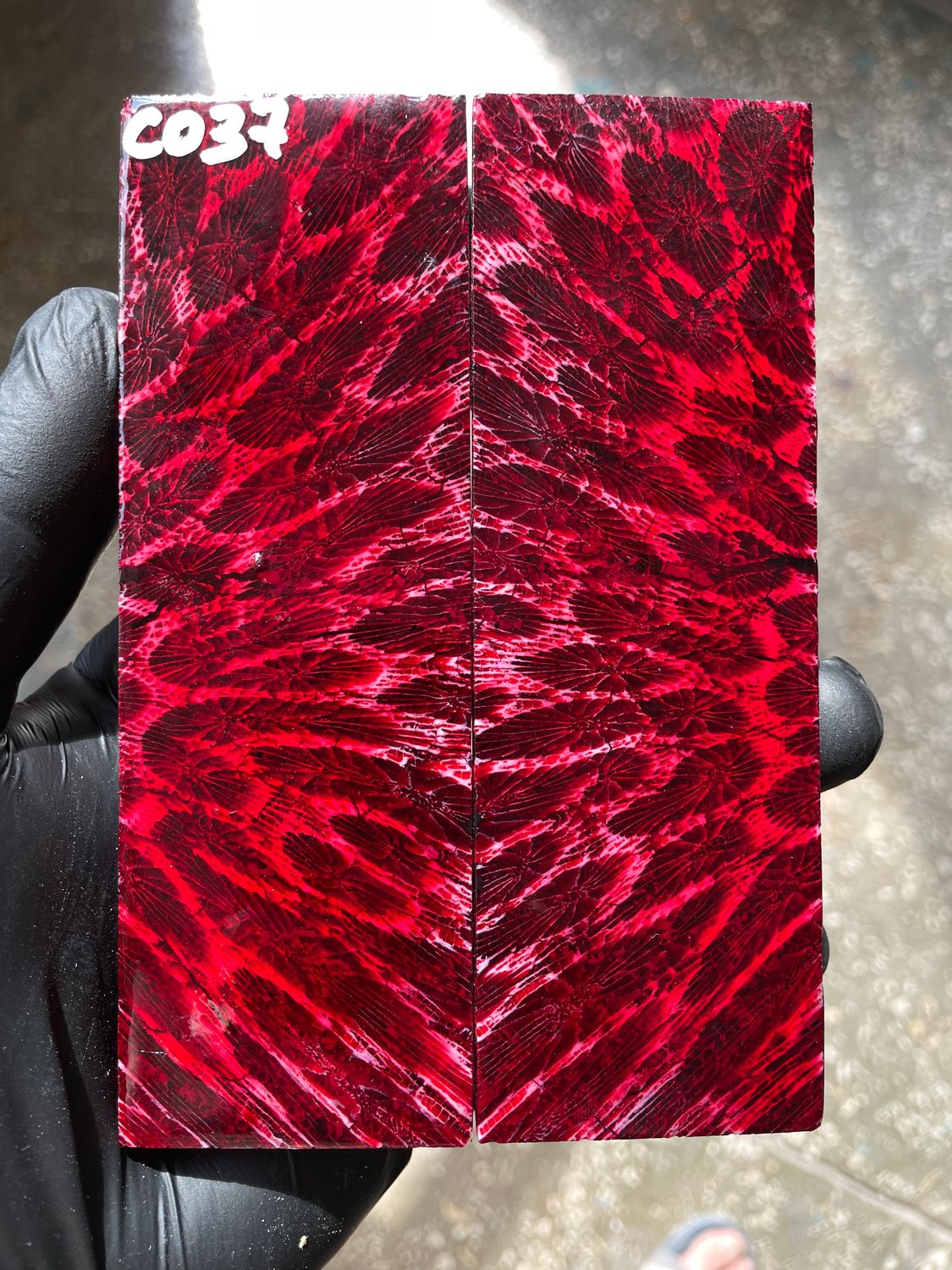
Coral has a complex three-dimensional internal structure. Cutting through that structure can reveal:
• branching patterns;
• circular structures;
• natural channels;
• pores and cavities;
• contrasting mineral areas;
• intricate organic textures.
The resulting pattern cannot be manufactured or reproduced exactly.
Even two scales cut next to each other from the same original piece will not be completely identical.
This makes stabilized fossil coral especially attractive for:
• custom knives;
• collector knives;
• presentation knives;
• high-end handmade knives;
• custom folding knives;
• fixed-blade knives;
• decorative inlays;
• one-of-a-kind knife projects.
For a maker building a knife where the handle material is an important part of the overall design, fossil coral offers something synthetic materials cannot: a naturally unique pattern.
Why Does Coral Need to Be Stabilized?
Natural fossil coral can contain a network of pores, channels, cavities, and other internal irregularities.
These structures create its distinctive appearance, but they also create potential weak points.
For knife-making applications, stabilization helps reinforce this naturally porous structure.
The basic idea is to introduce polymer resin into accessible pores and cavities using vacuum and pressure.
Once the resin is cured, it helps reinforce the structure of the material.
Proper stabilization can:
• reinforce porous areas;
• improve structural stability;
• reduce moisture absorption;
• reduce the risk of minor chipping;
• improve machinability;
• make the material more suitable for knife handles.
Without stabilization, many highly porous pieces of coral would be considerably more difficult to use successfully in a knife-making project.
How We Stabilize Fossil Coral at FossilUSA
Our goal during stabilization is to introduce resin as deeply as possible into the accessible pore structure of the coral.
This is not simply a surface coating.
The material goes through vacuum-pressure stabilization cycles using Cactus Juice and is then additionally reinforced with Alumilite resin.
The process takes time because every piece has a different internal structure.
Some pieces contain relatively open interconnected pores. Others contain narrow channels or isolated cavities that are much more difficult for resin to reach.
The objective is therefore not to turn coral into an artificial homogeneous material.
Our objective is to maximize resin penetration and reinforce the natural structure while preserving the appearance that makes each piece unique.
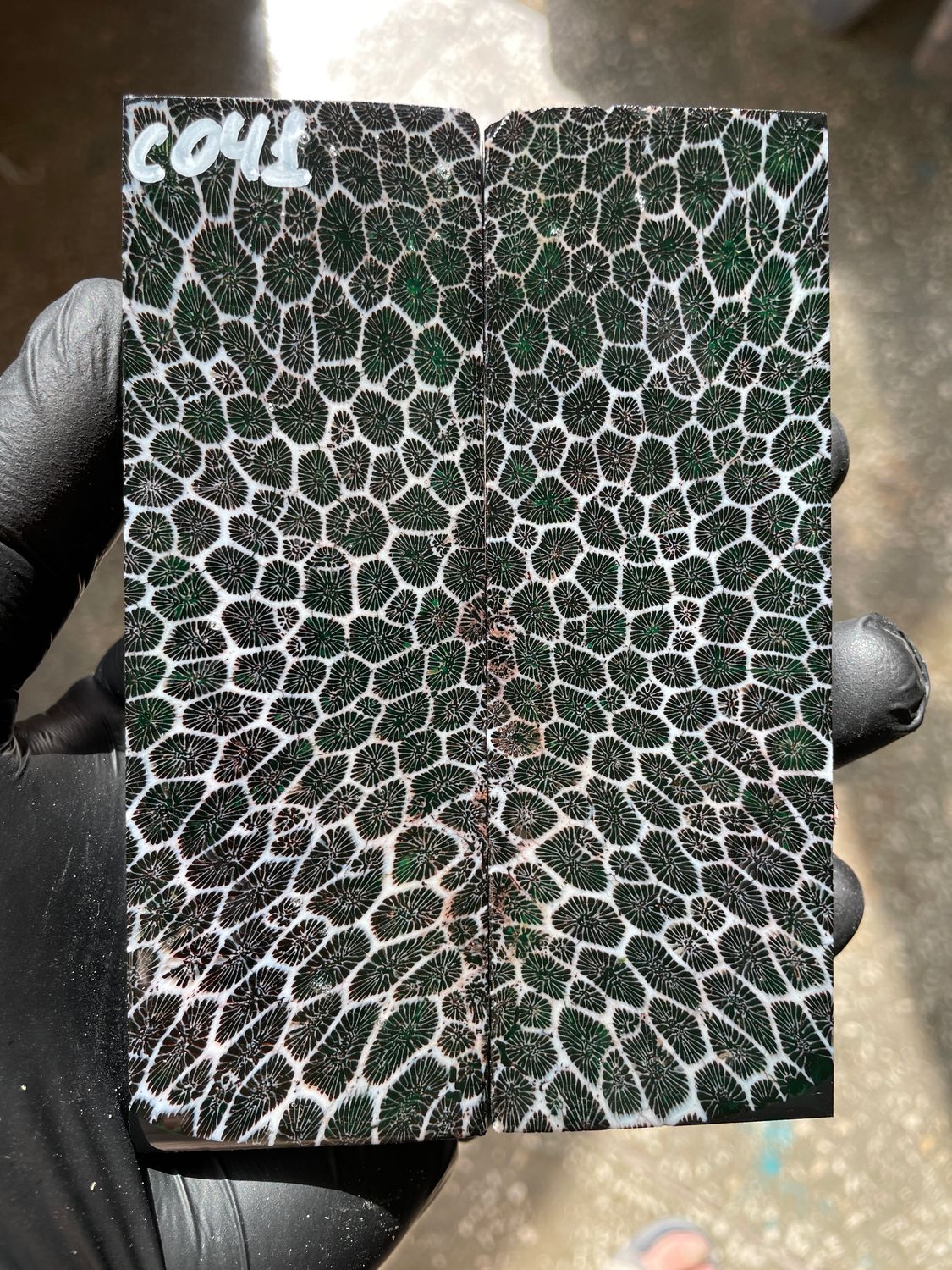
Stabilized Coral Is Still a Natural Material
This is probably the most important thing to understand before buying or working with stabilized coral knife scales.
Stabilization makes coral stronger and more workable. It does not make it indestructible.
Coral has a mineral-based structure and remains naturally more brittle than many common knife-handle materials.
It should not be expected to behave like:
• G10;
• Micarta;
• carbon-fiber composites;
• acrylic;
• dense stabilized wood.
Polymer resin reinforces the existing structure, but the underlying natural material is still there.
That means excessive pressure, impact, vibration, heat, or improper machining can cause chipping or cracking.
For this reason, stabilized coral should be treated as a reinforced natural mineral material, not as a synthetic composite.
Why Can Stabilized Coral Still Have Natural Voids?
This is another important characteristic of the material.
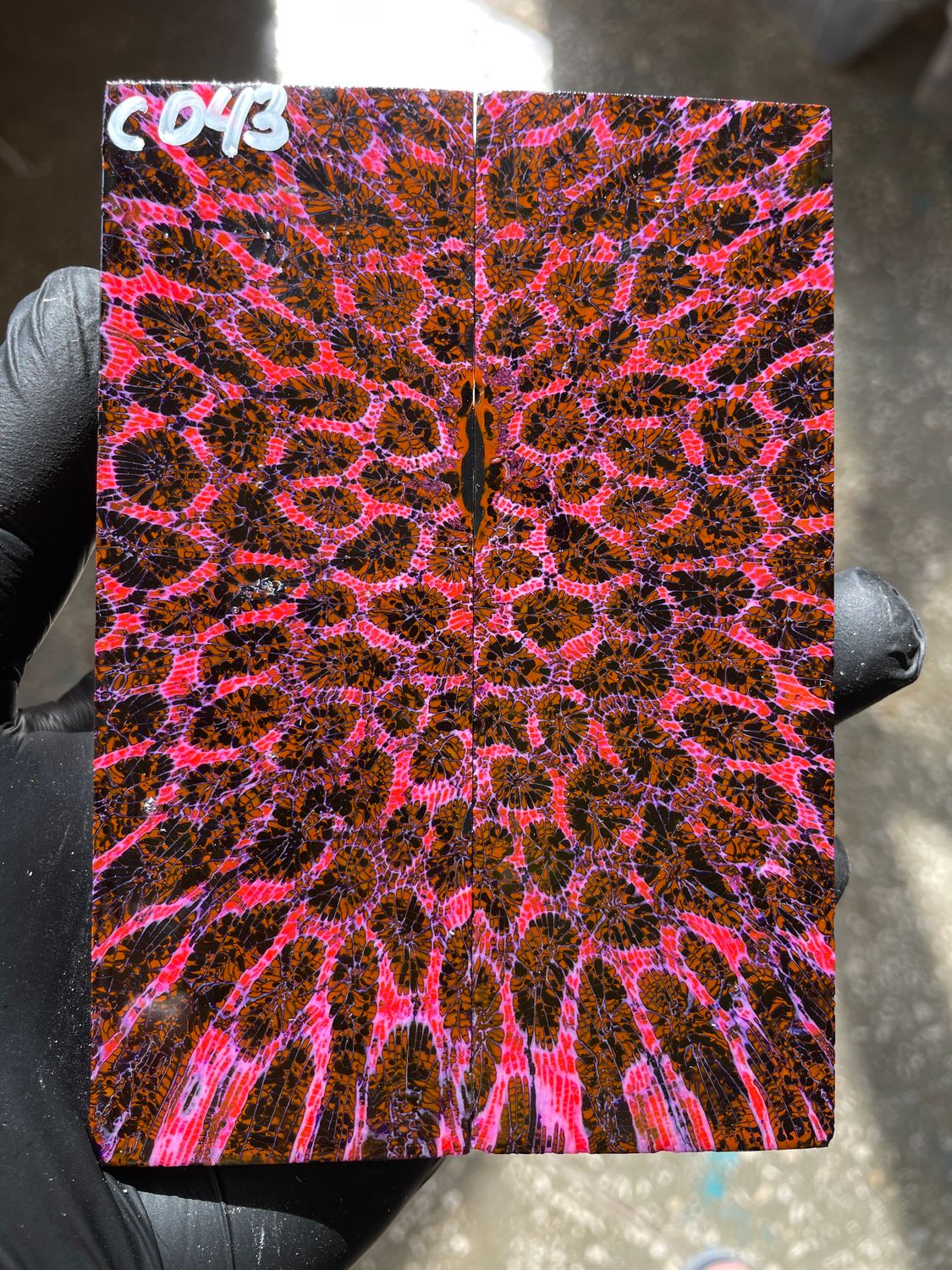
During stabilization, resin penetrates the pores and cavities it can reach.
But coral contains an extremely complex three-dimensional network of internal spaces.
Some cavities may be:
• completely enclosed inside the material;
• connected only by microscopic passages;
• extremely deep;
• irregularly shaped;
• inaccessible to the stabilizing resin.
Because of this, it is impossible to guarantee that every internal cavity in a piece of natural coral will be completely filled.
A scale may look completely solid from the outside while still containing a small enclosed cavity deeper inside.
That cavity may only become visible when the maker cuts, drills, mills, or grinds into the material.
This is a natural characteristic of coral and should not automatically be considered a manufacturing defect.
What If a Void Appears During Machining?
If a small internal cavity becomes exposed while shaping the handle, it can usually be filled.
Two common options are:
CA Glue
Thin cyanoacrylate (CA) glue works well for small pores, fine cracks, and shallow cavities.
Epoxy Resin
Epoxy is often more suitable for larger openings.
After the filler has fully cured, carefully sand the repaired area flush with the surrounding surface.
Depending on the depth and shape of the cavity, the process may need to be repeated.
For example:
fill → cure → sand → inspect → refill if necessary → final sand.
This is a normal part of working with naturally porous materials.
Is Stabilized Coral Brittle?
Yes.
Stabilization significantly improves the usability of coral, but it cannot completely change the physical structure of the original material.
That is why stabilized fossil coral remains more brittle than G10, Micarta, many synthetic composites, and dense stabilized woods.
Potential causes of damage include:
• dropping a loose scale onto a hard surface;
• excessive clamping pressure;
• aggressive drilling;
• impact;
• overheating;
• excessive grinding pressure;
• improper fitting;
• overtightening screws or other hardware.
This does not mean coral cannot be used successfully for knife handles.
It means the maker needs to adapt the machining process to the material.
How to Cut Stabilized Coral Knife Scales
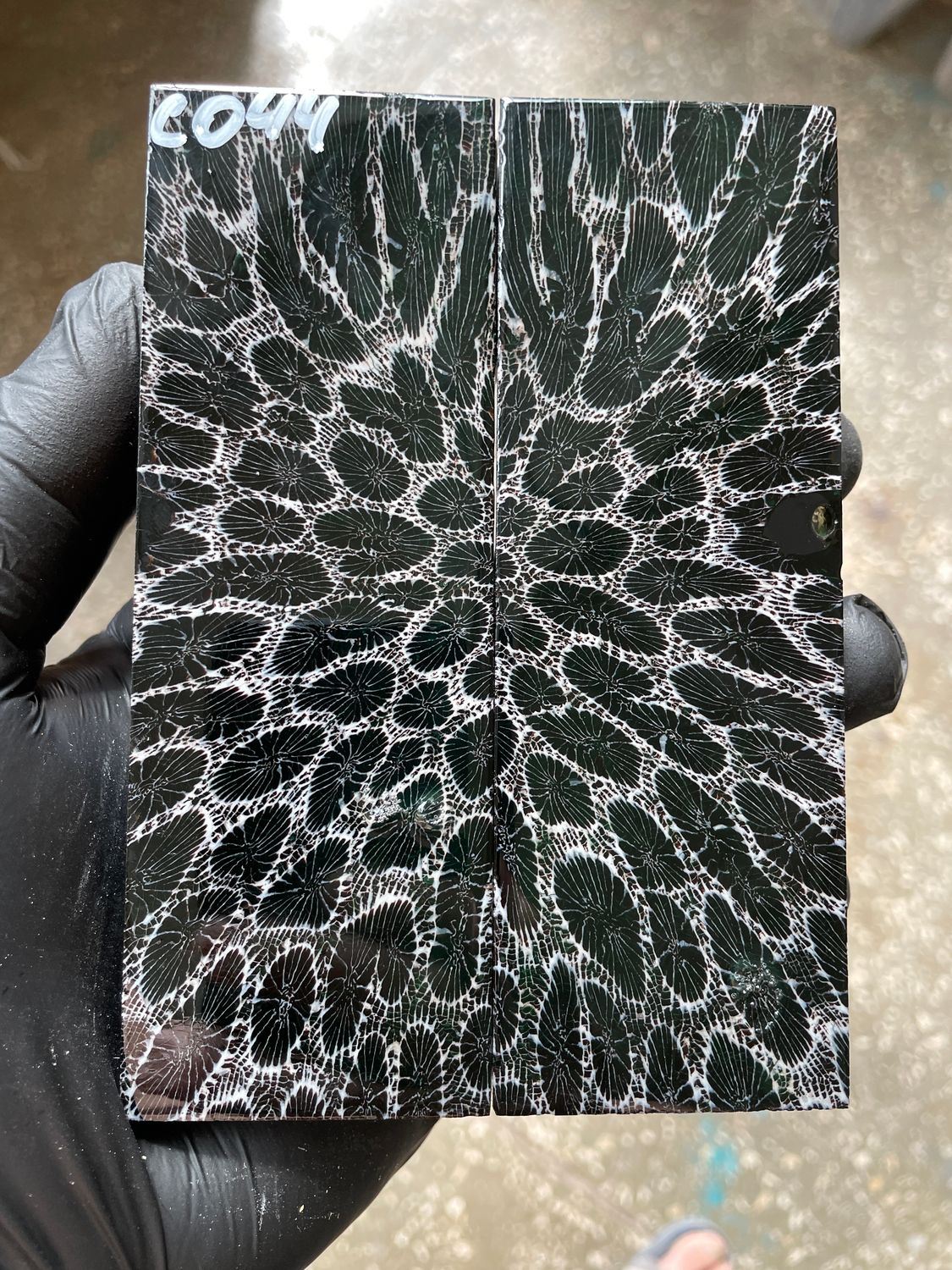
Cutting is one of the operations where extra care is particularly important.
Before cutting, we recommend wrapping the coral scale with painter's tape.
The tape helps support the surface and may reduce minor chipping along the cut.
For best results:
1. Inspect the scale before cutting.
2. Wrap the material with painter's tape.
3. Secure it without excessive clamping pressure.
4. Use a sharp cutting tool appropriate for hard, brittle material.
5. Use light, controlled feed pressure.
6. Avoid sudden impacts and vibration.
7. Keep heat generation under control.
8. Inspect the newly cut edge before continuing.
Do not try to force the material through the cutting tool.
With coral, slower and more controlled machining is generally preferable to aggressive material removal.
How to Drill Stabilized Coral Knife Scales
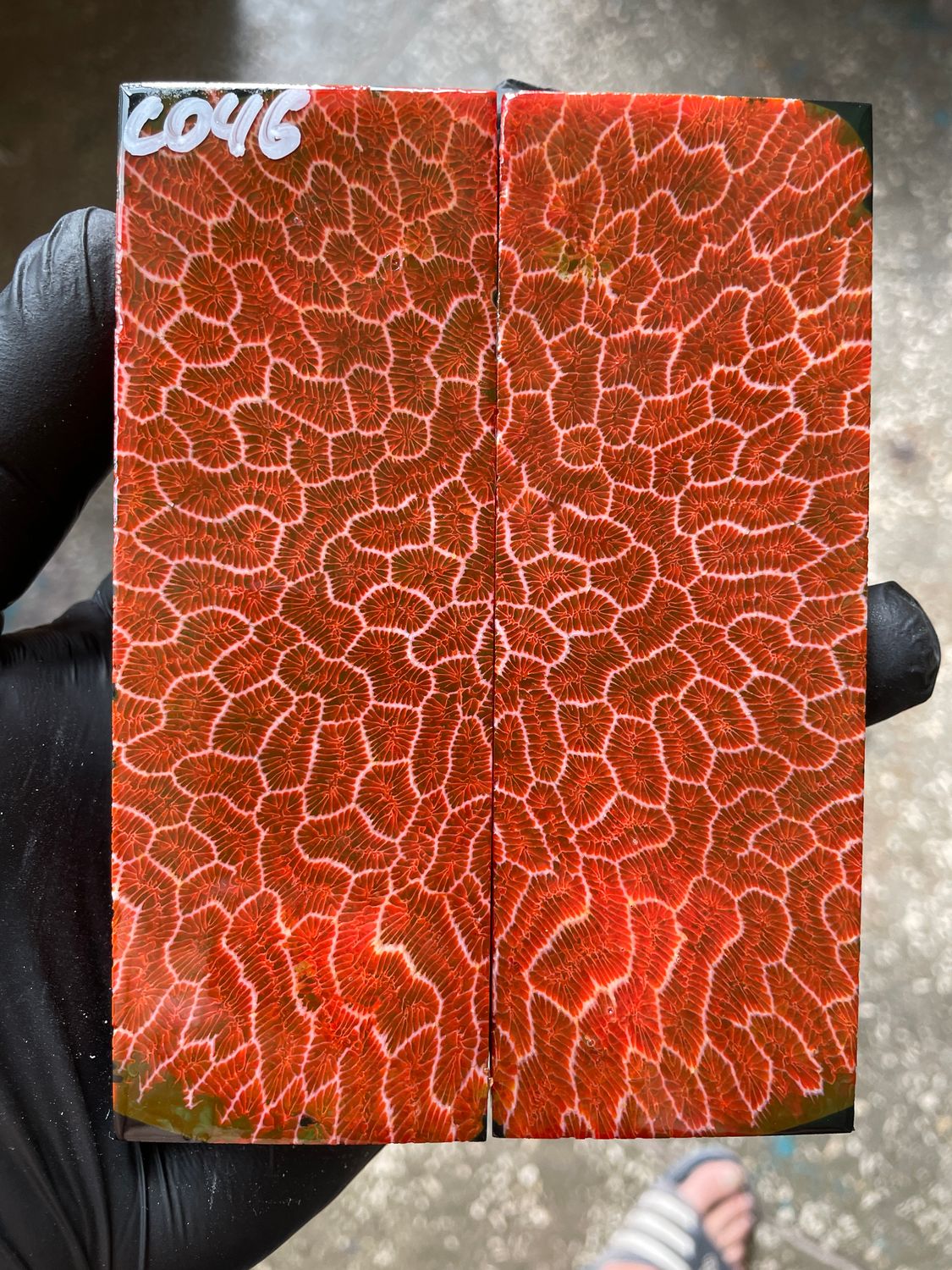
Drilling requires particular care because a hole creates a localized stress concentration in the material.
Again, we recommend wrapping the scale with painter's tape before drilling.
The workpiece should also be fully supported.
A good procedure is:
1. Mark the hole carefully.
2. Support the back of the scale with a sacrificial backing board.
3. Secure the scale without excessive pressure.
4. Use a sharp drill bit.
5. Apply light, controlled feed pressure.
6. Avoid overheating.
7. Slow down as the drill approaches the back surface.
8. Do not force the bit through the final fraction of material.
The moment the drill exits the back of the scale is particularly important.
Too much pressure can cause breakout or chipping around the exit hole.
For especially valuable pieces, drilling partway from each side may help reduce the risk of breakout.
How to Sand and Polish Stabilized Coral
Stabilized coral can be ground, sanded, and polished to a beautiful finish.
Again, the key is controlled pressure and controlled heat.
Work progressively through the abrasive grits rather than trying to remove large amounts of material at once.
Avoid allowing the scale to become excessively hot during grinding or polishing.
As the surface becomes smoother, the natural structure becomes increasingly visible.
A good final finish can reveal:
• fine coral patterns;
• mineral structures;
• color transitions;
• resin-filled pores;
• natural contrasting areas;
• intricate three-dimensional textures.
This is often the stage where an ordinary-looking rough scale becomes a spectacular knife handle.
What to Look for When Buying Stabilized Fossil Coral Knife Scales
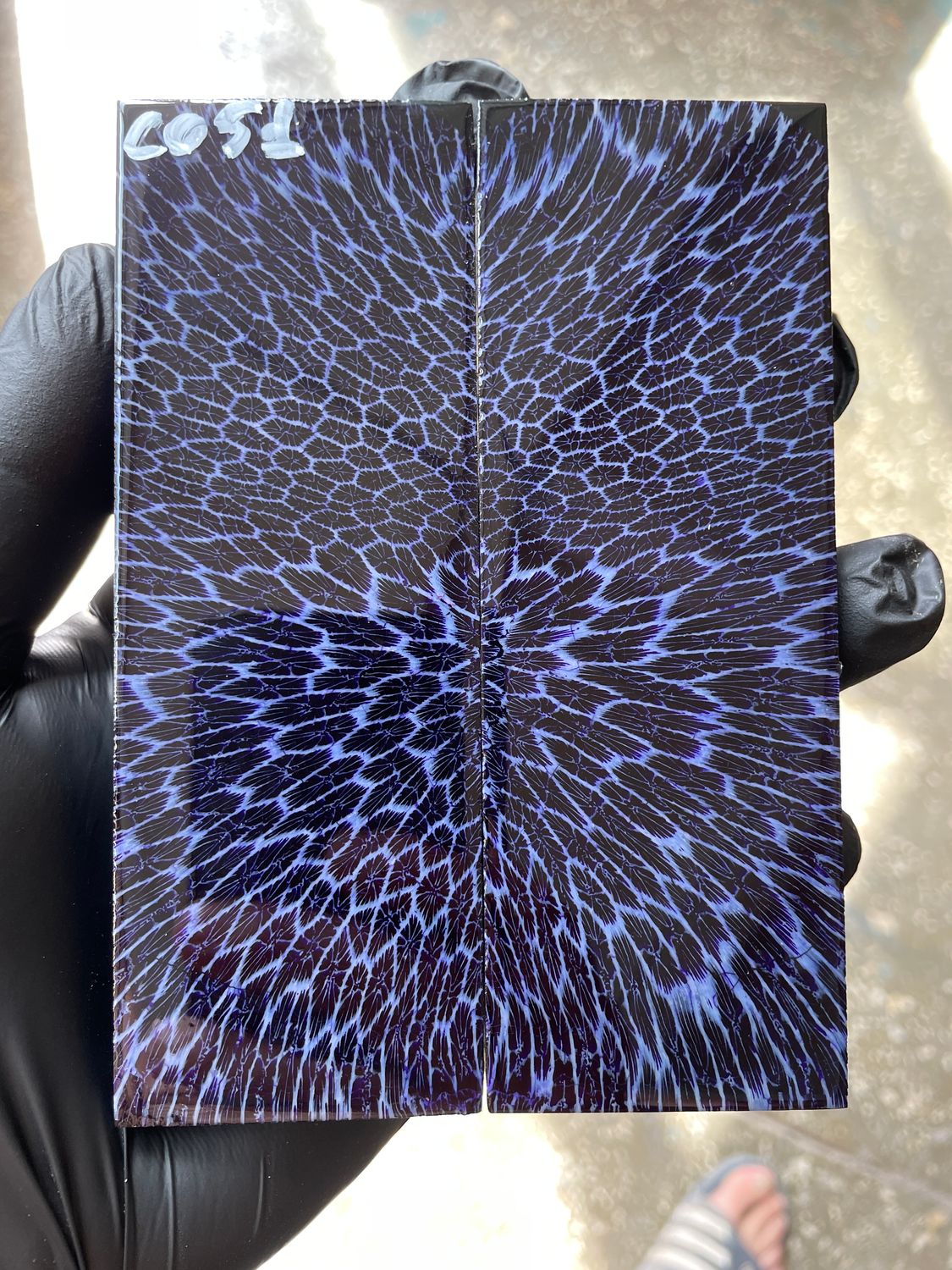
Because every piece is different, buying natural coral scales is different from buying standardized G10 or Micarta.
Before choosing a pair, consider:
Size
Make sure the length, width, and thickness provide enough material for your intended handle.
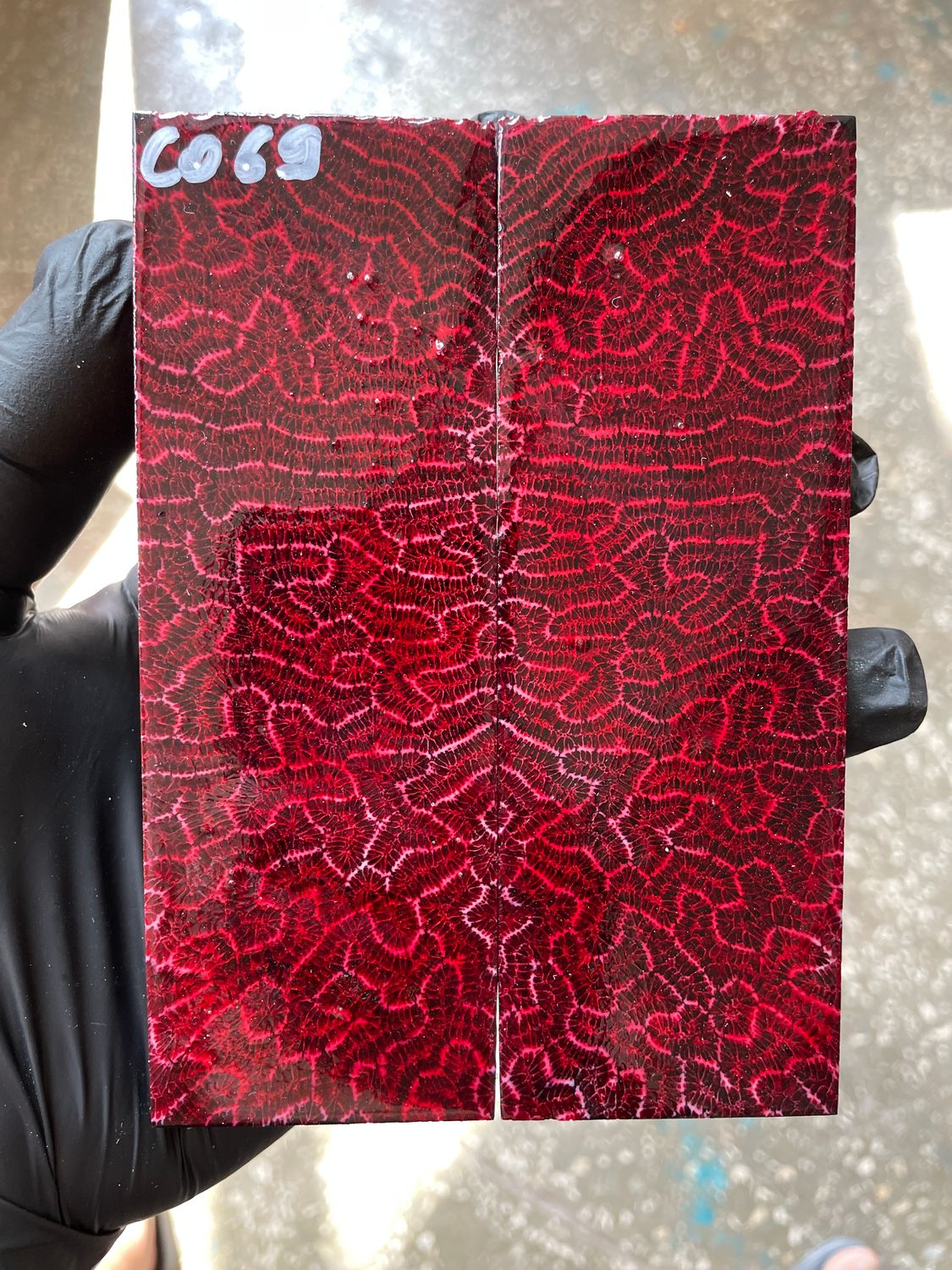
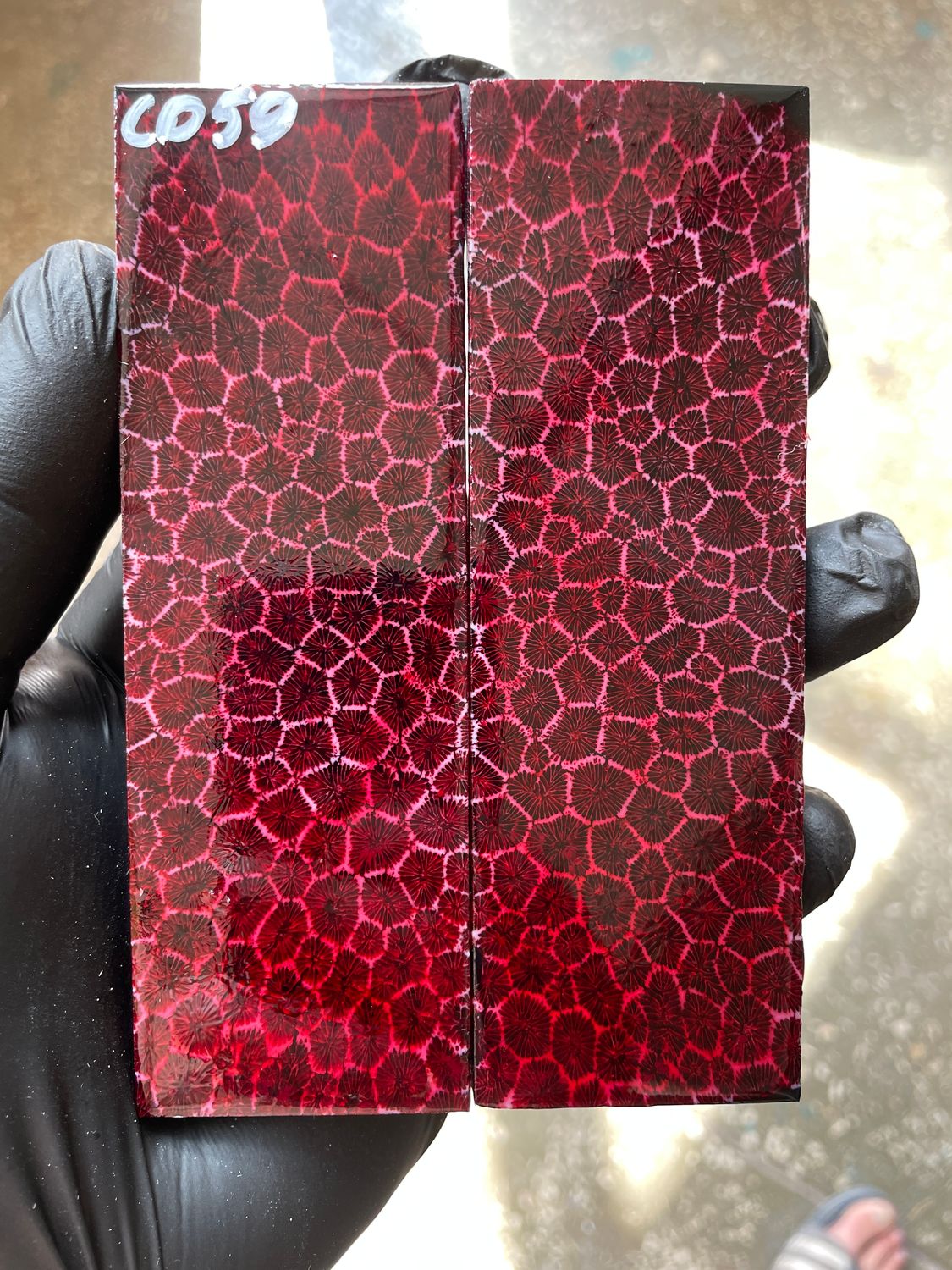
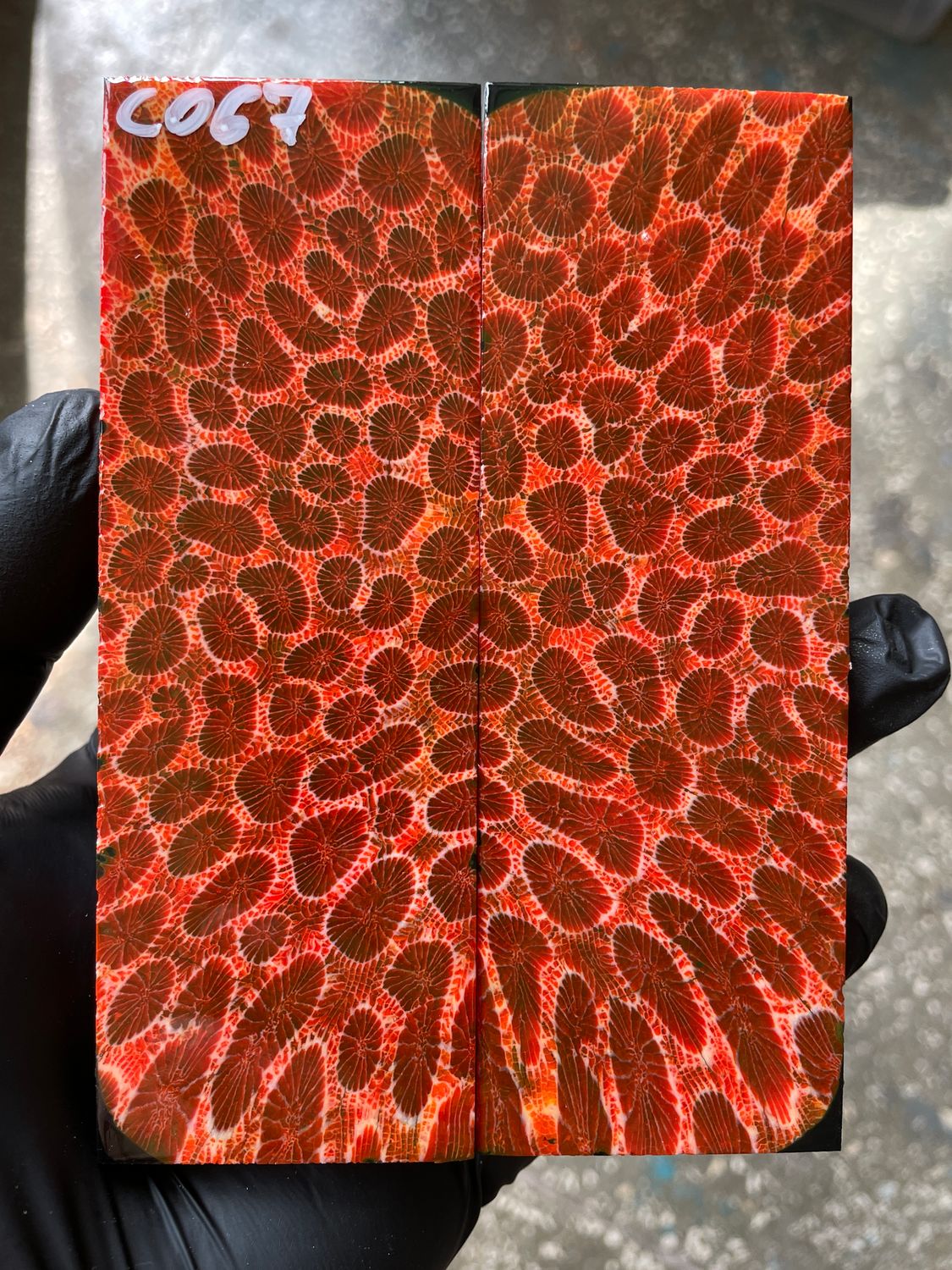
Pattern
Look at the actual pair you are purchasing rather than relying only on a generic material photograph.
The pattern of every set is different.
Thickness
Leave enough material for final flattening, fitting, shaping, and sanding.
Natural Structure
Visible pores and irregularities are part of the material.
A highly textured piece may produce an extraordinary finished handle, but it may also require more filling and finishing work.
Intended Knife
Consider whether the material is appropriate for the knife's intended use.
For a collector, presentation, or high-end custom knife, uniqueness may be more important than extreme impact resistance.
For a knife intended for severe impact and abuse, another handle material may be more appropriate.
Why Every Pair of Coral Knife Scales Is One of a Kind
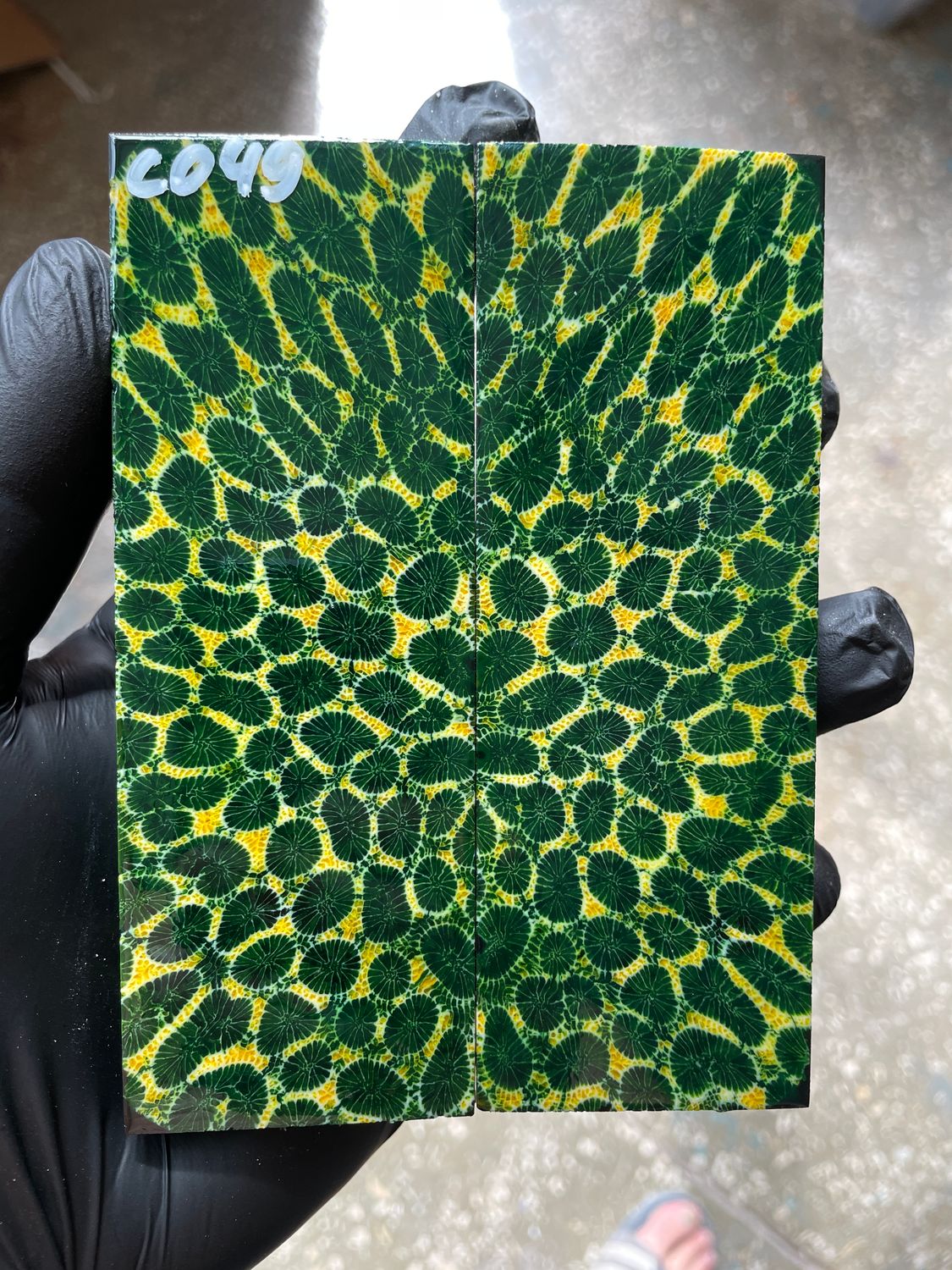
The internal structure of fossil coral is three-dimensional.
A scale represents only one cross-section through that structure.
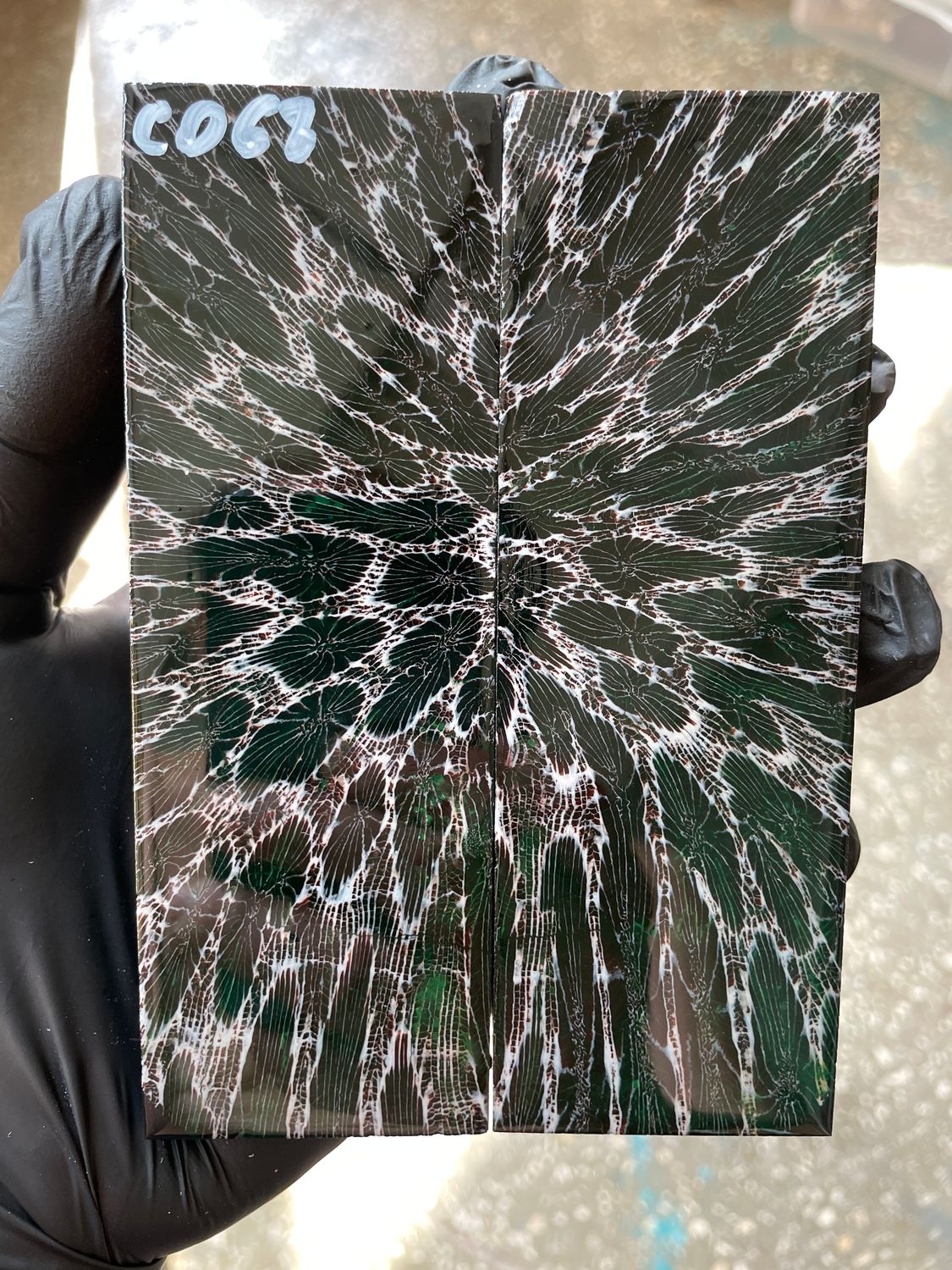
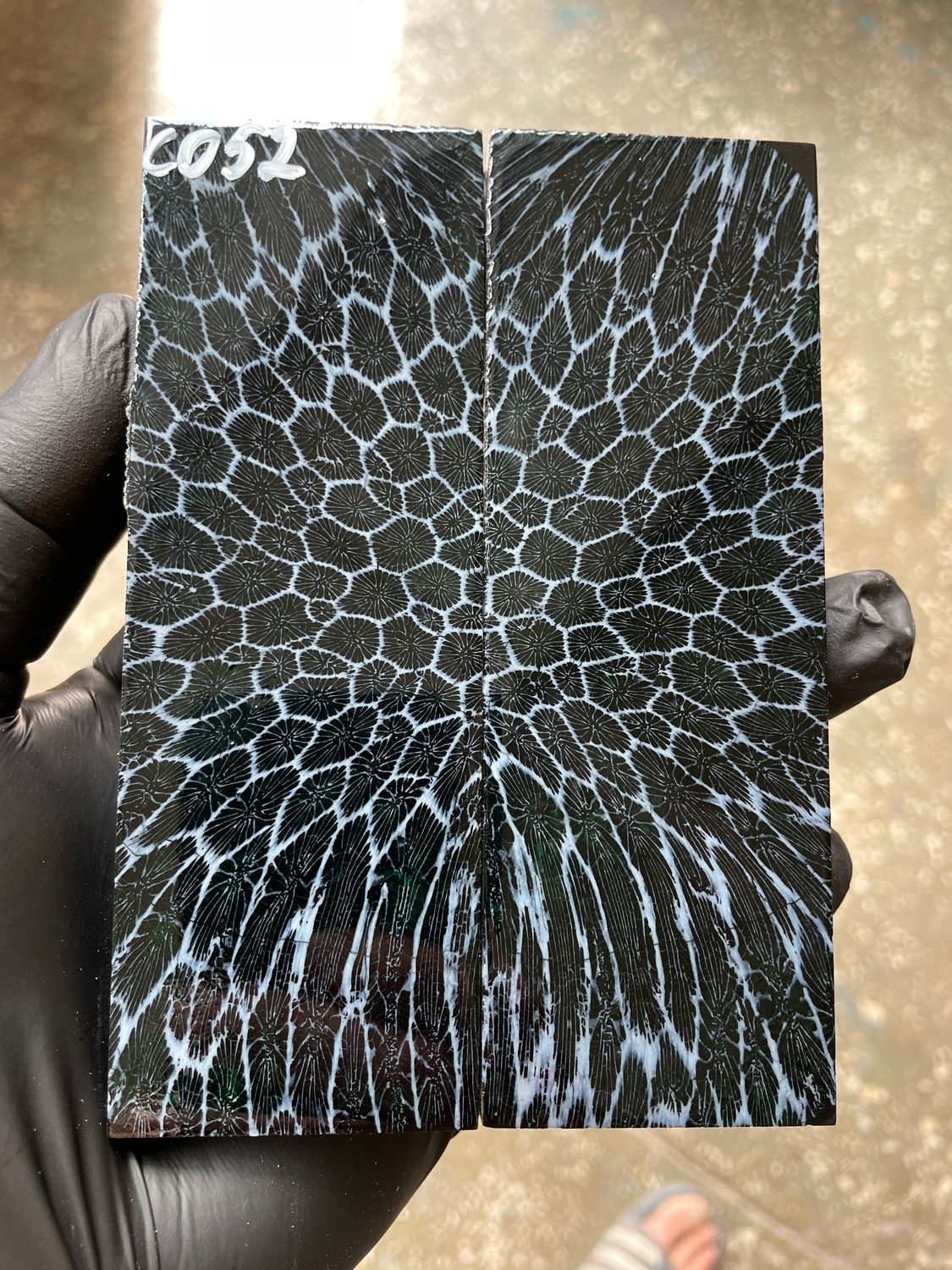
Move the cutting plane slightly and a completely different arrangement of pores, branches, circles, and mineral structures can appear.
As a result, individual pairs can vary in:
• pattern density;
• color;
• pore size;
• contrast;
• orientation;
• branching structure;
• natural cavities.
This is why photographs of the actual pair matter when purchasing premium coral knife scales.
What you see is the piece you are buying.
Once that pair is sold, the exact same natural pattern cannot simply be manufactured again.
What Types of Knives Are Best for Stabilized Coral?
Stabilized coral is particularly well suited to knives where appearance, craftsmanship, and uniqueness are major priorities.
Custom Fixed Blades
Coral can produce striking full-tang handles when properly fitted and supported.
Custom Folding Knives
It can be used for folder scales or overlays, but extra care is necessary around pivot and screw holes.
Collector Knives
This is one of the strongest applications for the material because every pair is naturally unique.
Presentation Knives
Bright colors and complex natural patterns work particularly well on knives intended to showcase craftsmanship.
Knife Inlays
Smaller sections of stabilized coral can also be used as decorative inlays alongside wood, metal, carbon fiber, mammoth materials, or other premium handle materials.
Is Stabilized Coral Good for Hard-Use Knives?
It can be used on functional knives, but it would not be our first recommendation for a knife designed for repeated heavy impacts, drops, or extreme field abuse.
Materials such as G10 or Micarta are generally better suited to that purpose.
Stabilized fossil coral is most attractive when the priorities are:
appearance + uniqueness + natural material + craftsmanship.
That makes it especially appropriate for custom, collector, presentation, and high-end handmade knives.
A Note on the History of Fossil Coral in Custom Knifemaking
There is no reliable single date when fossil coral was first used for knife handles.
Natural stone, shell, bone, horn, and other decorative materials have been used by craftspeople for centuries.
In the modern custom knife community, however, fossil coral has been discussed as a specialized handle material for many years. Knife makers were already discussing natural and resin-stabilized fossil coral knife scales on BladeForums in 2017.
Today it remains a relatively uncommon material — one reason it can be so visually distinctive on a custom knife.
Frequently Asked Questions About Stabilized Fossil Coral Knife Scales
What are stabilized fossil coral knife scales?
They are knife-handle scales cut from fossilized coral and reinforced with polymer resin to improve the material's stability and machinability while preserving its natural structure.
Is fossil coral real coral?
Yes. Fossil coral originates from ancient coral, although geological processes have altered and mineralized the original material over time.
Is fossil coral the same as living coral?
No. Fossil coral is ancient geological material. Living coral is part of a modern marine ecosystem.
Does FossilUSA use living coral?
No. Our stabilized coral knife scales are made from fossil material, not living coral harvested from modern reefs.
Is fossil coral legal in the United States?
Genuine fossil coral is different from living or recently dead coral regulated under wildlife-trade rules. CITES annotations exclude fossils of several listed coral groups, including Scleractinia, from the provisions of the Convention. However, import, export, identification, and state or national requirements can vary, so regulations should always be checked for the specific material and destination.
Can fossil coral be used for knife handles?
Yes. Stabilized fossil coral can be used for knife handles, particularly on custom, collector, and presentation knives. It requires more careful machining than tougher synthetic handle materials.
Why does coral need stabilization?
Coral contains natural pores, channels, and cavities. Stabilization introduces polymer resin into accessible areas to reinforce the structure and make it more suitable for knife making.
Does stabilization make coral unbreakable?
No. Stabilization strengthens coral but does not eliminate its natural brittleness.
Is stabilized coral as strong as G10 or Micarta?
No. G10 and Micarta are generally much better choices when maximum impact resistance is required. Coral is chosen primarily for its natural beauty and uniqueness.
Can stabilized coral contain natural voids?
Yes. Deep, enclosed, or inaccessible internal cavities may remain even after extensive stabilization.
Are internal pores or voids a defect?
Small natural pores and internal cavities are inherent characteristics of coral and are not automatically manufacturing defects.
What happens if a void appears while shaping the handle?
Small exposed cavities can usually be filled with CA glue or epoxy resin and then carefully sanded smooth.
How do you cut stabilized coral knife scales?
Use a sharp appropriate cutting tool, light controlled pressure, good support, and avoid excessive vibration and heat. We recommend wrapping the material with painter's tape before cutting.
How do you drill stabilized coral?
Support the back of the scale, use a sharp drill bit, apply light pressure, avoid overheating, and slow down as the drill approaches the back surface. Painter's tape can provide additional surface support.
Can stabilized coral be sanded and polished?
Yes. It can be ground, sanded, and polished, but excessive heat and pressure should be avoided.
Can stabilized coral be used on folding knives?
Yes. However, particular care should be taken around pivot holes, screw holes, thin sections, and other areas where stress is concentrated.
Can fossil coral be used for knife inlays?
Yes. Stabilized coral is well suited to decorative inlays and can be combined with many other premium knife-handle materials.
Is stabilized fossil coral good for a working knife?
It can be used on functional knives, but tougher materials are preferable for extreme hard-use applications. Coral is particularly well suited to custom, collector, and presentation knives.
Why are fossil coral knife scales expensive?
Preparing high-quality scales requires suitable fossil material, cutting, lengthy stabilization and reinforcement, finishing, and careful selection. In addition, every natural pattern is unique rather than mass-produced.
Why are two pairs of fossil coral scales never identical?
Because every cut passes through a different section of the coral's three-dimensional natural structure. Each cut reveals its own arrangement of patterns, pores, branches, and mineral features.
What should I look for when buying coral knife scales?
Check the dimensions, thickness, actual photographs of the pair, natural structure, and whether the material has been stabilized. Also consider whether coral is appropriate for the intended use of the knife.
Final Thoughts
Stabilized fossil coral is not the right handle material for every knife.
And that is exactly what makes it interesting.
It is not intended to replace G10, Micarta, or other extremely tough synthetic materials.
Instead, fossil coral offers something entirely different: a natural pattern that cannot be reproduced.
Professional stabilization makes this naturally porous and brittle material much more practical for custom knife making while preserving the structure that makes it unique.
For a knife maker building a custom, collector, or presentation knife, that combination can create a handle that becomes one of the defining features of the finished piece.
Every piece has its own structure.
Every cut reveals a different pattern.
And every finished handle is truly one of a kind.
Ready to buy stabilized coral or any materials? Welcome!


FossilUSA
Premium stabilized materials for knife making
Contact:
dimafan777@gmail.com




Secure Payments
PayPal · Visa · Mastercard