
Stabilized Amboyna Burl for Knife Handles & Knife Scales
09.17.2026
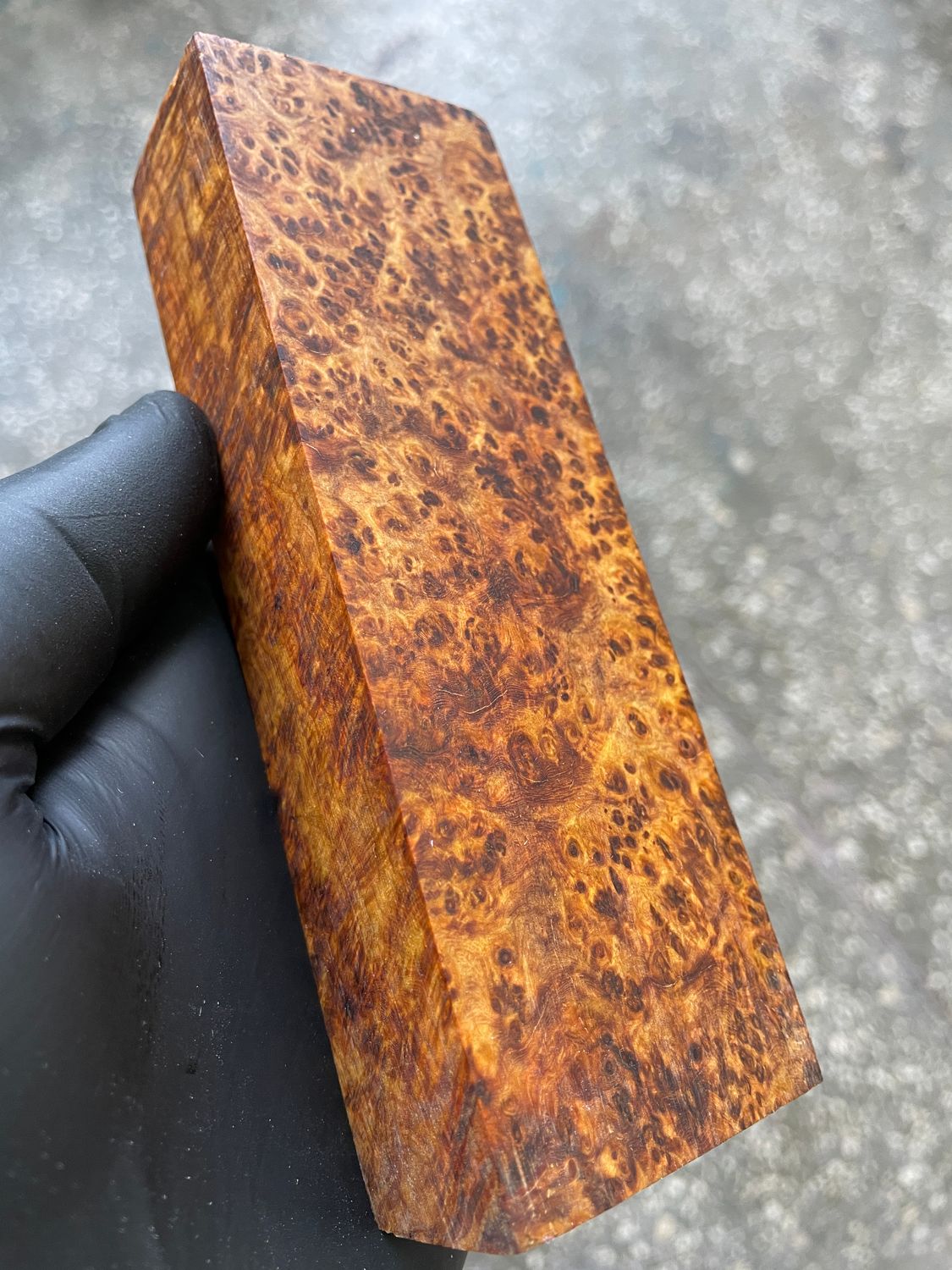
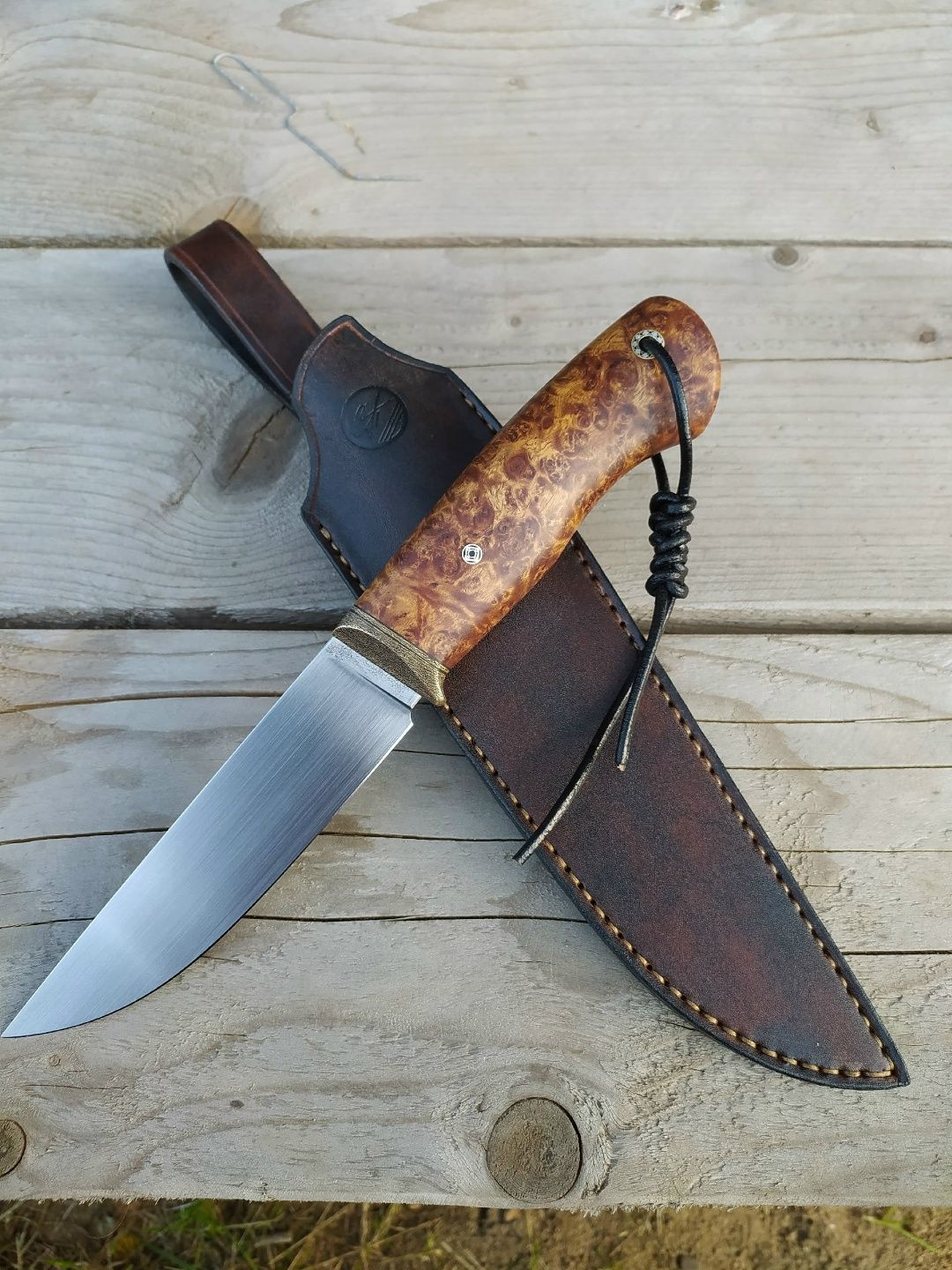
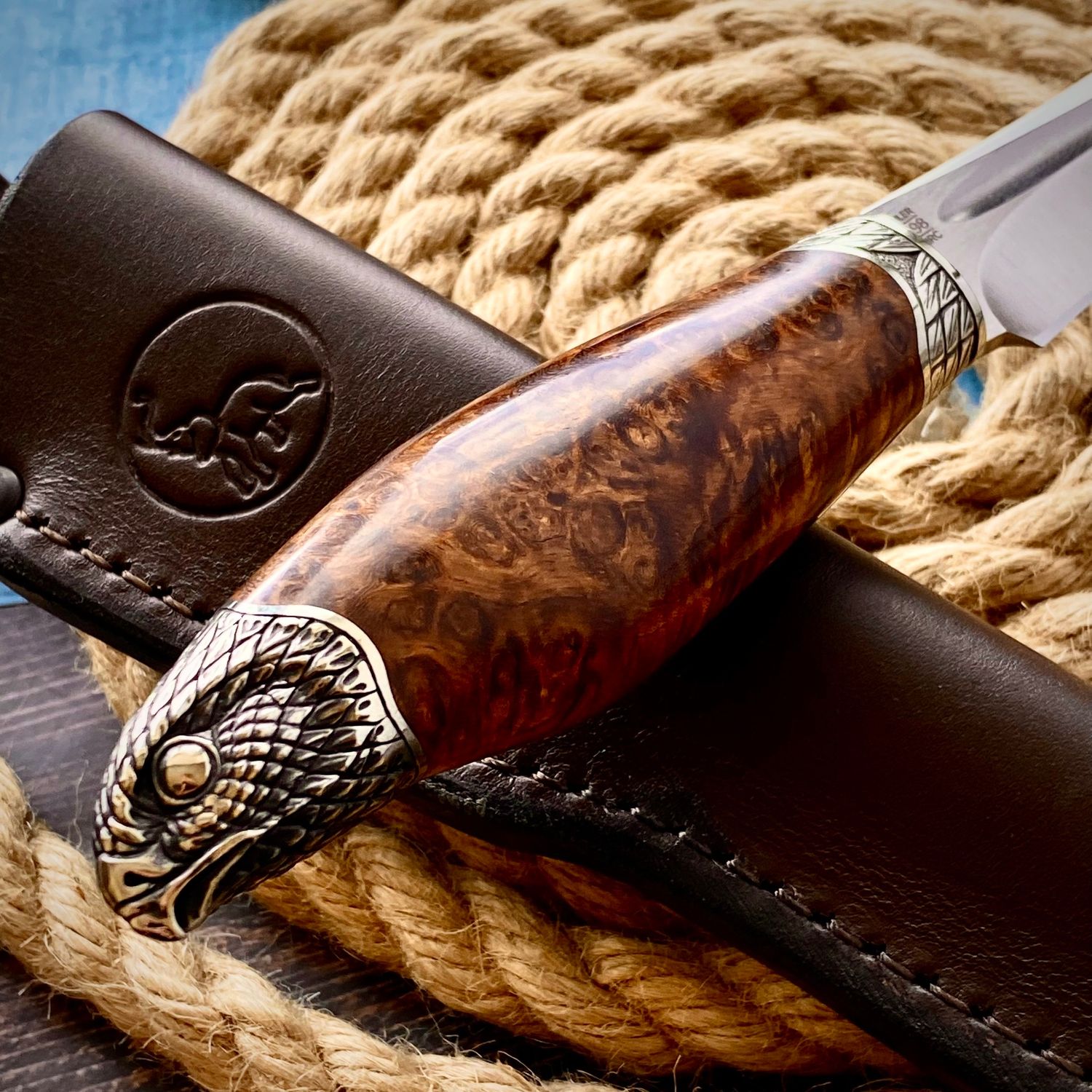
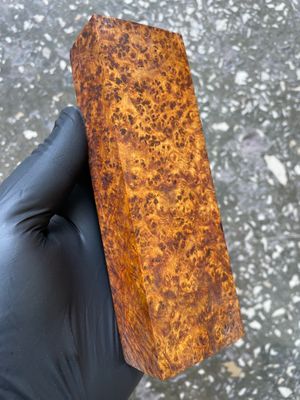
Amboyna burl is one of the most distinctive and highly prized exotic woods used for knife handles. Known for its deep burl figure, clusters of small eyes, swirling grain and rich natural colors, high-grade Amboyna can turn a knife handle into one of the most visually striking parts of the finished knife.
The material can range from deep reddish brown to warm golden and honey tones, while some pieces combine dramatically contrasting colors within the same blank.
For knife makers, however, appearance is only part of the story.
When properly stabilized, Amboyna burl becomes denser and more dimensionally stable, with reduced sensitivity to moisture. Stabilization can also reinforce the complex burl structure and enhance the depth and contrast of its natural figure.
The result is a material that works equally well on a premium custom knife, a collector's piece, or a high-quality working and EDC knife.
What Is Amboyna Burl?
Amboyna is not technically a separate species of tree.
The name Amboyna burl refers to highly figured burl wood from trees of the Pterocarpus genus. It is most commonly associated with Narra (Pterocarpus indicus), a tropical hardwood native to Southeast Asia.
The name Amboyna is derived from Ambon Island in Indonesia, historically associated with the trade and export of this highly figured wood.
What makes Amboyna particularly valuable is not simply the species of tree, but the burl growth.
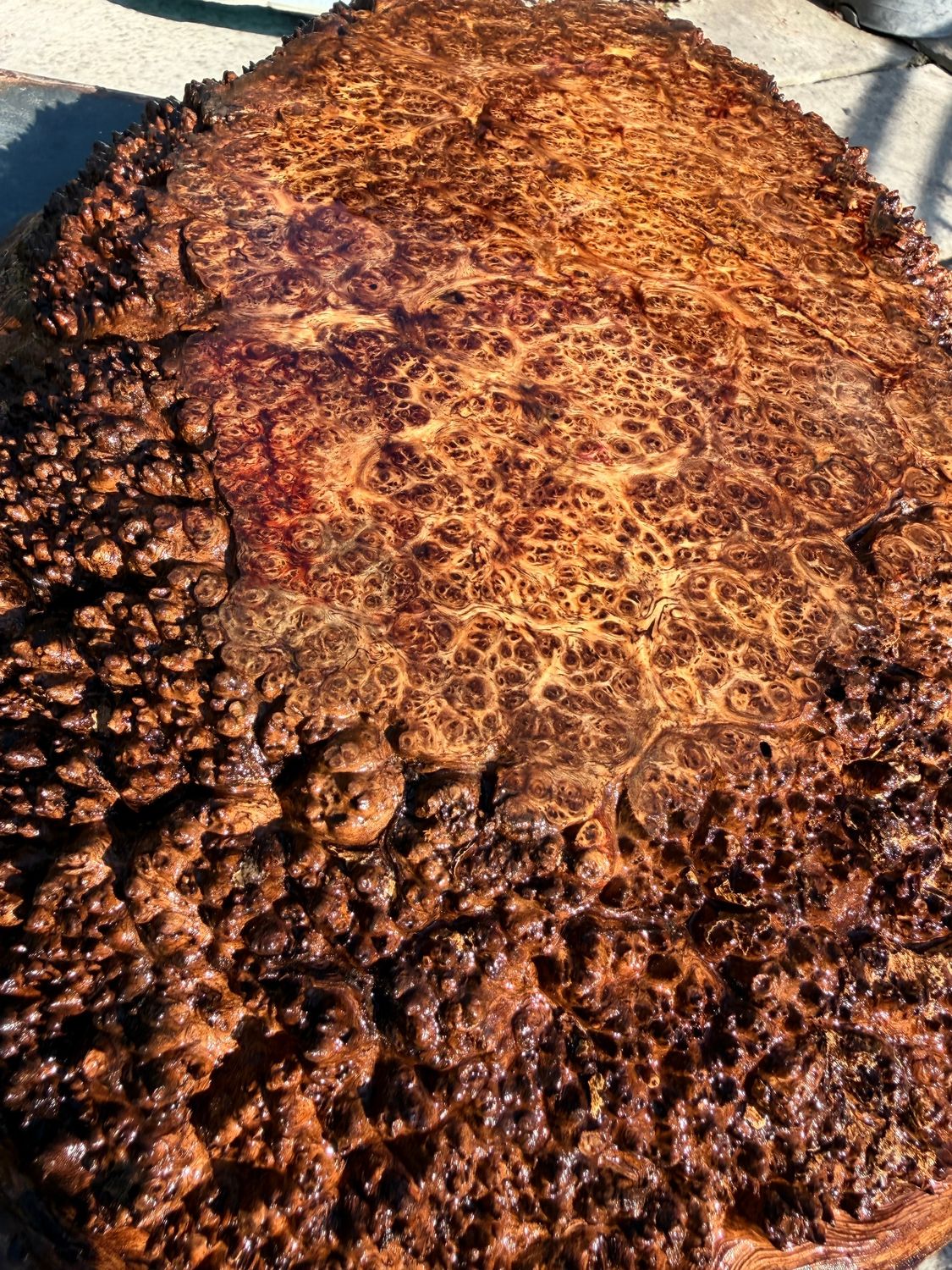
A burl develops with an extremely irregular grain structure. Instead of the relatively straight and predictable grain found in ordinary lumber, burl wood can contain clusters of small eyes, knots, curls and fibers growing in multiple directions.
Once cut and polished, this complex structure produces the deep three-dimensional figure for which Amboyna burl is famous.
Why Is Amboyna Burl So Highly Prized?
High-grade Amboyna is considered one of the most valuable burl woods.
Its appeal comes largely from the density and complexity of its figure. A premium piece may contain dozens of tightly packed burl eyes surrounded by swirling and interlocking grain.
No two sections of a burl are exactly alike.
Even consecutive cuts from the same piece can reveal noticeably different patterns. One section may contain tight clusters of small eyes, while another may show larger swirls or dramatic changes in grain direction.
This makes Amboyna particularly attractive for custom knife making.
A knife maker isn't simply selecting a species of wood — they are selecting an individual piece with its own pattern and character.
Red Amboyna Burl
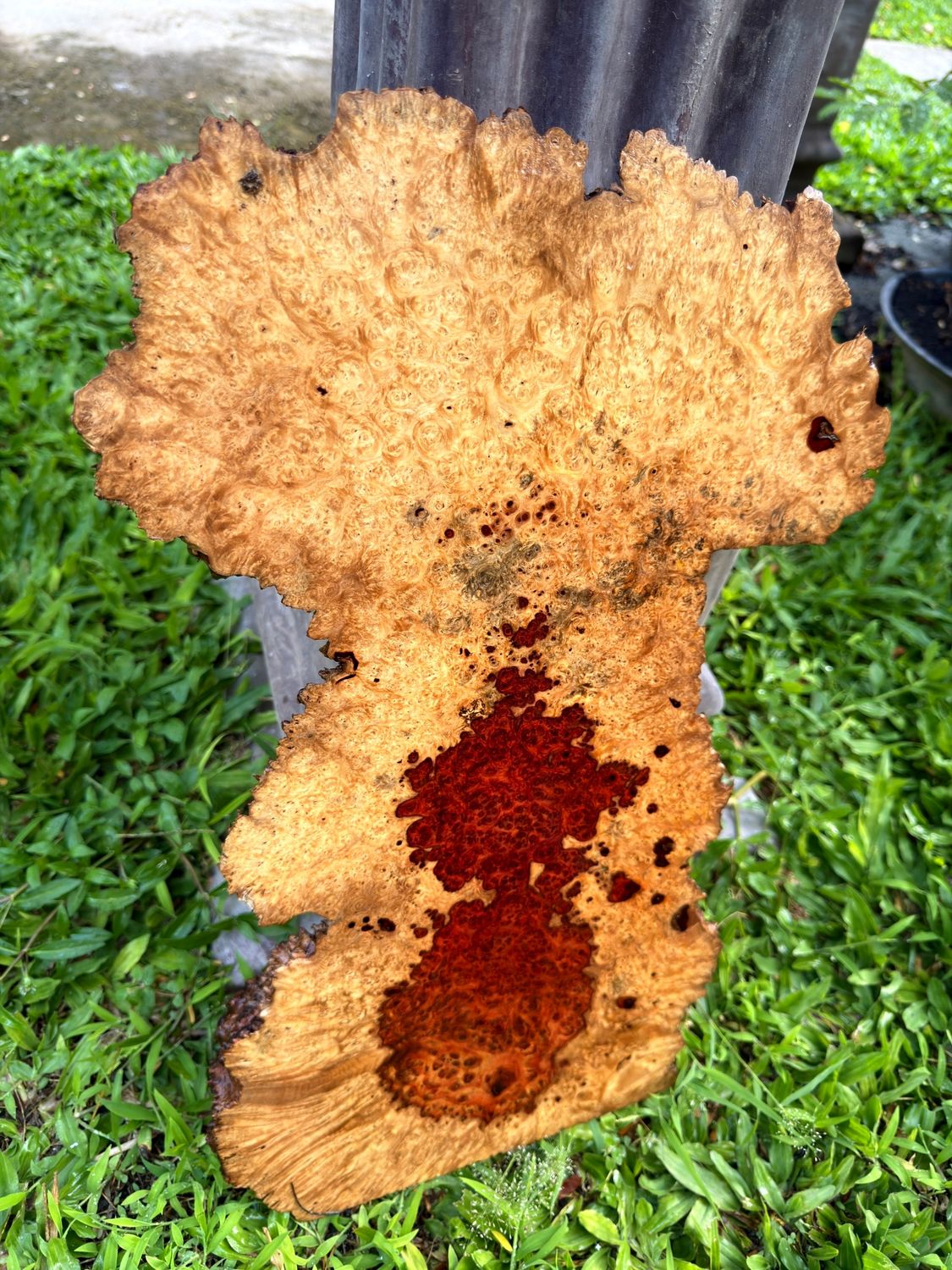
Red Amboyna is probably the most recognizable form of the material.
Its natural colors can range from orange-red and warm reddish brown to much darker red-brown tones.
Combined with dense burl eyes and darker grain lines, these colors can create an exceptionally rich appearance after sanding and polishing.
Red Amboyna is particularly well suited to custom and premium knives where the handle material is intended to become an important part of the overall design.
The warm colors also pair naturally with brass, bronze and darker handle components.
Golden Amboyna Burl
Golden Amboyna represents the lighter side of the natural Amboyna color spectrum.
Typical pieces may display:
• golden brown;
• honey;
• yellow-brown;
• light orange;
• warm amber tones.
A dense burl pattern can make Golden Amboyna every bit as visually interesting as darker Red Amboyna.
The lighter background often creates excellent contrast with darker eyes and grain lines, making the structure of the burl particularly easy to see.
For knife makers who prefer natural warm colors without artificial dye, Golden Amboyna can be an excellent option.
Two-Tone Amboyna Burl
Some of the most visually dramatic Amboyna blanks contain two distinctly different natural colors.
This often occurs where darker heartwood meets lighter sapwood.
A single knife scale or block may therefore transition from deep reddish brown into golden yellow, cream or lighter honey-colored wood.
For a knife maker, this natural boundary can become part of the handle design.
Instead of trying to hide the color transition, the scales can be positioned so that the contrast follows the shape of the handle.
This makes Two-Tone Amboyna particularly interesting for one-of-a-kind custom knives.
The Deep Burl Figure
Color is only one reason Amboyna is valued.
The defining feature of high-quality Amboyna burl is its figure.
Depending on the individual piece, the wood can display:
• tightly packed burl eyes;
• swirling grain;
• small knot clusters;
• curly figure;
• irregular grain direction;
• strong light-to-dark contrast;
• natural color transitions.
After fine sanding and polishing, the figure can develop considerable visual depth.
Different sections appear lighter or darker as the viewing angle changes, giving the handle an almost three-dimensional appearance.
This combination of natural color and deep figure is one of the reasons Amboyna has long been used not only for knife handles, but also for fine furniture, veneer, turned objects, musical instruments and other specialty woodworking applications.
Natural Voids and Cavities in Amboyna Burl
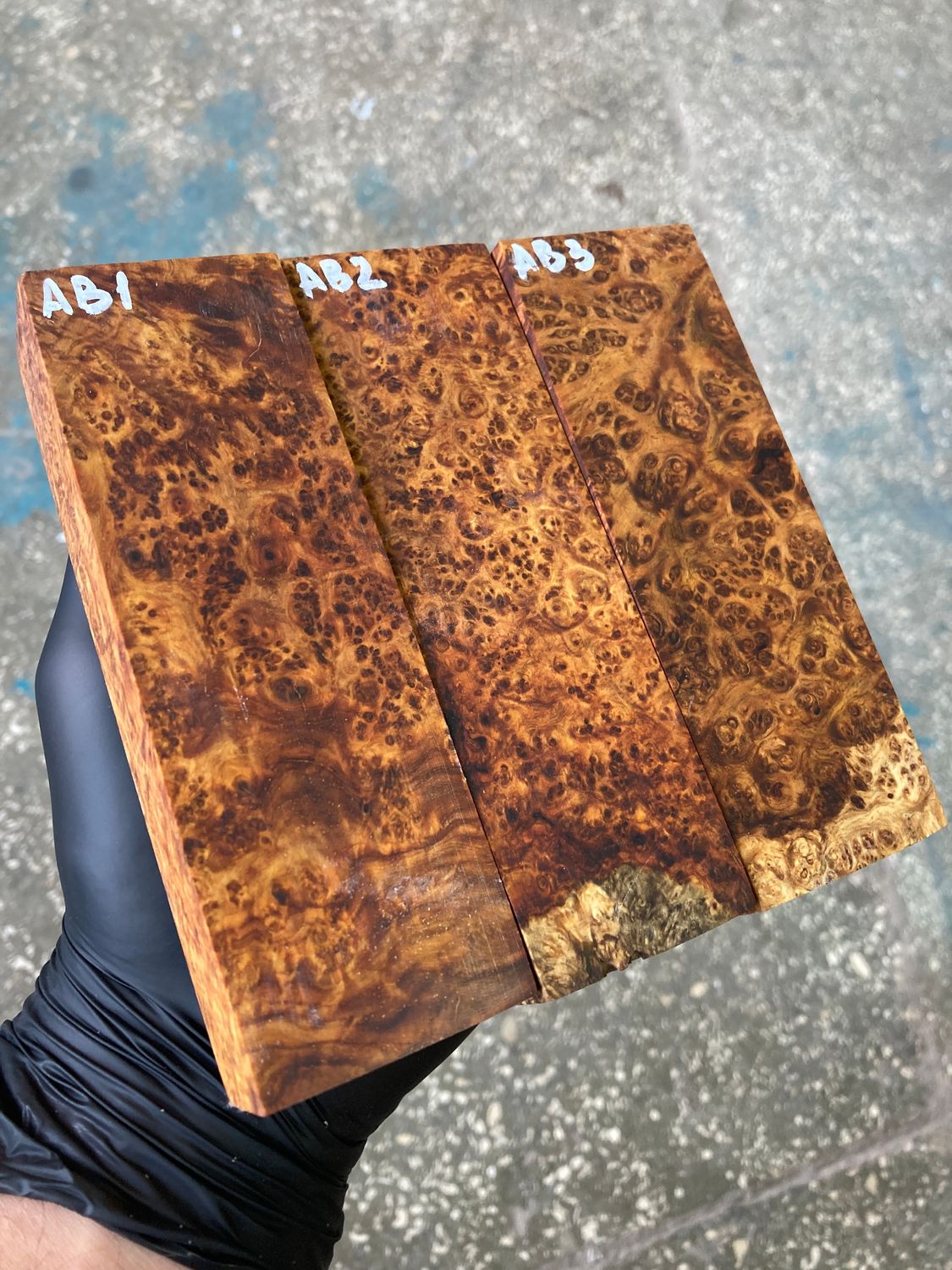
The same complex structure responsible for Amboyna's appearance can also produce natural imperfections.
Burl wood may contain:
• small cavities;
• micro-cracks;
• inclusions;
• differences in density;
• open burl eyes;
• internal voids revealed during cutting.
Some of these features may not become visible until a block is cut or the scales are shaped.
These are natural characteristics of burl wood rather than necessarily manufacturing defects.
For knife makers, this is important to understand when working with any highly figured natural burl.
Stabilization helps reinforce the wood and may fill accessible pores and small cavities with resin, but it does not turn natural burl into a completely homogeneous synthetic material.
Larger voids can remain after stabilization and may need to be filled with CA glue or epoxy during handle construction.
What Does Stabilization Do to Amboyna Burl?
Wood stabilization is considerably different from simply applying a surface finish.
Properly dried wood is impregnated with a low-viscosity stabilizing resin under vacuum. The resin penetrates accessible porous areas of the wood and is subsequently heat cured.
Once polymerized, the resin becomes part of the internal structure of the material.
This is particularly useful for complex burl woods.
Increased Density
Stabilization increases the density of porous areas of the wood.
The resulting blank generally feels more solid and uniform than the untreated material, particularly where the original burl contained softer or more porous areas.
More Stable Burl Structure
The irregular grain that makes burl attractive can also make untreated material less predictable during machining.
Stabilizing resin helps reinforce accessible areas within this complex structure, producing a more consistent material for knife handle construction.
Reduced Moisture Movement
Natural wood absorbs and releases moisture as environmental conditions change.
Stabilization significantly reduces this response.
This is particularly useful for knife handles, which may encounter changing humidity, temperature and regular handling.
Improved Dimensional Stability
Reduced moisture movement means the material is less likely to noticeably swell, shrink or change shape as environmental conditions change.
Dimensional stability is one of the major practical reasons knife makers choose stabilized wood for handle construction.
Reinforcement of Small Pores and Cavities
Amboyna burl naturally contains pores, eyes and occasional small cavities.
Stabilizing resin can penetrate many accessible areas and reinforce the surrounding wood.
However, stabilization should not be confused with casting. Larger cavities may remain and can be filled separately with CA glue or epoxy if necessary during construction.
Enhanced Color and Figure
One of the most noticeable visual effects of stabilization is the increased depth of the natural figure.
Rich reddish-brown areas can appear deeper, golden areas become warmer, and contrast between individual burl eyes and surrounding grain becomes more pronounced.
With transparent stabilizing resin, this effect can be achieved while retaining the natural color of the wood.
Natural Color vs. Dyed Amboyna Burl
Amboyna already has an unusually rich natural color palette.
Red, reddish brown, orange, golden, honey, yellow and cream tones can all occur naturally within the wood.
For this reason, Amboyna does not necessarily need to be artificially colored to create a striking knife handle.
Clear stabilization preserves the natural colors while increasing the visual depth of the grain.
This is particularly attractive in Red, Golden and Two-Tone Amboyna, where natural coloration is an important part of the material's character.
Amboyna Burl for Premium Custom Knives
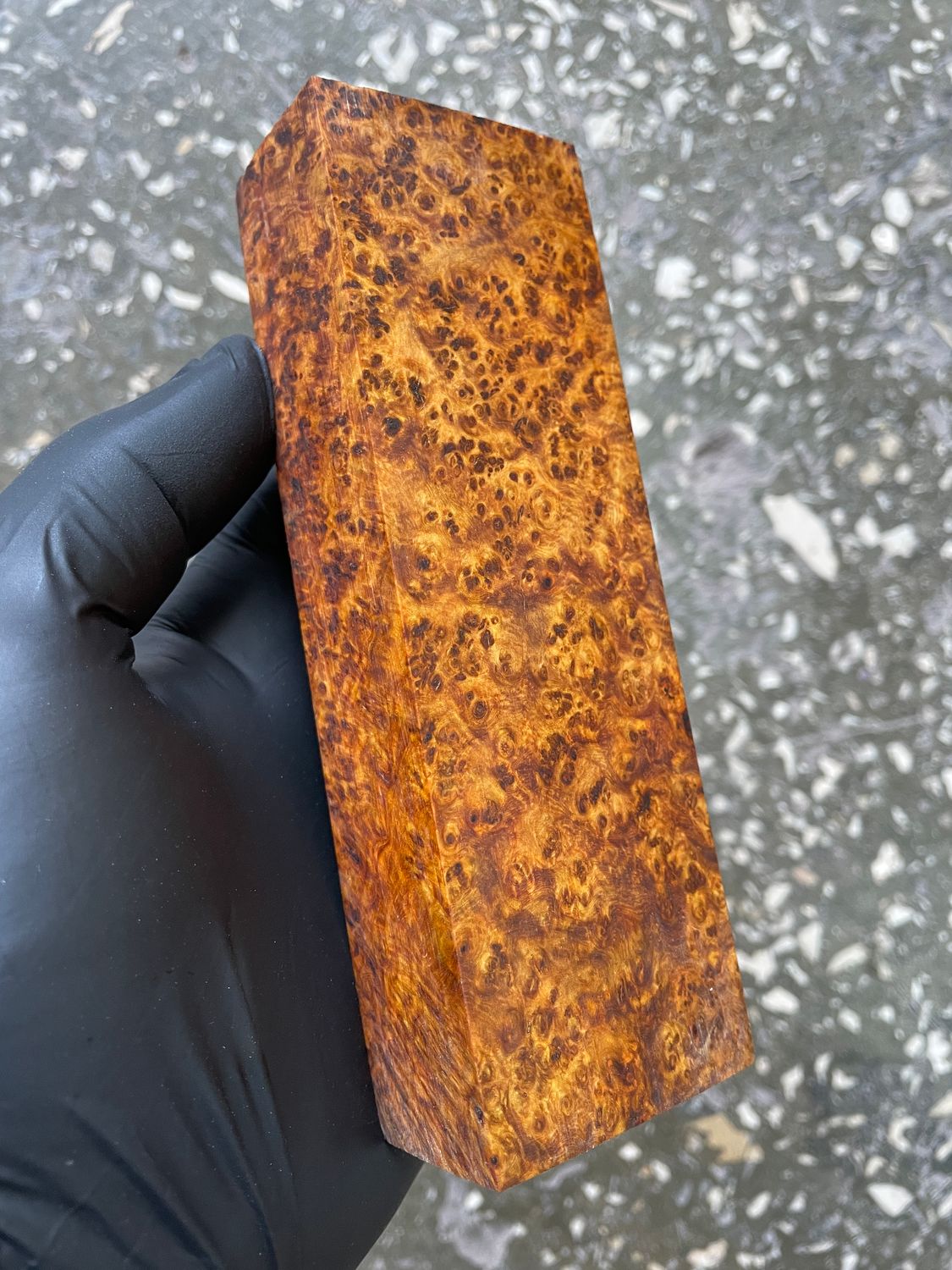
Amboyna has a long-standing reputation as a premium decorative wood.
That makes it a natural choice for custom knives where material selection is an important part of the finished design.
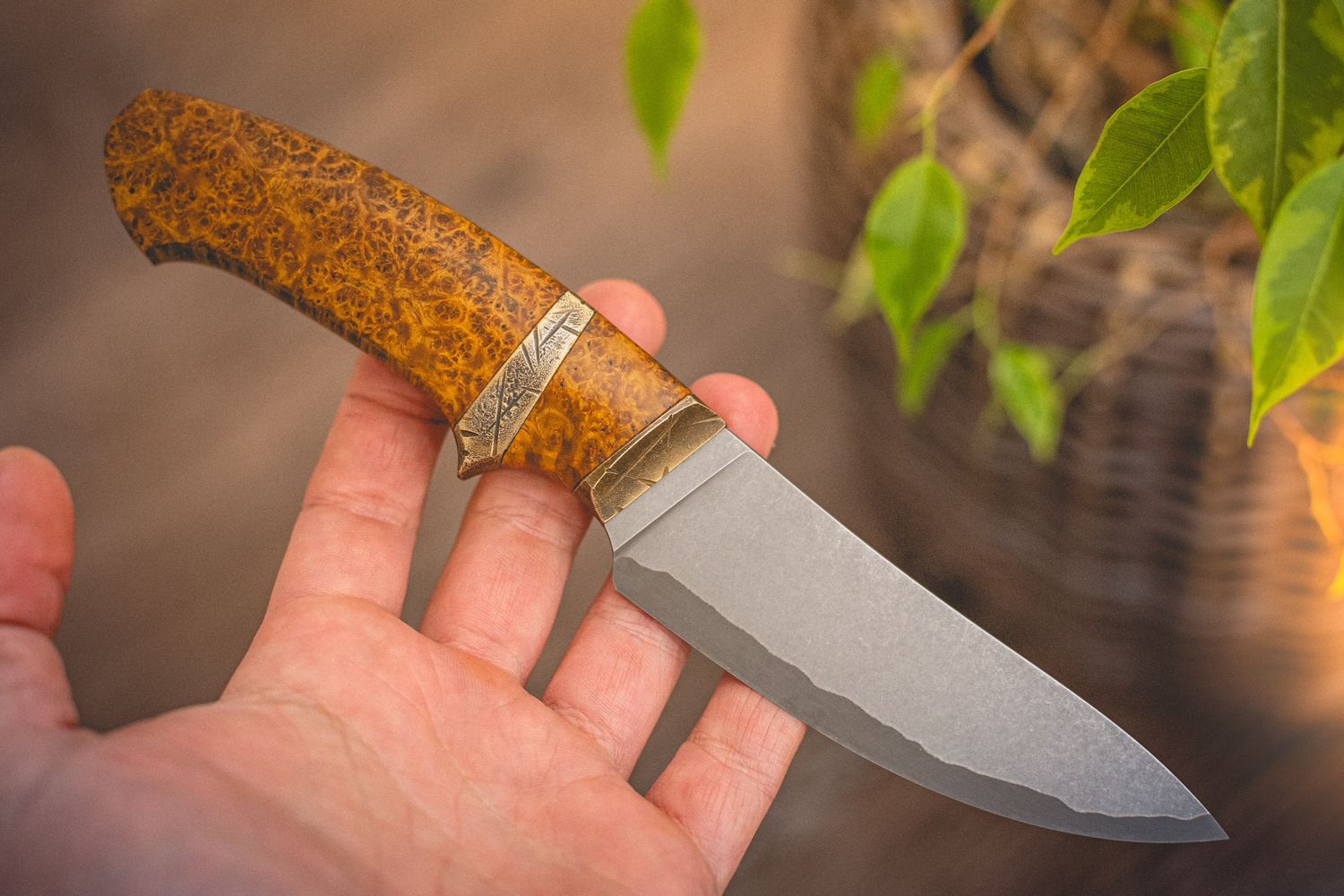
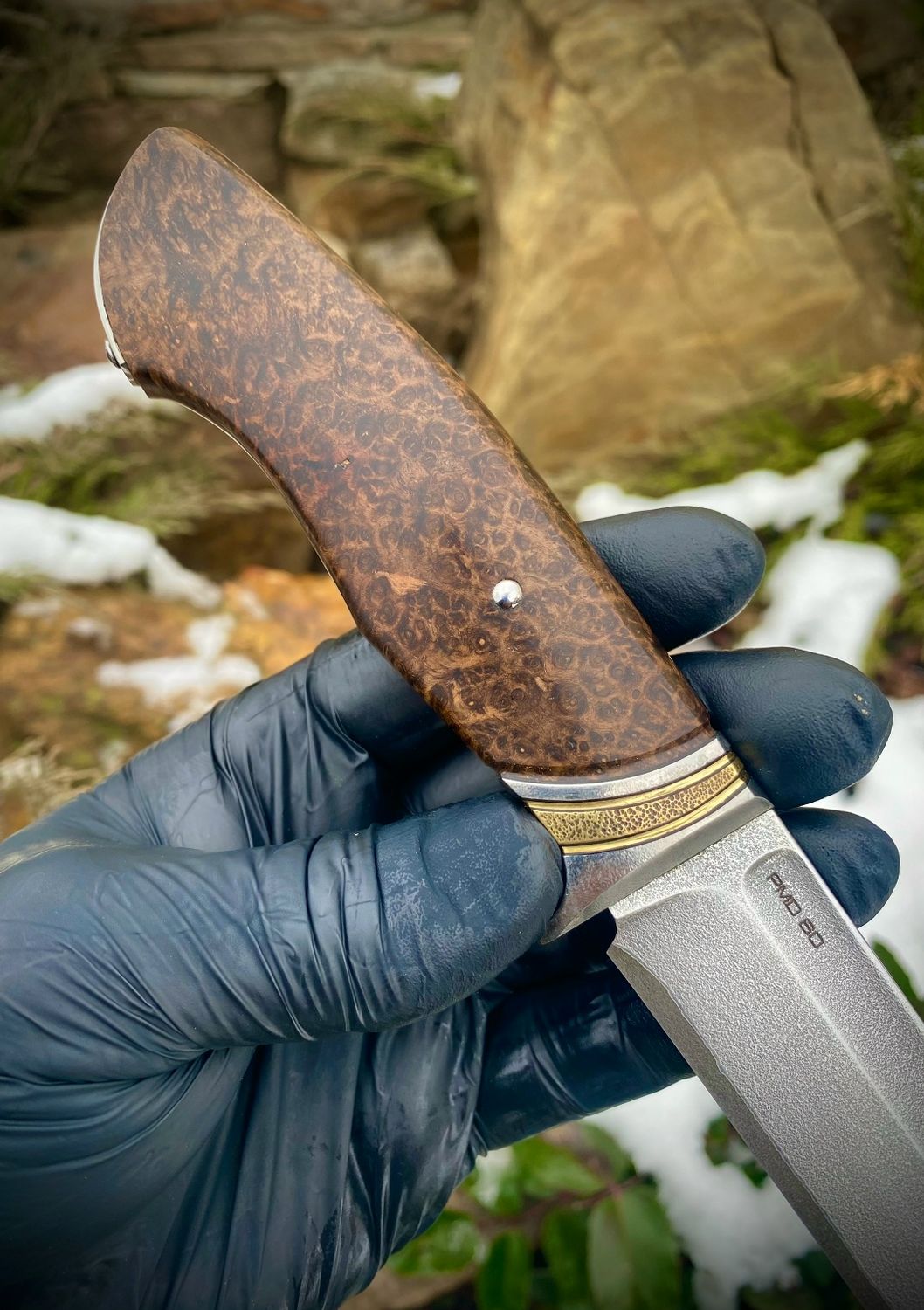
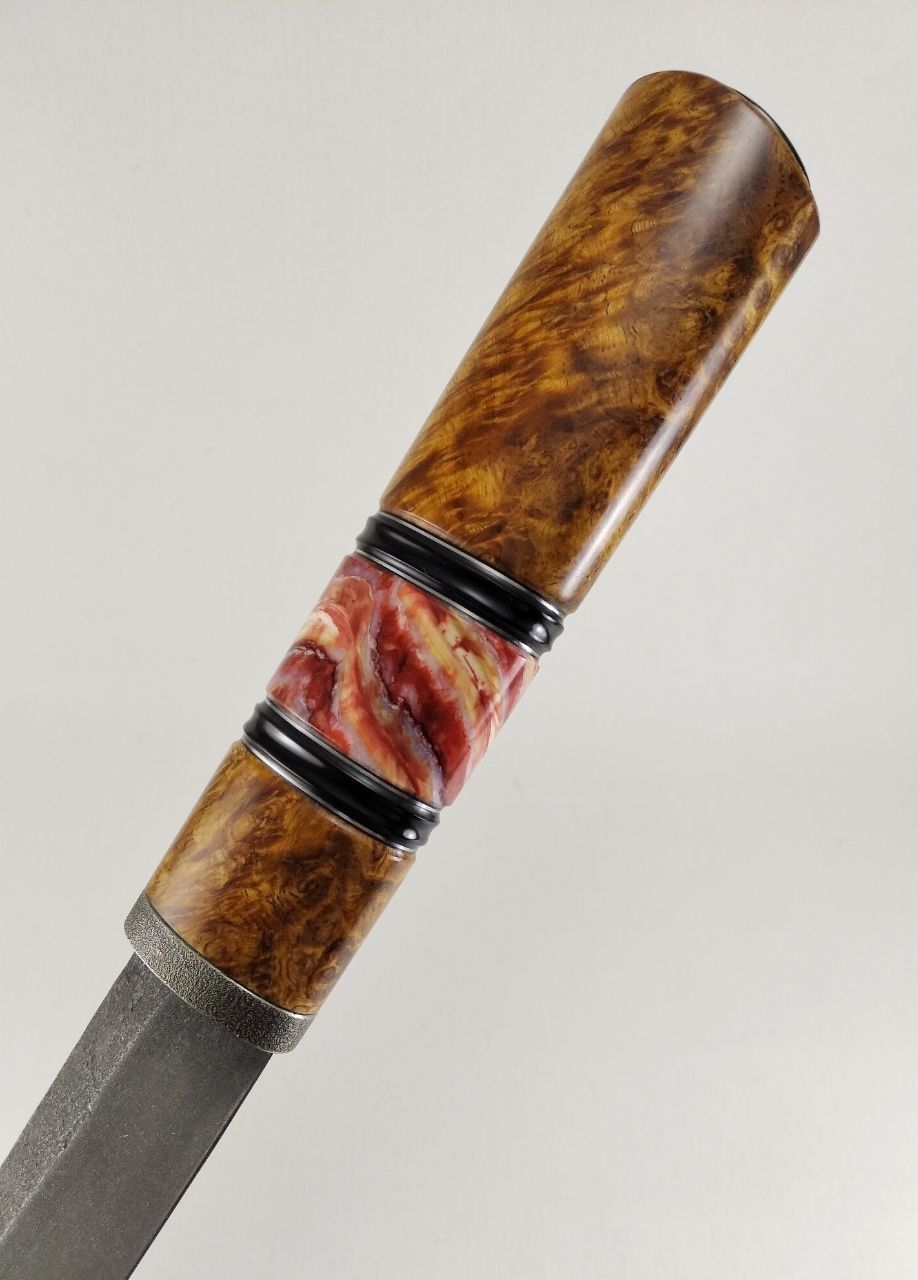
A highly figured pair of Amboyna scales can work especially well for:
• custom fixed blades;
• hunting knives;
• collector knives;
• premium kitchen knives;
• folding knives;
• EDC knives;
• presentation knives;
• handles combining wood with metal, spacers or other natural materials.
The complex natural pattern creates visual interest without requiring an artificial texture or printed design.
Every handle is naturally different.
Is Amboyna Burl Only for Display or Collector Knives?
No.
Although high-grade Amboyna is frequently associated with premium and collector knives, stabilized Amboyna can also be used for functional working knives.
Stabilization makes the wood denser and reduces its response to moisture, making it much more practical for regular handle use than appearance alone might suggest.
This gives knife makers an interesting combination:
a handle material that can look appropriate on a high-end custom knife while remaining suitable for a knife intended to be carried and used.
As with any natural wood handle, reasonable care is still recommended.
Working With Stabilized Amboyna Burl
Stabilized Amboyna can be shaped, sanded and polished using normal knife-making techniques.
However, the irregular grain direction of burl remains even after stabilization.
Controlled material removal is therefore preferable to overly aggressive grinding, particularly around edges or areas with complex figure.
Progressive sanding gradually reveals the depth of the burl pattern.
A carefully finished surface can produce excellent visual depth and a smooth, polished appearance.
Knife makers should also use appropriate dust extraction and respiratory protection when machining stabilized wood, since the process produces both wood and cured resin dust.
Why Choose Stabilized Amboyna Burl for a Knife Handle?
Few natural woods combine color, figure and individuality quite like Amboyna burl.
High-quality pieces offer:
• naturally rich colors;
• extremely dense burl figure;
• one-of-a-kind grain patterns;
• excellent visual depth after finishing;
• increased density after stabilization;
• reduced sensitivity to moisture;
• improved dimensional stability;
• suitability for both premium and practical knife projects.
Red Amboyna provides the classic rich reddish-brown appearance.
Golden Amboyna offers warmer and lighter natural colors.
Two-Tone Amboyna combines contrasting sections within a single piece, allowing the natural transition itself to become part of the knife design.
And because every burl develops differently, no two finished handles are exactly alike.
Stabilized Amboyna Burl Knife Scales & Blocks at FossilUSA
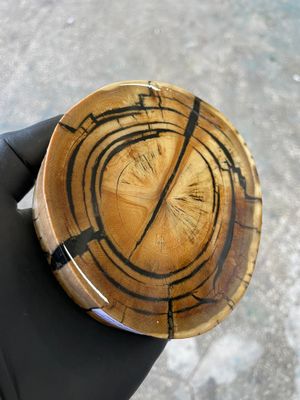
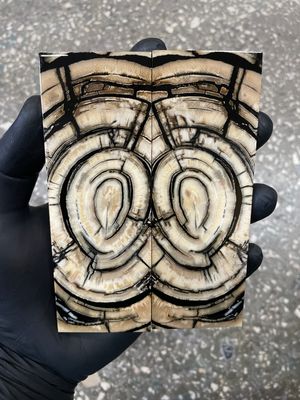
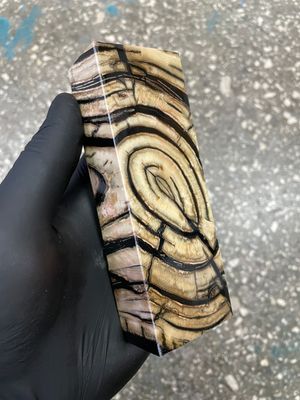
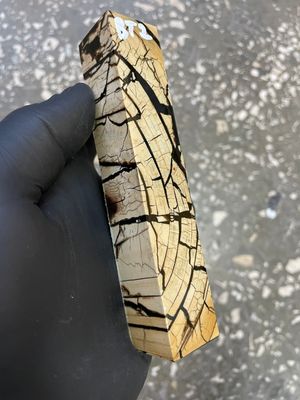
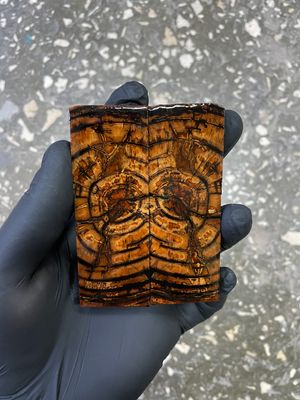
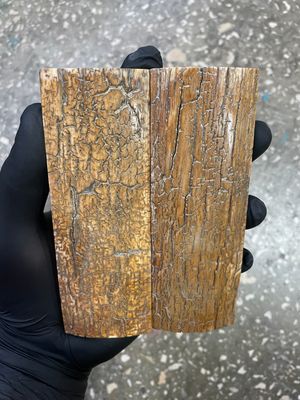
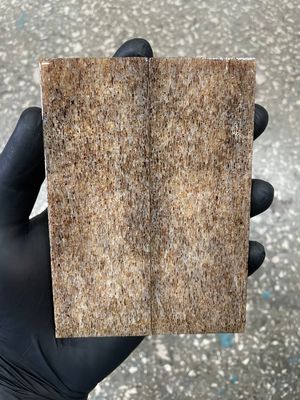
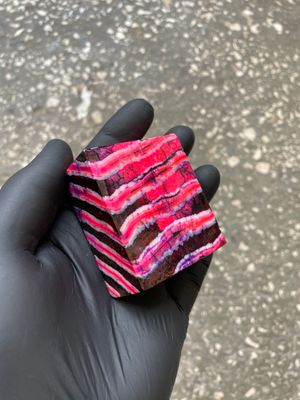
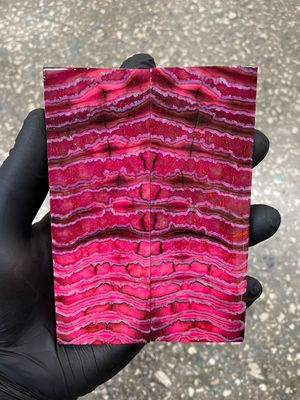
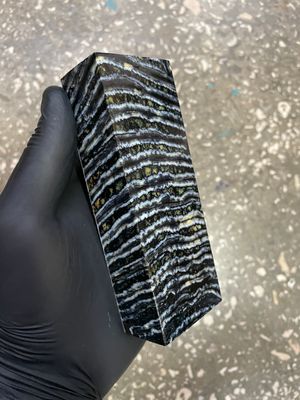
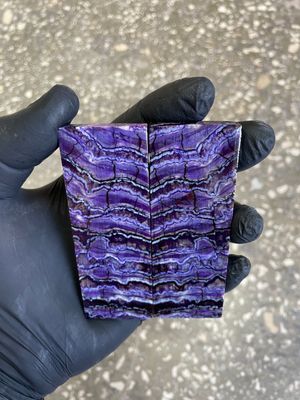
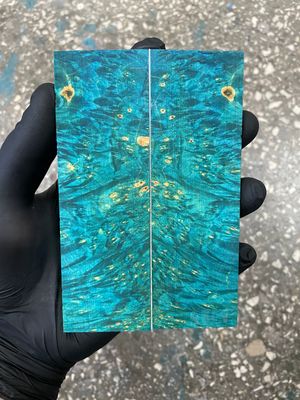
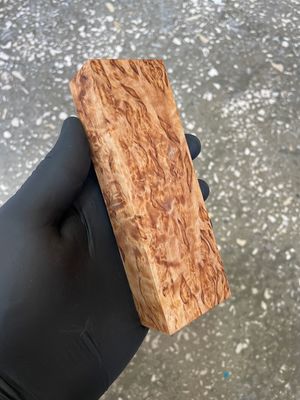
FossilUSA offers individually photographed stabilized Amboyna burl knife scales and blocks selected for knife handle projects.
Our Amboyna inventory may include Red Amboyna, Golden Amboyna and naturally contrasting Two-Tone pieces with different burl structures and color patterns.
Because Amboyna is a natural burl material, every set is unique.
The piece shown in the product photographs is the actual piece you receive.
This allows knife makers to choose the exact grain pattern, burl figure and natural color combination that best fits their project.
Frequently Asked Questions About Amboyna Burl
What is Amboyna burl?
Amboyna burl is highly figured burl wood from trees of the Pterocarpus genus, most commonly associated with Narra (Pterocarpus indicus). It is known for dense clusters of burl eyes, swirling grain and rich natural colors.
Where does Amboyna burl come from?
Amboyna is associated with Southeast Asia. Its name comes from Ambon Island in Indonesia, historically associated with the trade of this figured wood. Narra (Pterocarpus indicus), the species most commonly associated with Amboyna burl, is native to Southeast Asia.
Is Amboyna a separate species of wood?
No. Amboyna is a trade name used for highly figured burl wood from Pterocarpus species rather than a separate botanical species.
What is the difference between Red Amboyna and Golden Amboyna?
The main difference is natural coloration. Red Amboyna typically has rich reddish-brown to orange-red heartwood, while Golden Amboyna has lighter golden, honey, yellow-brown or amber tones. Both can display the characteristic dense burl figure.
What is Two-Tone Amboyna?
Two-Tone Amboyna contains two naturally contrasting color areas, often where darker heartwood meets lighter sapwood. The transition can range from reddish brown to golden yellow or cream and can be incorporated into the design of a knife handle.
Is Amboyna burl good for knife handles?
Yes. Amboyna burl is widely used for knife handles because of its distinctive figure and natural color. Stabilized Amboyna is particularly useful because stabilization increases density and reduces the wood's response to changes in moisture.
Why is Amboyna burl stabilized?
Stabilization helps increase density, reinforce porous areas and reduce dimensional movement caused by moisture changes. It also enhances the depth and contrast of the natural burl figure.
Does stabilization make Amboyna waterproof?
No. Stabilization significantly reduces moisture absorption and movement, but stabilized wood should not be treated as completely waterproof. It remains a natural wood/resin composite and should receive reasonable care.
Does stabilization fill every void in Amboyna burl?
No. Stabilizing resin can penetrate accessible pores and small cavities, but larger natural voids can remain. Knife makers may fill these areas with CA glue or epoxy during handle construction if necessary.
Are small holes or cavities in Amboyna burl defects?
Not necessarily. Small voids, open eyes, inclusions and cavities are common natural characteristics of burl wood. The exact structure varies from piece to piece.
Can stabilized Amboyna be used for an everyday working knife?
Yes. Stabilized Amboyna is not limited to display or collector knives. Its improved dimensional stability and reduced moisture sensitivity make it suitable for EDC, hunting and other working knives when properly constructed and cared for.
Is the color of Amboyna burl natural?
Amboyna naturally occurs in a wide range of colors including reddish brown, red-orange, golden brown, honey, yellow and cream. If the wood is stabilized with clear resin and no dye is added, these colors remain natural.
Is every pair of Amboyna knife scales different?
Yes. Burl figure is naturally irregular, and even neighboring cuts from the same burl can display different eye patterns, grain directions and color transitions. This makes every set of Amboyna scales effectively unique.
Is Amboyna burl expensive?
High-grade Amboyna is considered one of the more valuable burl woods. Price depends heavily on figure density, color, size, quality and the individual piece. Highly figured material with dense eyes or unusual natural color contrast generally commands a premium.
How do you finish stabilized Amboyna knife scales?
Stabilized Amboyna can be shaped and progressively sanded using normal knife-making methods. Fine sanding and polishing help reveal the depth and contrast of the burl figure. Because the material contains both wood and cured stabilizing resin, appropriate respiratory protection and dust extraction should be used during machining.
Can I choose the exact Amboyna scales I will receive from FossilUSA?
Yes. FossilUSA sells unique knife handle materials as individually photographed pieces. The product photographs show the actual pair of scales or block being offered, so you can select the specific color and burl figure for your project.
Ready to buy stabilized amboyna burl or any materials? Welcome!
FossilUSA
Premium stabilized materials for knife making
Contact:
dimafan777@gmail.com



Secure Payments
PayPal · Visa · Mastercard