Mammoth Bark Ivory: What It Is, How It Gets Its Color, and Why It Is So Valuable for Custom Knives
09.03.2026
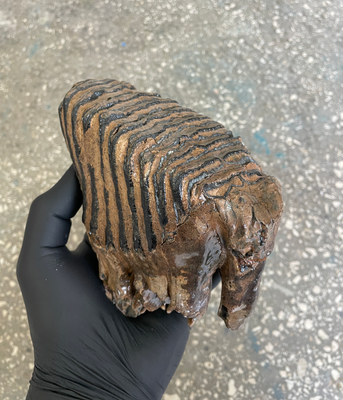
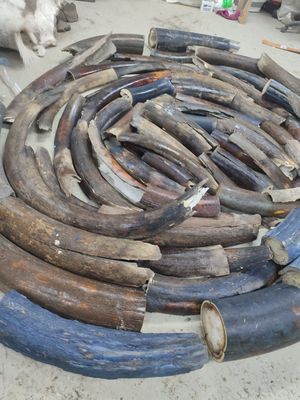
Mammoth bark ivory is one of the most unusual natural materials available to custom knifemakers and collectors. Unlike ordinary ivory, mammoth ivory has spent thousands of years buried in the ground, where minerals, groundwater, temperature, oxygen levels, and the surrounding geological environment gradually transformed its surface.
The result can be spectacular.
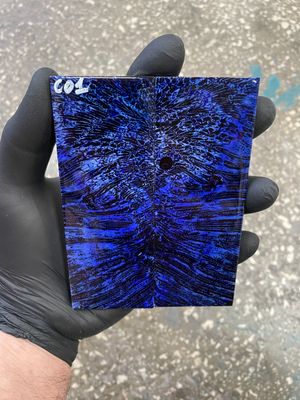
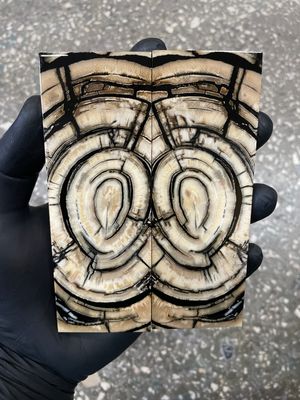
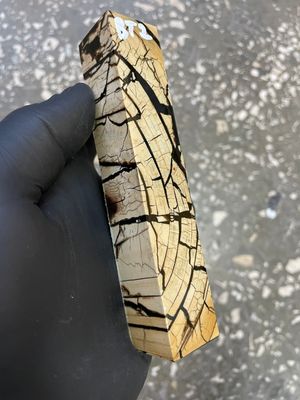
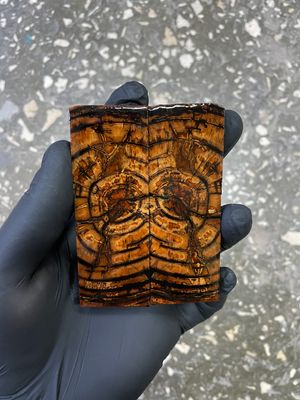
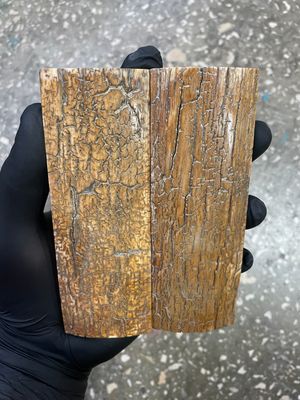
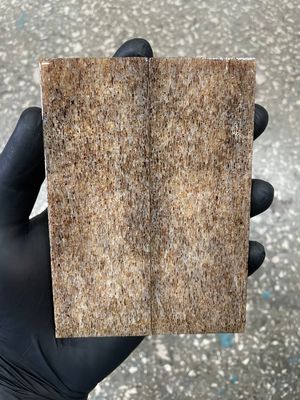
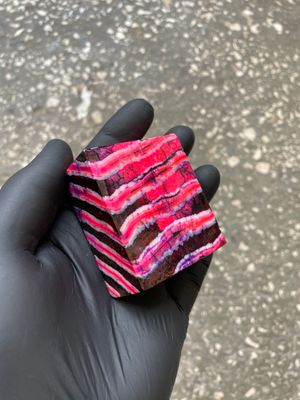
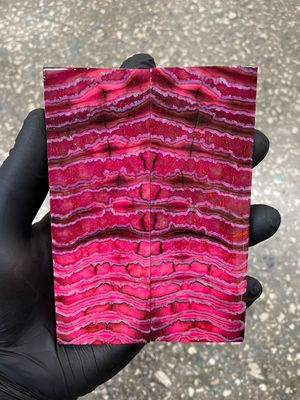
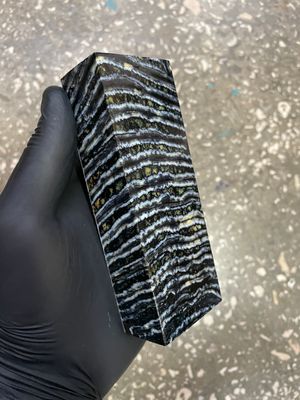
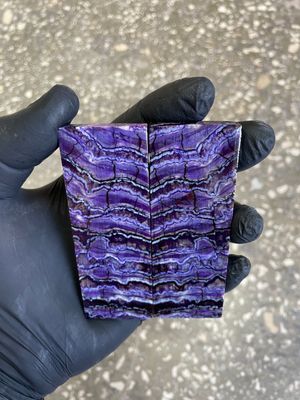
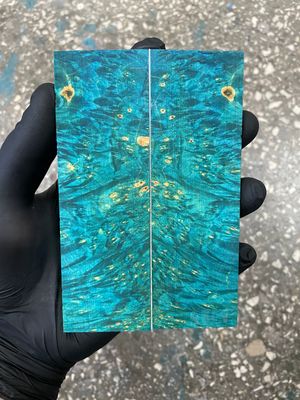
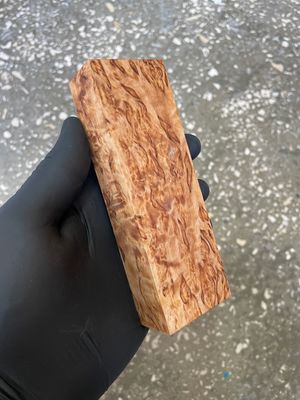
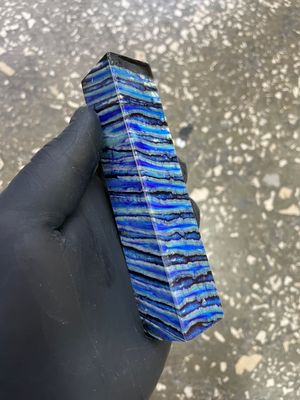
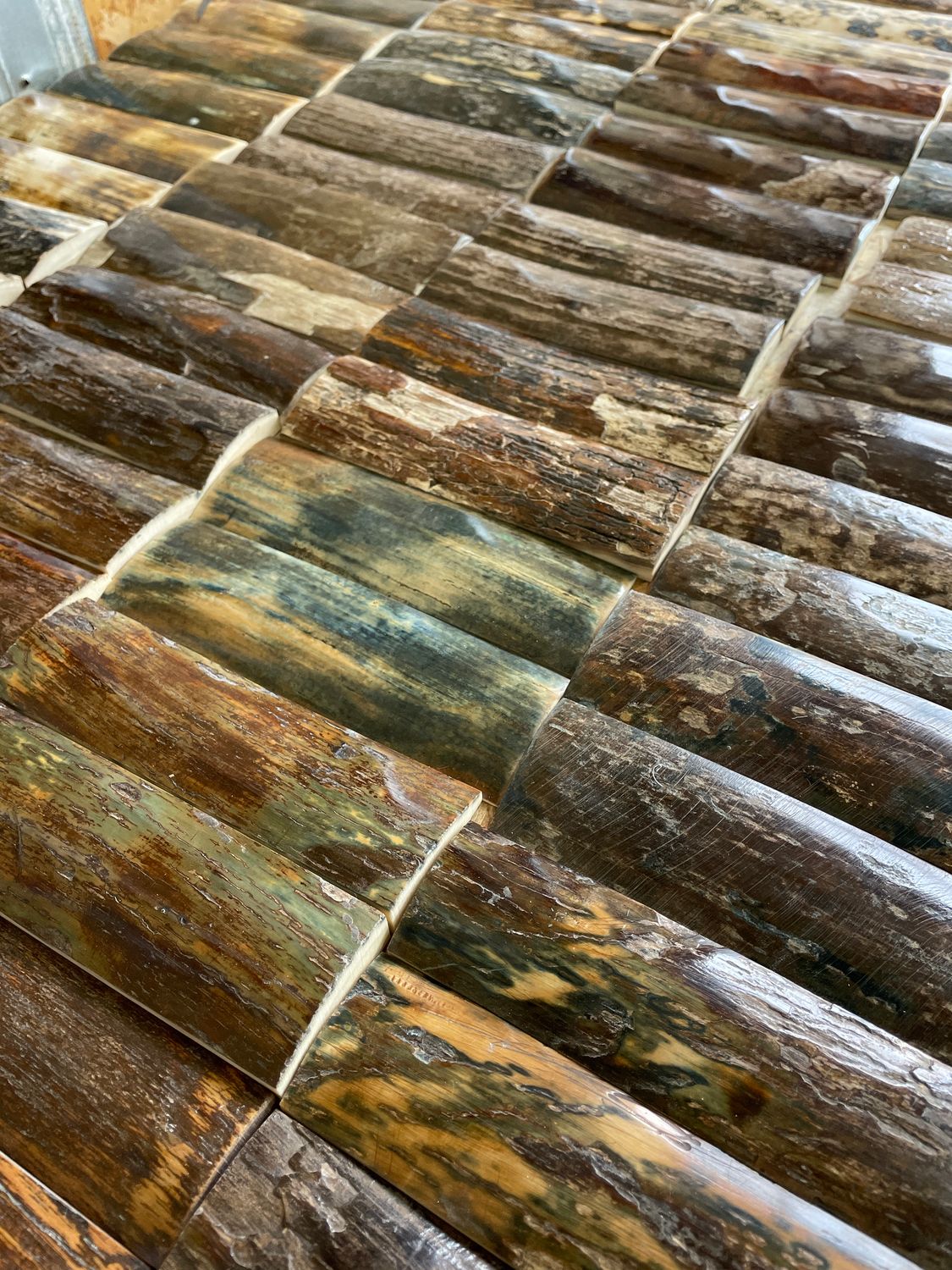
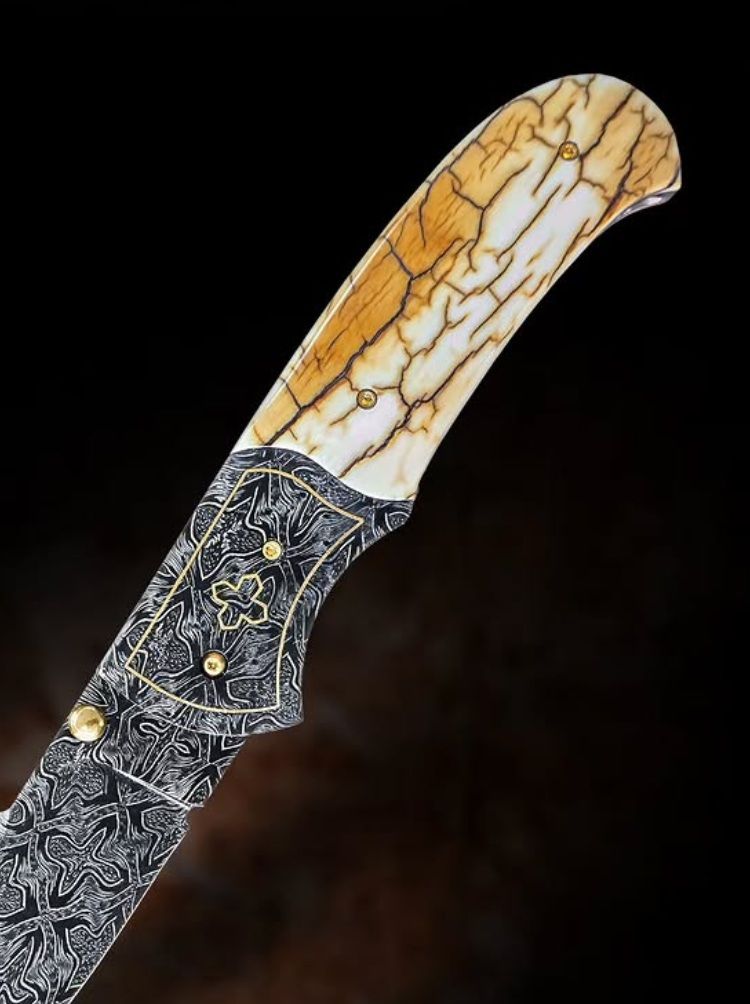
Mammoth bark can display natural shades of cream, tan, brown, black, blue, blue-green, and green, sometimes with several colors appearing in a single piece. Some pieces develop intricate crack-like patterns that look remarkably similar to wood grain, stone, or ancient weathered bark.
For custom knife makers, this makes mammoth bark much more than an exotic handle material. Every piece is unique, and its color and pattern are essentially a record of the environment in which the tusk spent thousands of years.
What Is Mammoth Bark Ivory?
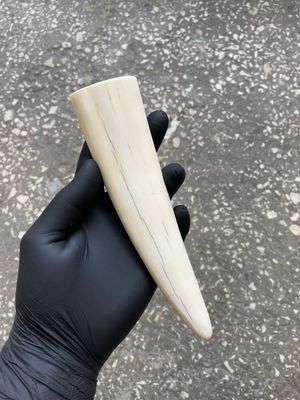
The term mammoth bark is commonly used by collectors, carvers, jewelers, and custom knifemakers to describe the naturally weathered and mineralized outer portion of a fossil mammoth tusk.
A mammoth tusk is primarily made of dentin, with an outer cementum layer. The cementum is the tissue that covers the exterior of the tusk, and it is this naturally weathered outer material that is commonly referred to as "bark" in the fossil ivory trade.
Unlike the relatively uniform creamy-white dentin found deeper inside a well-preserved tusk, mammoth bark can be strongly colored and highly patterned.
That difference exists because the outer portion of the tusk spent thousands of years exposed to the chemical environment surrounding the buried animal.
Minerals and mineral-bearing groundwater could enter cracks and porous areas of the tusk. Over geological time, these minerals became incorporated into the outer layers and produced the remarkable colors seen in mammoth bark today.
Scientific studies have identified minerals and mineral phases including hematite, pyrite, pyrolusite, manganite, vivianite, metavivianite, santabarbaraite, quartz, and hydroxyapatite in mammoth ivory.
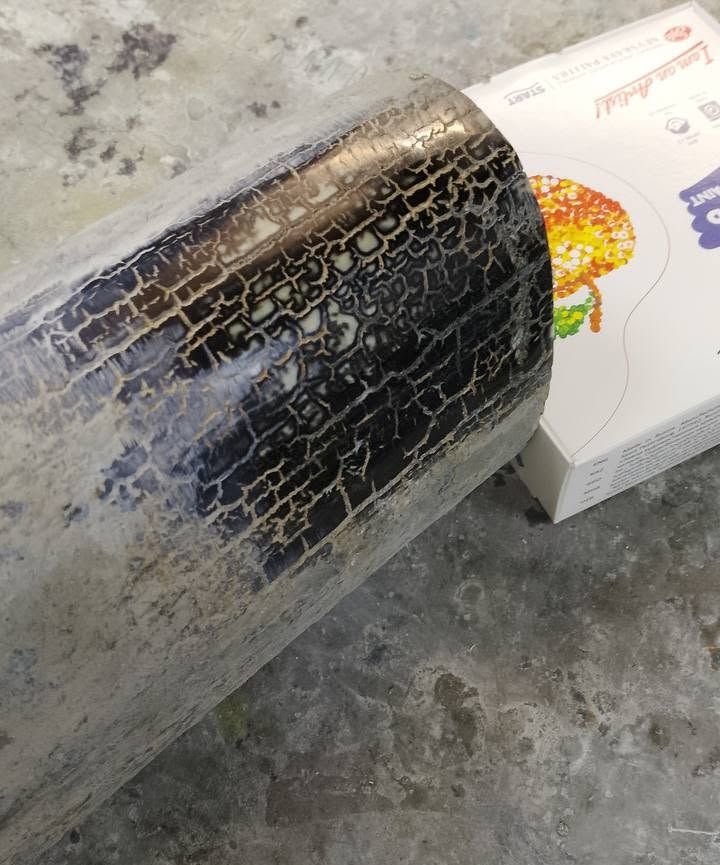
Why Does Mammoth Bark Have So Many Different Colors?
The color of mammoth bark is largely a story of mineralization and burial environment.
A tusk could remain underground for thousands or tens of thousands of years. During that time, its surface was exposed to a particular combination of:
• groundwater;
• soil chemistry;
• iron-bearing minerals;
• manganese compounds;
• phosphates;
• oxygen availability;
• moisture;
• temperature;
• surrounding sediment.
The exact combination varies from location to location.
That is why two mammoth tusks can have completely different appearances even though they came from animals of the same species and lived during the same Ice Age.
Research on mammoth ivory from Yakutia, for example, found distinct zones ranging from yellowish-white dentin through blue and bluish-green areas to yellowish-brown outer layers. The researchers linked these differences to vivianite and its oxidation products formed during burial.
In other words, mammoth bark is naturally colored by its geological history.
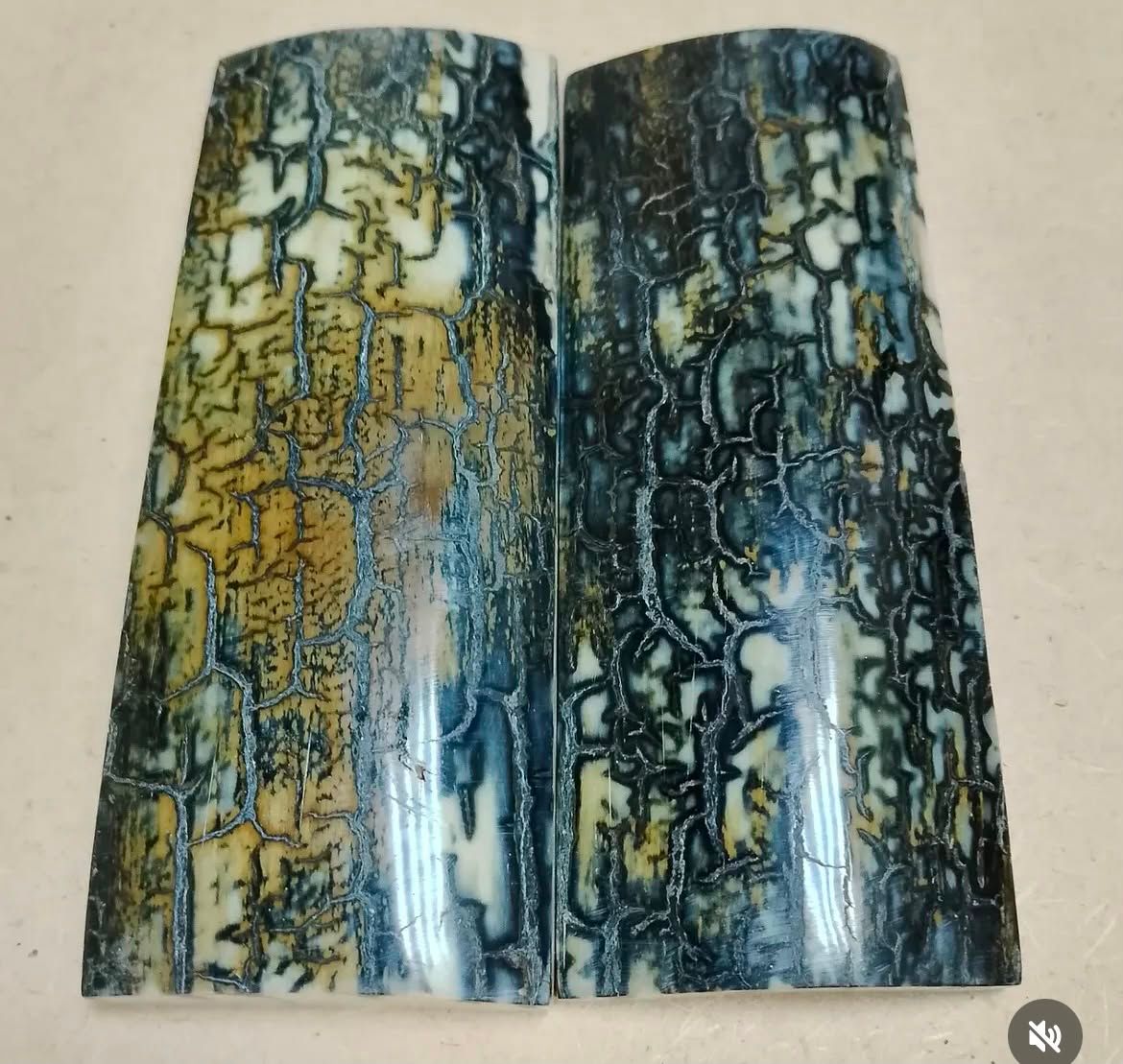
Mammoth Bark Color Guide
There is no universal rule that says a particular color always comes from a particular type of deposit. Geological environments are complex, and several minerals can contribute to the final appearance.
Nevertheless, some patterns are well documented.
Cream and White Mammoth Ivory
The deeper dentin of a well-preserved mammoth tusk is commonly cream, ivory, or yellowish-white.
This is the relatively unmineralized-looking interior that many people associate with traditional ivory.
Brown and Golden-Brown Mammoth Bark
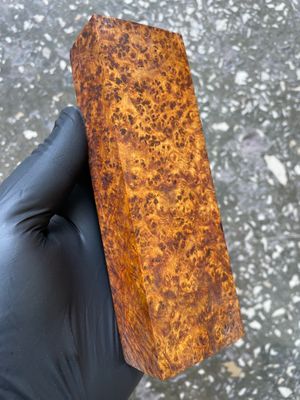
Brown is one of the most common colors found on mammoth ivory.
Scientific analysis has identified iron- and manganese-bearing minerals in brown mammoth ivory, including hematite, pyrite, pyrolusite, and manganite. These minerals can crystallize on the surface and become concentrated inside cracks in the cementum layer.
The result can range from:
• light tan;
• honey brown;
• golden brown;
• reddish brown;
• chocolate brown;
• very dark brown.
This is one reason mammoth bark can resemble aged or exotic wood after polishing.
Black Mammoth Bark
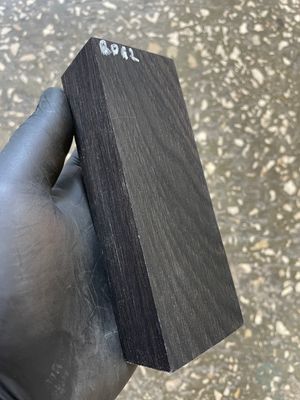
Very dark brown and nearly black mammoth bark can also occur.
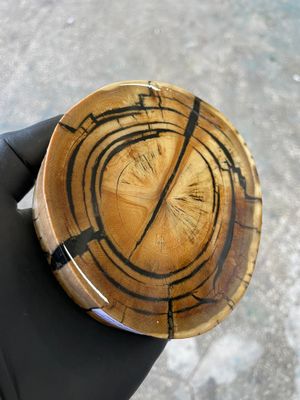
Dark coloration can be associated with concentrations of manganese-bearing minerals and iron compounds. In some pieces, the dark material fills a network of natural cracks, creating an extremely high-contrast pattern.
Blue Mammoth Bark
Natural blue is among the most sought-after colors in mammoth bark.
The blue coloration is strongly associated with the iron phosphate mineral vivianite. Research has demonstrated vivianite in blue areas of mammoth ivory and has shown that it can form when iron ions from the surrounding environment interact with phosphate within the ivory during long-term burial.
Blue-Green and Green Mammoth Bark
Blue-green coloration can occur as vivianite undergoes oxidation and transforms into other iron phosphate minerals.
Research has documented a progression involving vivianite → metavivianite → santabarbaraite, accompanied by changes from blue toward bluish-green and yellowish-brown coloration.
This is one reason a single piece of mammoth bark can contain several colors at once.
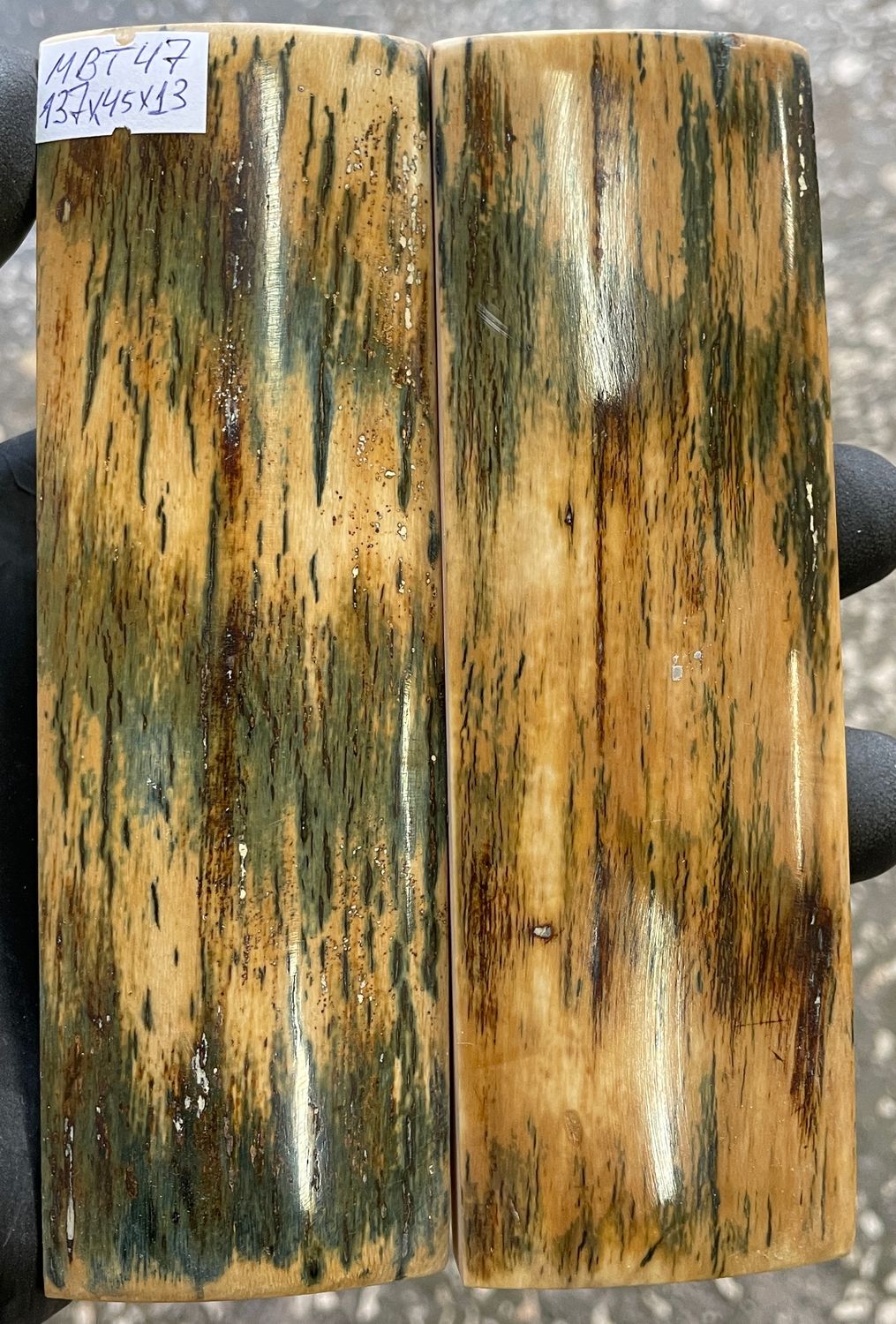
Why Does the Burial Environment Matter So Much?
A mammoth tusk does not simply sit unchanged underground.
For thousands of years, it interacts with its surroundings.
The geological environment can determine what minerals are available and how they move through the tusk.
Mammoth Ivory from Permafrost
The Arctic regions of Siberia, Yakutia, and Alaska are particularly well known for mammoth remains preserved in permafrost.
Permafrost can dramatically slow the decomposition of organic materials and help preserve mammoth tusks for extremely long periods.
However, permafrost itself does not automatically determine the color of the ivory.
The chemistry of the surrounding sediment and groundwater is also important.
Research on mammoth ivory from Yakutia found blue and bluish-green outer zones associated with vivianite and its oxidation products.
Mammoth Ivory from Wetlands and Water-Rich Deposits
Water-saturated and oxygen-poor environments can create conditions favorable for the formation of certain iron minerals.
This is particularly relevant to blue mammoth ivory because vivianite commonly forms in environments where iron and phosphate are available under reducing, low-oxygen conditions.
When groundwater containing iron interacts with phosphate in the fossil ivory, vivianite can form over long periods of time.
This helps explain why some mammoth ivory recovered from wet or water-influenced deposits can display striking blue or blue-green mineralization.
However, the exact color of an individual tusk cannot be determined solely from whether it came from a river, swamp, or permafrost.
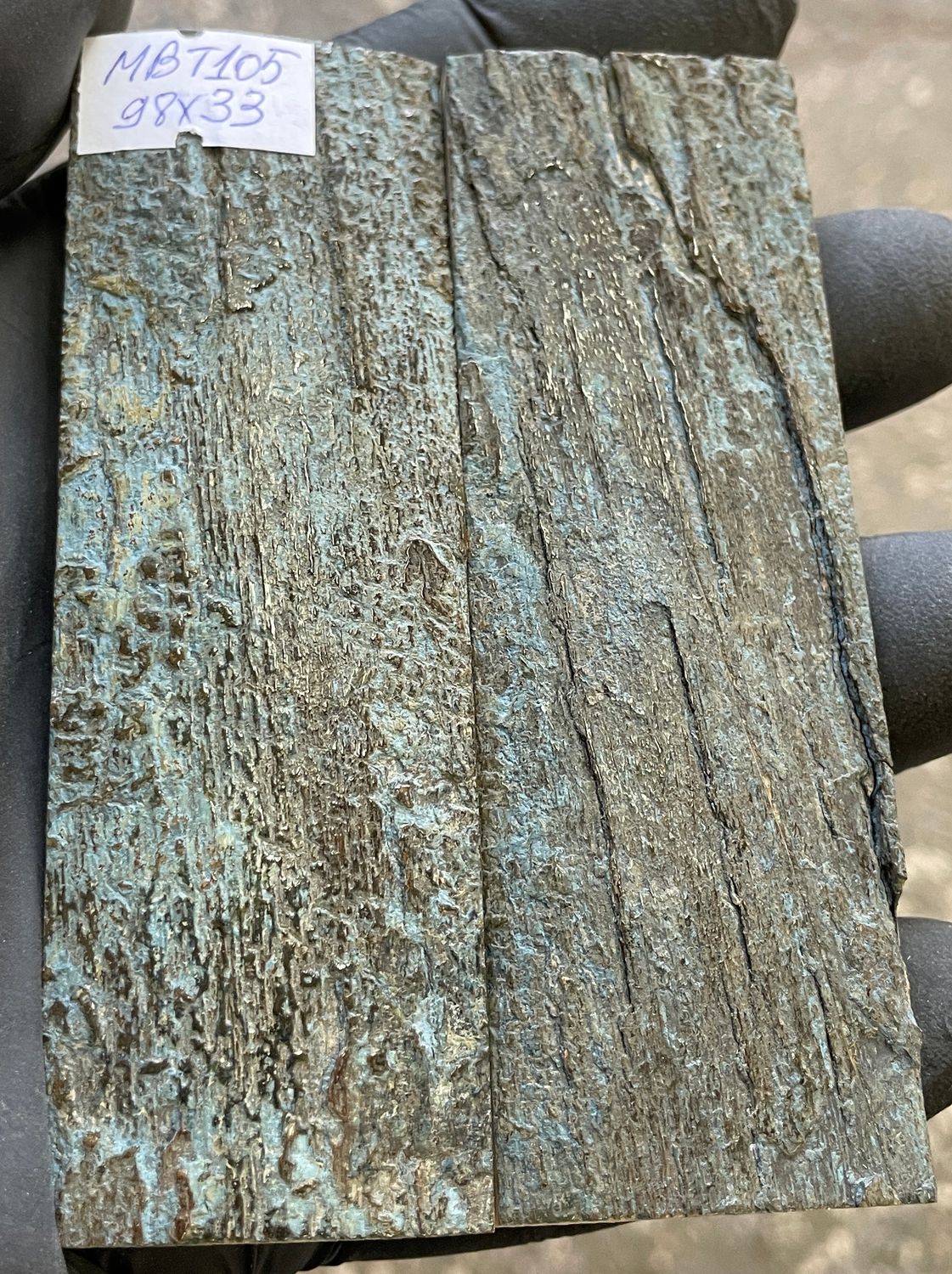
River-Buried Mammoth Tusks
Mammoth remains can also be found in river deposits and ancient river terraces.
Water movement can affect the surface of the tusk mechanically, while minerals in the surrounding sediment and groundwater can influence its chemical alteration.
River environments are highly variable, however. The sediment may contain different concentrations of iron, manganese, quartz, and other minerals depending on the geological region.
As a result, river-found mammoth bark can range from relatively light-colored material to strongly mineralized brown, black, blue, or mixed-color surfaces.
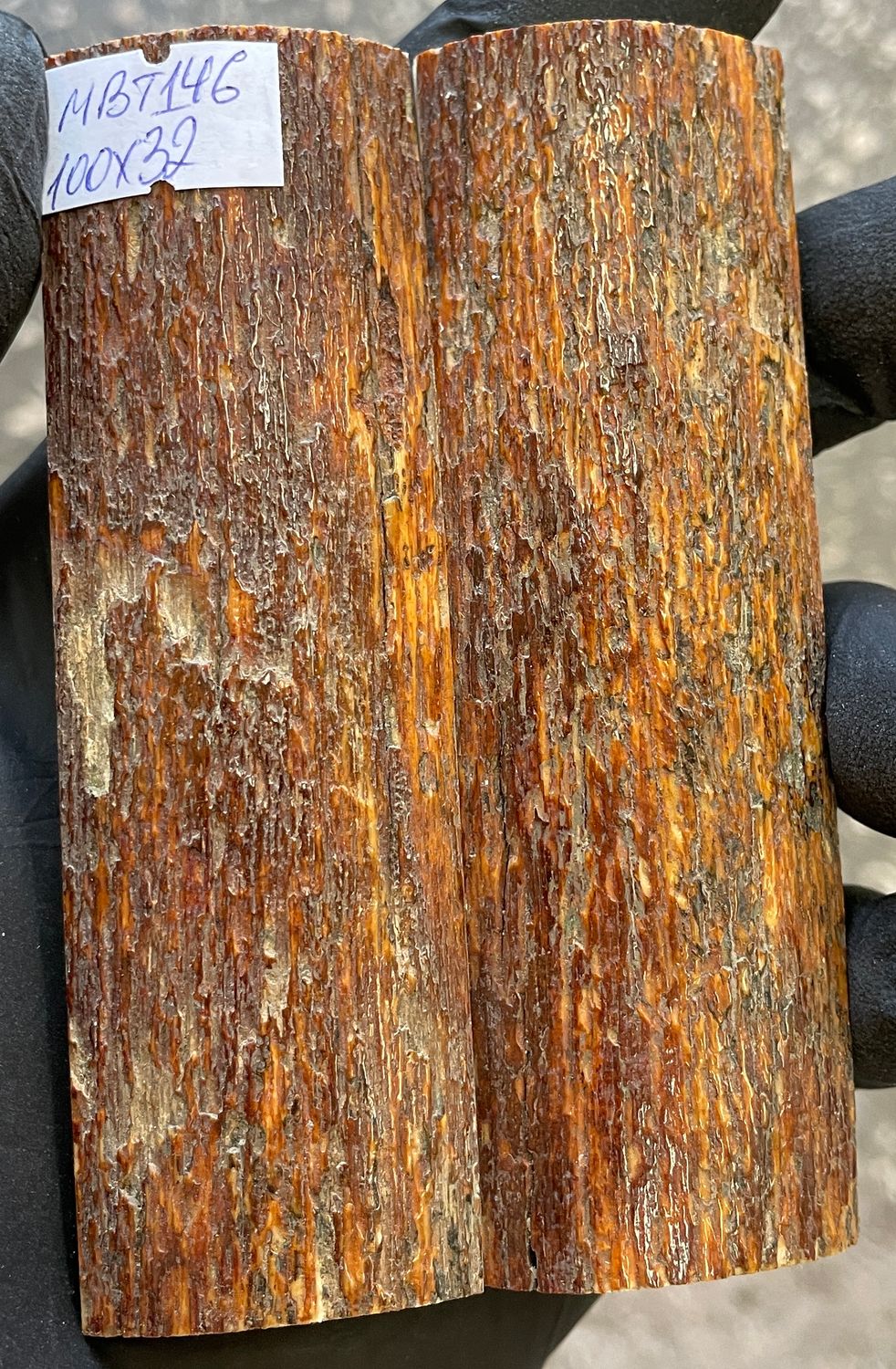
Why Are Some Mammoth Tusks Deep Brown?
One particularly interesting example is mammoth ivory recovered from geological environments associated with coal-bearing deposits.
Mammoth remains have been discovered in the Kuzbass region of Russia, including during excavation and mining activities.
Deep brown coloration in fossil ivory from such environments should not simply be described as "coal staining." The chemistry is more complicated.
Scientific research on brown mammoth ivory has demonstrated that iron and manganese minerals can form and concentrate in the surface cracks of the cementum layer. Identified minerals include hematite, pyrite, pyrolusite, and manganite.
Therefore, the deep brown appearance of some mammoth bark from coal-bearing geological formations is better understood as the result of long-term interaction between the tusk and its mineral-rich burial environment, rather than coal alone.
How Is Mammoth Bark Ivory Recovered?
Some are exposed naturally as erosion removes sediment from riverbanks, permafrost cliffs, and ancient deposits.
Others are discovered during excavation or earth-moving operations, including:
• construction;
• quarrying;
• mining;
• excavation of large pits;
• removal of sediment;
• erosion of riverbanks and permafrost.
The depth at which a tusk is found can vary enormously.
Some tusks are exposed relatively close to the surface, while others may be buried many meters underground.
Therefore, there is no universal depth at which mammoth tusks are found. Their location depends on the local geological history and the type of sediment in which the remains were preserved.
Why Does Mammoth Bark Sometimes Look Like Wood?
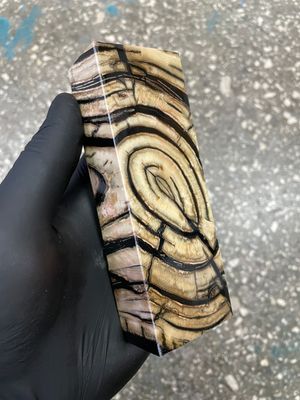
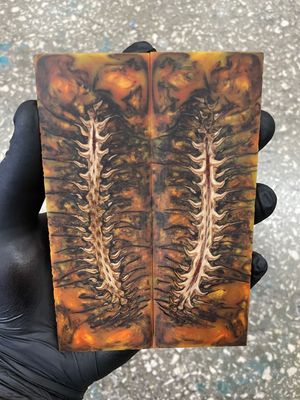
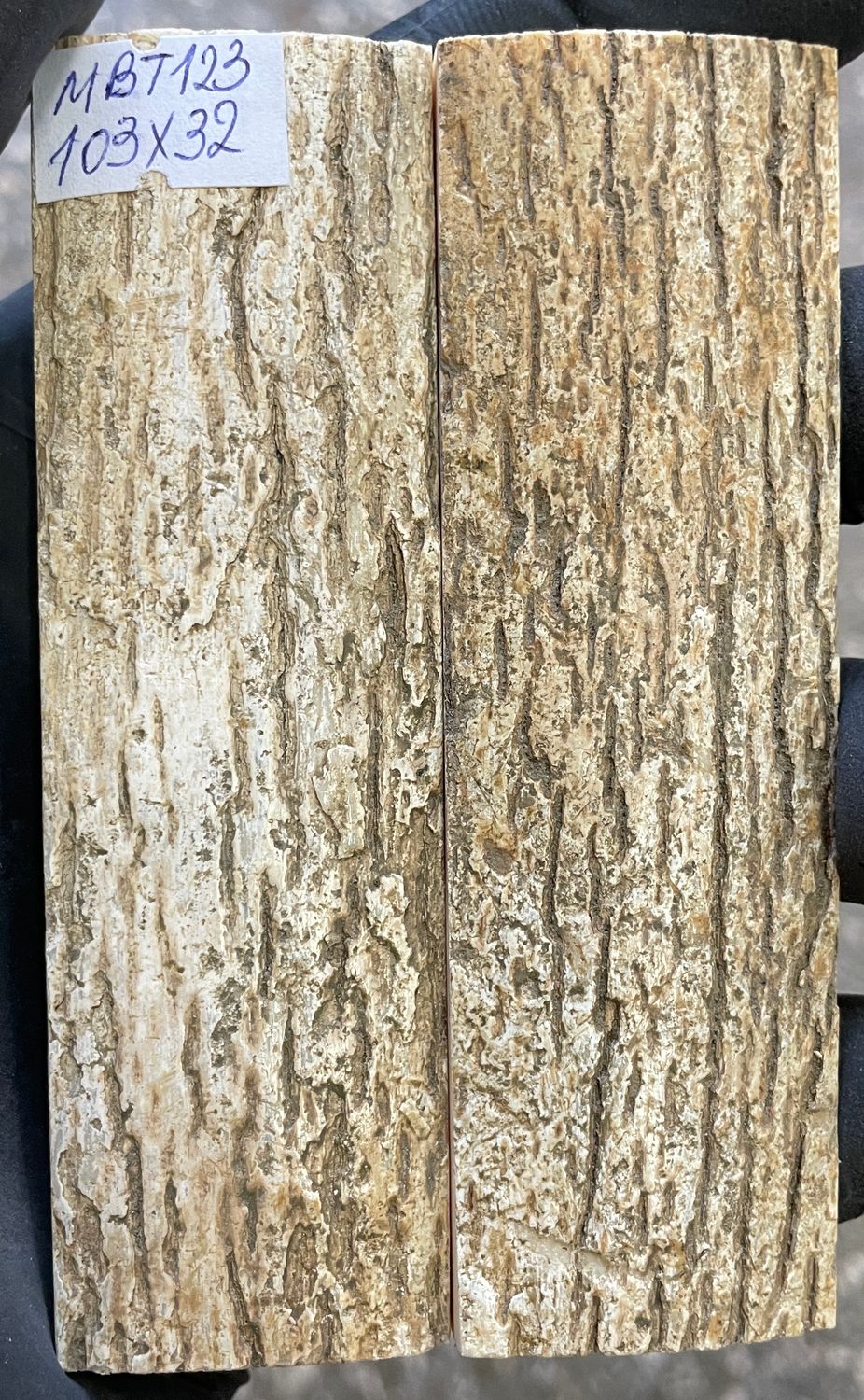
One of the most fascinating characteristics of mammoth bark is its ability to develop patterns that look surprisingly similar to wood.
Some pieces have:
• long flowing lines;
• layered bands;
• branching patterns;
• rectangular crack networks;
• fine grain-like structures;
• dark veins;
• contrasting light and dark areas.
After polishing, some pieces can look almost like an exotic hardwood.
But the pattern is not wood grain.
It is the result of the natural structure of the tusk combined with mineralization, cracking, weathering, and the distribution of different mineral phases.
Mammoth tusks have a complex internal structure involving dentin, cementum, concentric and radial structural elements, and characteristic Schreger patterns. The cementum itself can have a corrugated structure, while cracks can follow the underlying microstructure of the tusk.
Over thousands of years, minerals can accumulate along cracks and structural boundaries.
After cutting and polishing, those mineral-filled cracks become visible as dark lines against lighter ivory.
The result can be remarkably wood-like.
Why Does Some Mammoth Bark Have a Smooth Surface?
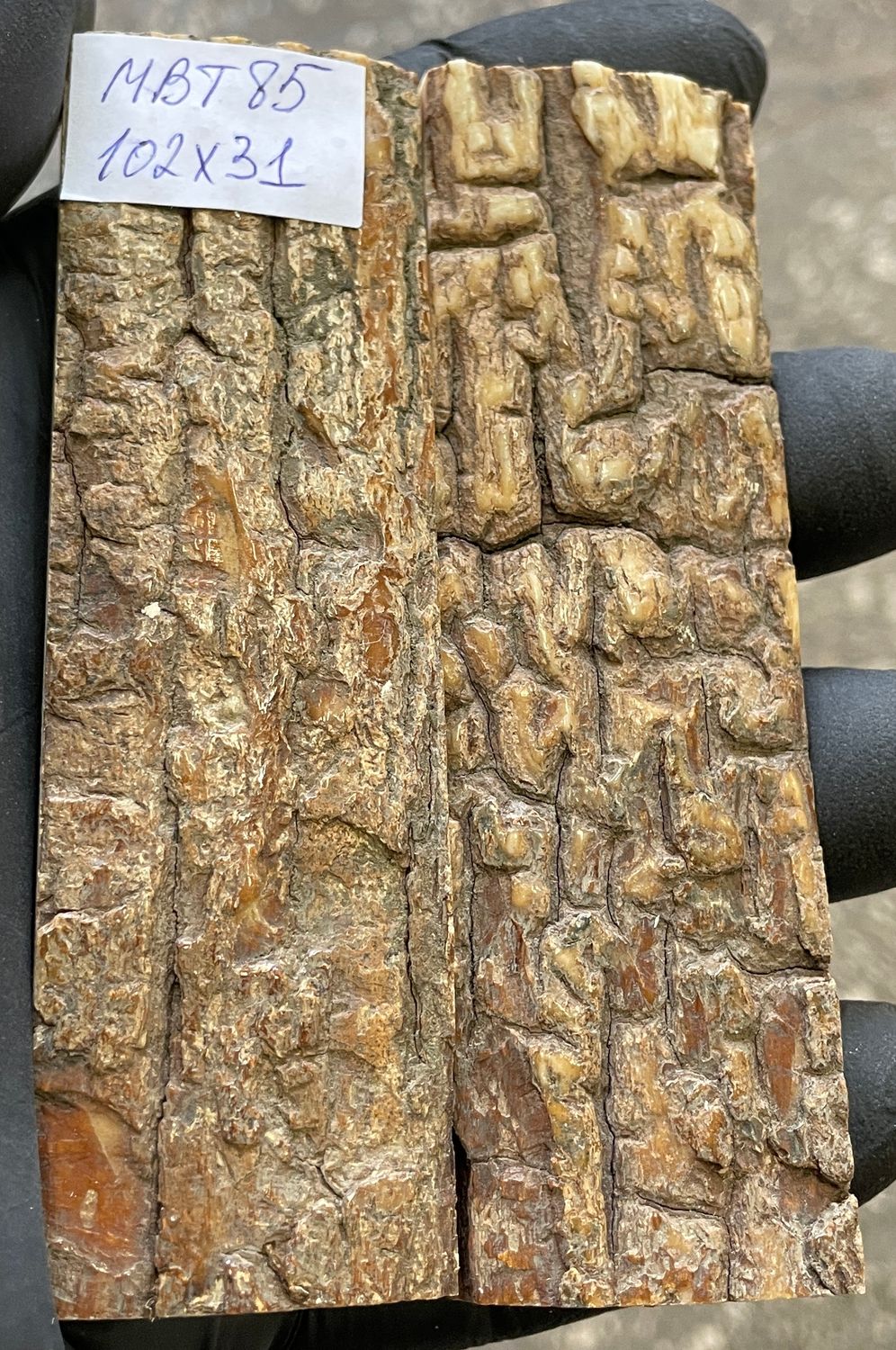
Not every piece of mammoth bark develops a pronounced crack network.
Some pieces have relatively smooth surfaces, while others have extremely pronounced natural fissures.
This difference can be influenced by:
• the original structure of the tusk;
• mineral content;
• burial environment;
• moisture;
• decomposition of organic components;
• weathering;
• cracking during long-term burial;
• drying after recovery.
Scientific examination of brown mammoth ivory has shown that dissolution and loss of organic material and phosphate ions can contribute to the development of fissures and cracks, with mineral phases subsequently concentrating in these areas.
This is why the surface of mammoth bark can range from relatively smooth to dramatically textured
Mammoth Bark Can Survive Even When the Inner Tusk Is Heavily Degraded
One of the most interesting characteristics of fossil mammoth tusks is that different parts of the same tusk can have dramatically different preservation quality.
A tusk may have a beautiful, dense outer bark while the interior has become:
• porous;
• chalky;
• brittle;
• friable;
• heavily degraded.
This is particularly important for people who process fossil ivory.
A highly degraded interior may not be suitable for producing large structural blanks or knife handles.
But if the outer bark remains sufficiently thick and sound, the tusk may still have significant value.
What Can Be Made from Mammoth Bark?
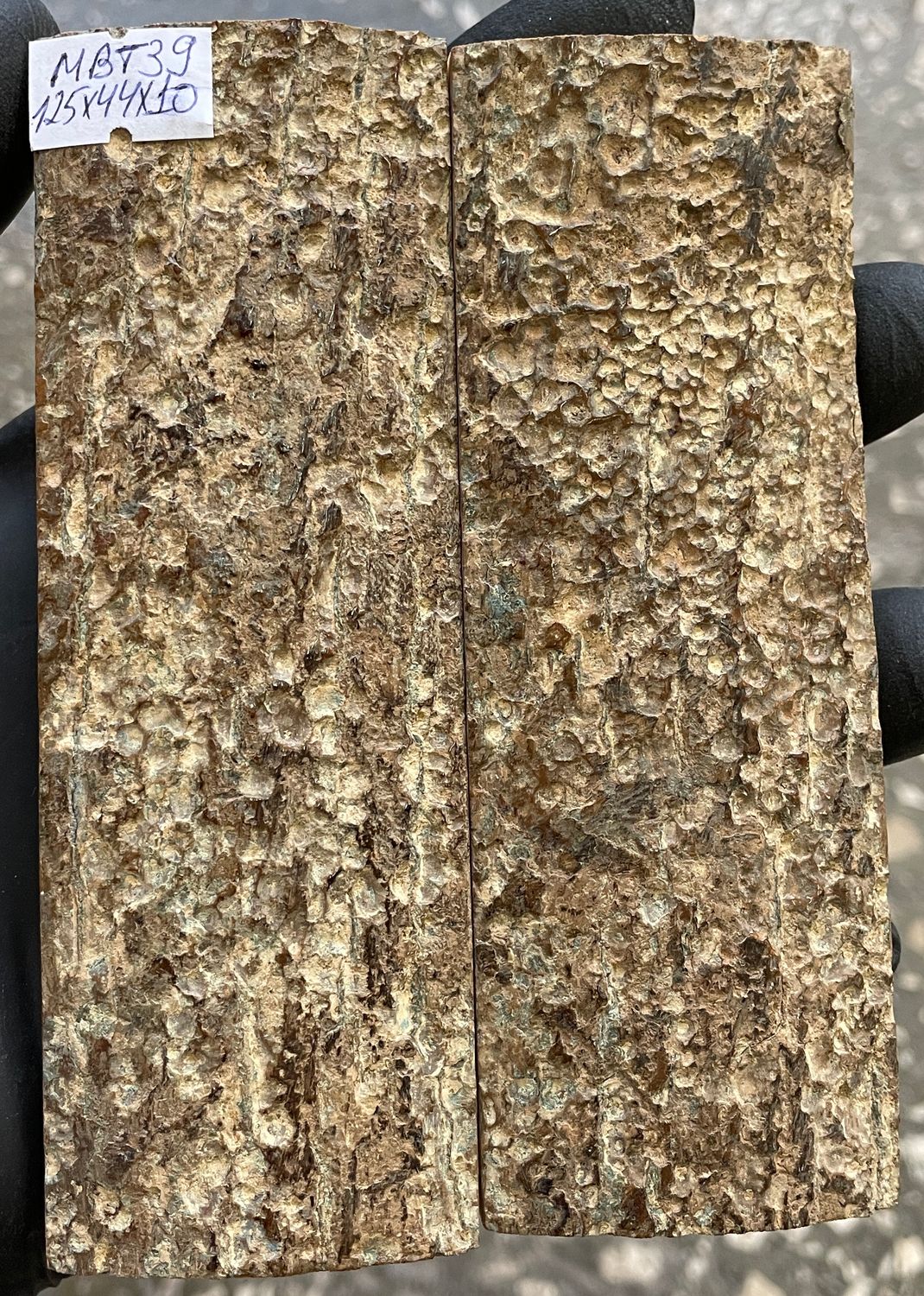
Depending on the size and condition of the material, mammoth bark can be processed into a variety of products.
These can include:
Mammoth Bark Knife Scales
One of the most desirable applications is the production of custom knife scales.
Large, well-preserved pieces allow a knifemaker to select the orientation that best displays the natural pattern.
Beads and Prayer Beads
Smaller pieces can be turned into beads, including components for collectible or decorative prayer beads.
Scrimshaw Plates
Flat pieces of mammoth ivory can provide a unique surface for traditional scrimshaw work.
Inlays and Decorative Components
Smaller sections can be used for:
• inlays;
• bolsters;
• spacers;
• decorative accents;
• jewelry;
• small carvings;
• collectible objects.
In many cases, the outer bark can therefore remain valuable even when the interior of the original tusk is too degraded for larger applications.
Can Chalky Mammoth Ivory Be Stabilized?
Some degraded mammoth ivory can be stabilized with resin-based processes, depending on the condition and porosity of the material.
However, stabilization has limits.
A moderately porous piece may respond well to professional stabilization, while severely degraded material may have lost too much of its original structure to become a reliable structural material.
This distinction is important when evaluating mammoth ivory for a knife handle.
A beautiful appearance does not automatically mean that the material has sufficient structural integrity for a working knife.
For custom knife applications, both appearance and physical condition matter.
Why Is Blue Mammoth Bark So Valuable?
Among collectors and custom knifemakers, blue mammoth bark is particularly desirable.
The reason is simple:
natural blue coloration is relatively uncommon.
The blue appearance is associated primarily with vivianite, an iron phosphate mineral that forms under particular chemical conditions during burial.
Not every mammoth tusk contains the necessary combination of iron, phosphate, moisture, oxygen conditions, and geological environment required to produce visible blue mineralization.
And even when vivianite is present, it may appear only in certain portions of the tusk.
That makes a large, thick piece of mammoth bark with strong natural blue coloration particularly interesting.
The most spectacular pieces may combine:
blue + blue-green + cream + brown + black
in one natural pattern.
Natural Blue Mammoth Bark vs. Dyed Ivory
For collectors and knifemakers, natural color is an important distinction.
Natural blue mammoth ivory owes its coloration to mineralization that occurred during the tusk's long burial history.
Scientific analysis has confirmed vivianite in blue areas of mammoth ivory.
This is fundamentally different from artificially coloring modern ivory or another material.
The appeal of natural mammoth bark comes from the fact that the color is part of the fossil's geological history.
Why Every Pair of Mammoth Bark Knife Scales Is Different
Mammoth bark is not a manufactured material.
There is no factory process that can reproduce the exact same pattern.
Even two scales cut from the same tusk can have noticeably different patterns depending on the direction and location of the cut.
One area may contain mostly blue.
Another may reveal brown and black mineralization.
Another may expose a completely different pattern.
The orientation of the cut is therefore extremely important.
A skilled knifemaker can choose the orientation that best displays the natural pattern when the scales are mounted on the knife.
This is one of the reasons high-quality mammoth bark is particularly well suited to one-of-a-kind custom knives.
Mammoth Bark with a Wood-Like Pattern
Some of the most visually impressive mammoth bark pieces are those with a natural pattern that resembles exotic wood.
The combination of:
• parallel structural features;
• mineral-filled cracks;
• brown and black mineralization;
• cream-colored dentin;
• blue or green zones;
• natural curvature;
• can create a surface that looks almost
• like ancient petrified wood.
After professional cutting, sanding, and polishing, these patterns become even more pronounced.
A knife made from such a piece can have a handle that looks completely different from anything produced from conventional wood or synthetic handle materials.
Mammoth Bark on a Premium Custom Knife
A premium custom knife is often judged by much more than the blade.
The handle materials, craftsmanship, proportions, finishing, engraving, and overall artistic concept all contribute to the final piece.
Mammoth bark adds another dimension: deep geological history.
The material used on the handle may have spent tens of thousands of years buried in the Arctic ground before eventually becoming part of a modern handmade knife.
That combination of:
• ancient fossil material;
• natural mineral coloration;
• unique pattern;
• rarity;
• skilled craftsmanship;
• can make the finished knife significantly more collectible.
A particularly rare blue mammoth bark or an exceptionally patterned piece may become one of the defining features of a high-end custom knife.
Mammoth Bark Ivory Is More Than a Handle Material
The appeal of mammoth bark is ultimately difficult to reproduce with any modern material.
Synthetic materials can imitate colors.
Modern wood can imitate patterns.
Resin can reproduce almost any visual effect.
But none of them have the same history.
Natural mammoth bark was created through a combination of biology, geology, chemistry, time, and chance.
Every crack, color transition, mineral deposit, and pattern developed naturally.
When a knifemaker turns that material into a finished handle, the result is not simply a decorative surface.
It is a small piece of Ice Age history incorporated into a modern work of art.
FAQ About Mammoth Bark Ivory
What is mammoth bark ivory?
Mammoth bark ivory is the trade term commonly used for the naturally weathered and mineralized outer portion of a fossil mammoth tusk, particularly the cementum and adjacent outer tusk material.
What is mammoth bark made of?
Mammoth tusks are primarily composed of dentin, while the exterior is covered by cementum. Fossilization and mineralization can introduce additional minerals into the outer layers and cracks. Studies have identified hydroxyapatite, quartz, vivianite and other iron- and manganese-bearing minerals in mammoth ivory.
Why is mammoth bark blue?
Natural blue mammoth ivory is strongly associated with vivianite, an iron phosphate mineral. Vivianite can form when iron from the surrounding environment interacts with phosphate in the ivory during long-term burial.
What causes brown mammoth ivory?
Brown coloration can be associated with iron- and manganese-bearing minerals formed during fossilization. Scientific studies have identified hematite, pyrite, pyrolusite, and manganite in brown mammoth ivory.
Can mammoth bark be green?
Yes. Mammoth ivory can display green and bluish-green coloration. Vivianite and its oxidation products can contribute to blue-green and greenish appearances.
Is blue mammoth bark rare?
Strong natural blue coloration is relatively uncommon compared with the more typical cream, tan, and brown colors. Large pieces with intense blue or blue-green mineralization are particularly desirable for collectors and custom knife makers.
Why does mammoth bark look like wood?
The natural structure of the tusk, combined with fissures and the concentration of minerals along cracks and structural boundaries, can produce patterns that visually resemble wood grain.
Can mammoth bark be used for knife handles?
Yes. Dense, well-preserved mammoth bark can be cut, shaped, and polished into knife scales and other handle components. The condition, thickness, stability, and size of the material are important when selecting it for a knife project.
Can chalky mammoth ivory be stabilized?
Some porous fossil ivory can be professionally stabilized, but severely degraded material may not be suitable for structural applications. Stabilization cannot always restore material that has already lost significant structural integrity.
Is every piece of mammoth bark unique?
Yes. Natural mineralization and the complex structure of the tusk create patterns that vary from piece to piece. Even two scales cut from the same tusk can have different visual patterns depending on their location and cutting direction.
How old is mammoth bark ivory?
Mammoth ivory is fossil material from extinct mammoths that lived during the Ice Age. Individual specimens can have very different ages depending on the species, geological layer, and location where they were found.
Is mammoth bark real ivory?
Yes. Mammoth tusk is genuine fossil ivory. It is different from modern elephant ivory because it comes from extinct mammoths rather than living elephants.
Final Thoughts
Mammoth bark ivory is one of the most unusual natural materials available for premium custom knife handles.
Its colors were not selected by a manufacturer. Its patterns were not printed or dyed. They developed naturally while the tusk was buried in the earth.
Iron, manganese, phosphate minerals, groundwater, oxygen levels, sediment, temperature, and thousands of years of geological processes all contributed to the final appearance.
That is why one piece may be deep brown, another almost black, another blue-green, and another intensely blue.
And when a rare piece of mammoth bark with exceptional natural patterning becomes the handle of a handmade custom knife, the result is more than a functional object.
It is a piece of Ice Age history transformed into a work of art.