Who Mammoths Really Were And Why Scientists Still Study Them So Closely
05.10.2026
When people hear the word “mammoth,” they usually picture an enormous shaggy animal wandering somewhere across frozen plains under heavy snowfall. That image is familiar to almost everyone. Yet the real story of mammoths is far more detailed than the simplified version most people know from films or illustrations.
Scientists originally gave the mammoth the Latin name Elephas primigenius. Later, another scientific name became widely used – Mammuthus primigenius. This happened because paleontology follows a strict naming principle: once a fossil species receives an official scientific description, that designation often remains connected to it throughout scientific history.
Despite their prehistoric appearance, mammoths were not some mysterious separate branch of life unrelated to modern animals. They belonged to the order Proboscidea – the same biological group that includes modern elephants.
Today only two major representatives of this ancient order remain alive:
• Asian elephants – animals adapted to humid forests and tropical regions with dense vegetation;
• African elephants – the largest modern land mammals capable of surviving in extremely demanding environments.
Thousands of years ago, however, the situation looked completely different. Proboscideans once spread across enormous territories throughout Europe, Asia, Africa, and North America. Numerous species existed simultaneously, occupying very different ecological niches. Modern elephants are only the last surviving fragments of what used to be a much larger and more diverse evolutionary family.
The Mammoth Trunk Worked As A Highly Specialized Survival Tool
The trunk remains one of the most distinctive anatomical features of all proboscideans. At first glance, it may simply look like an elongated nose. In reality, the structure is extraordinarily sophisticated.
A mammoth’s trunk formed from the fusion of the upper lip and nose over millions of years of evolution. Inside, it contained a massive system of longitudinal and circular muscles capable of extremely precise movement. Because mammoths had relatively short necks, the trunk became essential for almost every aspect of daily survival.
Without it, feeding and drinking would have been nearly impossible.
The trunk allowed mammoths to:
1. Gather vegetation from the ground – especially important in snowy environments where plants were hidden beneath frozen layers.
2. Draw water efficiently – large proboscideans could pull several liters of water into the trunk before transferring it into the mouth.
3. Detect smells across long distances – helping locate food, water, and herd members.
4. Explore surrounding terrain – the trunk worked as both a sensory and manipulative organ.
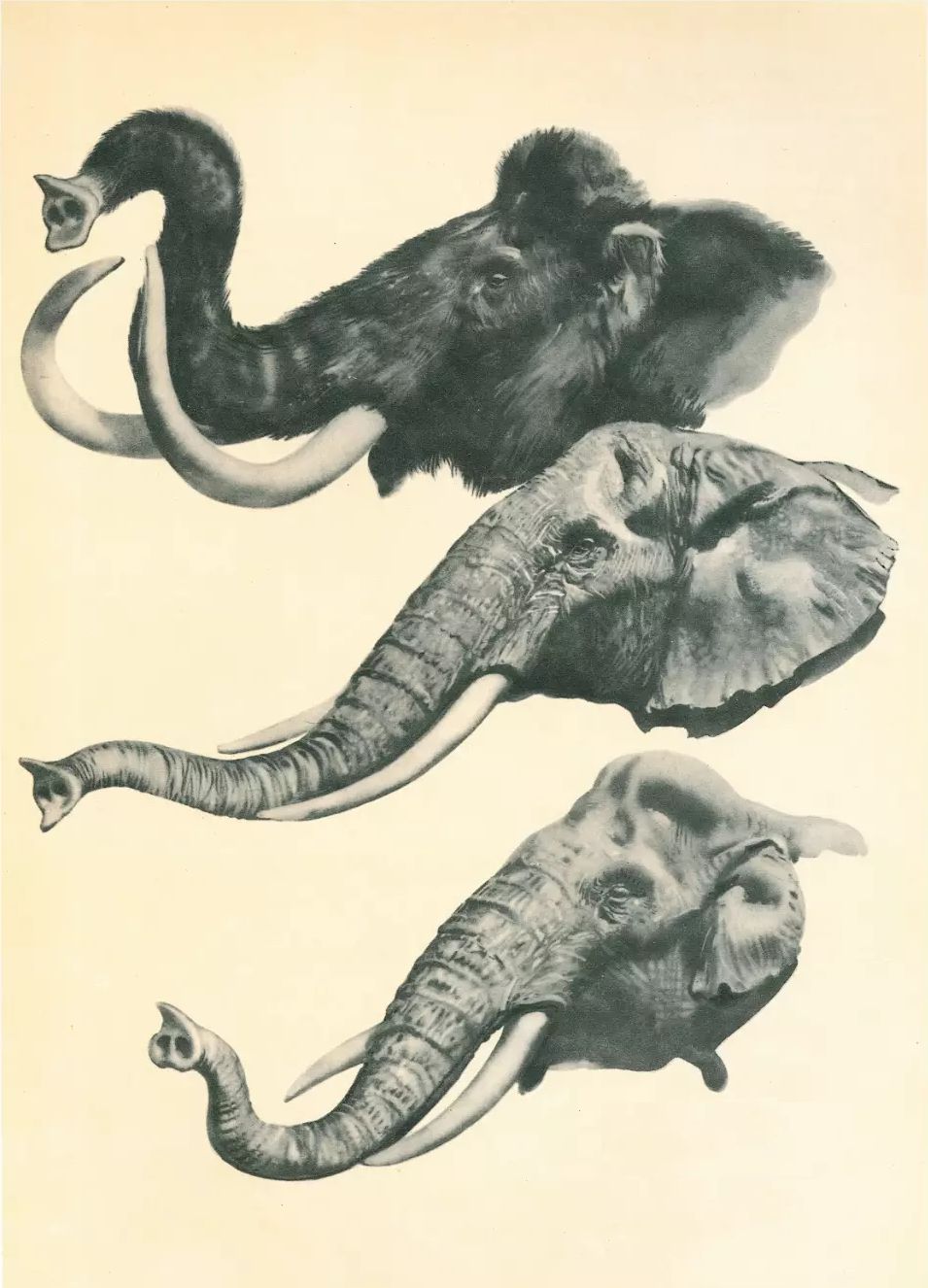
Researchers believe the mammoth trunk was covered with hair, unlike the smoother trunks of modern elephants. This adaptation likely reduced heat loss during severe Ice Age winters.
Interestingly, the earliest ancient proboscideans looked very different. One of the oldest known forms, called Moeritherium, possessed only a short elongated snout rather than a fully developed trunk. In terms of size, it resembled a tapir far more than a giant elephant.
Mammoth Tusks Continued Growing Throughout Life
Another defining feature of mammoths involved their enormous tusks.
Unlike ordinary teeth, mammoth tusks had no permanent roots and continued growing throughout the animal’s life. In biological terms, these tusks represented modified incisors. Similar continuous growth can still be observed in rodents today.
Mammoth tusks developed in a very characteristic way.
After emerging from the skull, they initially extended downward and outward before gradually curving upward and inward. In older males, the tusk tips could eventually cross one another. That spiral form became one of the most recognizable features of the species.
For many years, scientists debated how mammoths actually used their tusks.
One theory suggested tusks served mostly for display or fighting. Another explanation gained support after researchers examined wear patterns preserved on fossil specimens. Certain abrasion zones appeared exactly where repeated contact with snow or frozen soil would occur.
That observation changed scientific interpretation considerably.
Many paleontologists now believe mammoths actively used their tusks to clear snow while searching for vegetation during winter months. By lowering the head and swinging it from side to side, the animal could expose buried grasses and low shrubs hidden beneath compacted snow.
This behavior would have been critically important in Arctic conditions where food remained inaccessible for long periods.
Tusks likely performed several functions simultaneously:
• clearing snow during winter feeding – allowing access to buried vegetation;
• defending against predators – especially when protecting younger herd members;
• establishing dominance among males – particularly during mating competition;
• interacting with the surrounding environment – including movement through difficult terrain.
Because tusks continued growing throughout life, their shape changed gradually with age. Interestingly, constant contact with snow and frozen ground did not necessarily shorten them. Their spiral curvature caused wear to distribute unevenly, allowing the tusks to maintain impressive size despite regular abrasion.
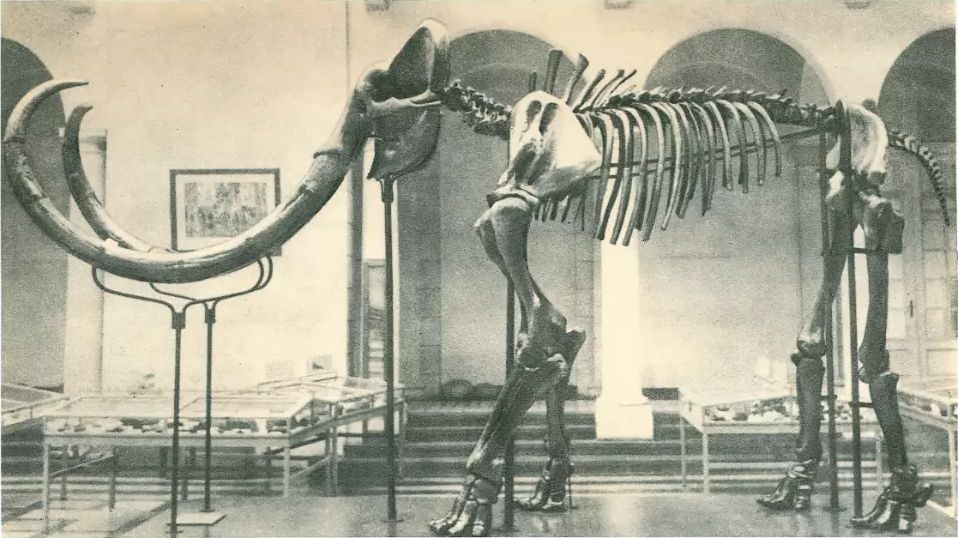
Massive Limb Structure Helped Mammoths Survive Harsh Terrain
The legs of mammoths appear unusually thick compared with many other large mammals. This was not accidental.
Proboscideans evolved heavy column-like limbs designed to support enormous body weight over long migration distances. Their feet contained five toes hidden beneath thick skin, which made the limbs appear almost solid from the outside.
Each toe ended in a small hoof-like structure, while beneath the foot sat a thick elastic fat pad.
That soft internal cushioning served several important purposes:
• reducing impact while walking across frozen ground;
• distributing body weight more evenly;
• helping large animals move surprisingly quietly despite their size;
• improving stability on uneven terrain.
Even modern elephants move more silently than most people expect, and mammoths likely possessed similar movement mechanics despite their tremendous mass.
Frozen Discoveries Revealed Unexpected Details About Mammoth Fur
Modern elephants carry relatively sparse body hair because they evolved in warm climates. Mammoths faced the exact opposite environmental challenge.
Over time, they developed dense fur and underwool capable of protecting the body from severe cold, snow, and freezing wind. Frozen mammoth discoveries from Siberia revealed long outer hairs combined with shorter insulating underlayers.
Hair length varied across different parts of the body.
Researchers examining preserved carcasses recorded especially long hair around:
• the belly area – improving insulation against snow contact;
• the legs – helping protect extremities from cold exposure;
• the cheeks and lower jaw – reducing heat loss near exposed facial areas;
• the sides of the body – where long hanging hair created additional thermal protection.
Scientists also discovered that mammoth calves carried even denser fur than adults. Young animals required extra protection because they possessed less body fat and adapted less efficiently to extreme cold during early development.
Why Mammoth Fur Was Much More Complex Than Most Reconstructions Show
When people imagine a woolly mammoth, attention usually goes first to the tusks or enormous body size. Yet for researchers studying Ice Age adaptation, the fur itself became one of the most important discoveries ever made. Without that dense coat, mammoths simply could not have survived the brutal climate of northern Eurasia and Arctic regions.
What makes the subject especially interesting is that scientists were able to study not only fossil bones, but actual preserved hair from frozen carcasses discovered in Siberia. Those discoveries completely changed how researchers understood Ice Age mammal adaptation and cold survival mechanisms.
One of the most important finds was the mammoth discovered in 1908 near the Sanga-Yuryakh River in Yakutia, Russia. Unlike ordinary fossil skeletons, this specimen preserved large areas of original hair and soft tissue, allowing scientists to examine fur structure in remarkable detail.
The results turned out to be far more complicated than earlier theories suggested.
Why Mammoth Hair Length Varied Across The Entire Body
The mammoth’s body was not covered with identical fur from head to tail. Different body regions carried different hair lengths depending on exposure to cold, snow contact, and heat retention needs.
Researchers studying the Sanga-Yuryakh mammoth recorded highly specific measurements:
• above the toes of the front leg – hair length reached approximately 15–18 centimeters (5.9 - 7.08 inch);
• near the elbow region – hair increased to roughly 35 centimeters (13.77 inch);
• along the sides and upper back – fur measured between 40 and 45 centimeters (15.74 - 17.71 inch) in length.
The underfur looked very different from the long outer coat.
Scientists determined that the underwool usually remained relatively short:
1. Typical undercoat length rarely exceeded 4–5 centimeters (1.57 - 1.96 inch).
2. In some preserved samples, underfur ranged between 6.4 and 8 centimeters (2.51 and 3.14 inch).
3. Outer protective hairs varied from approximately 28 to 48 centimeters (11 to 18.89 inch) depending on body location.
These details matter because they reveal that prehistoric mammoths possessed a highly specialized thermal protection system rather than simply “thick fur.”
Long outer hairs protected the body against snow, moisture, and Arctic wind, while the shorter dense underlayer trapped warm air close to the skin. Modern cold-weather mammals use similar insulation principles today.
Some Researchers Believed Mammoths Carried A Mane-Like Coat
Several researchers believed mammoths carried especially long shaggy hair forming structures similar to a mane across parts of the body.
This theory did not appear randomly. Frozen carcasses and prehistoric cave art both suggested that certain areas possessed noticeably thicker and longer hair growth than others.
The longest hair likely appeared:
• around the cheeks – helping shield exposed facial areas from freezing wind;
• beneath the lower jaw and chin – forming dense hanging fur beneath the head;
• on the legs – protecting extremities during movement across snow and ice;
• across the belly – reducing heat loss from contact with frozen ground;
• along the body sides – creating wide curtains of hanging hair visible even in prehistoric artwork.
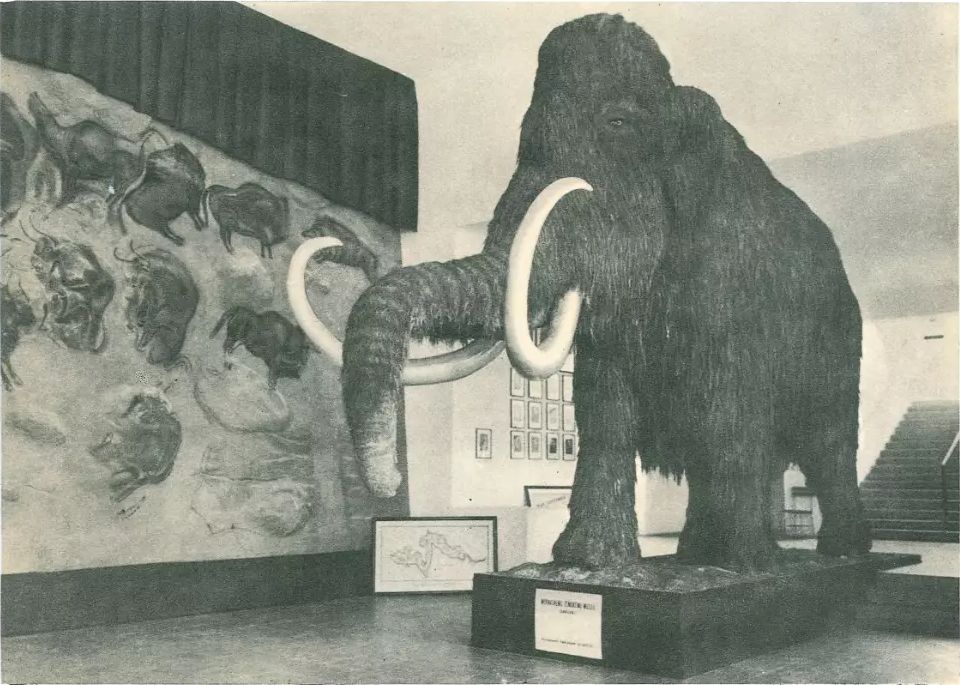
This last detail became especially important after discoveries in Les Combarelles Cave in France.
Les Combarelles Cave Paintings Preserved Surprisingly Accurate Mammoth Details
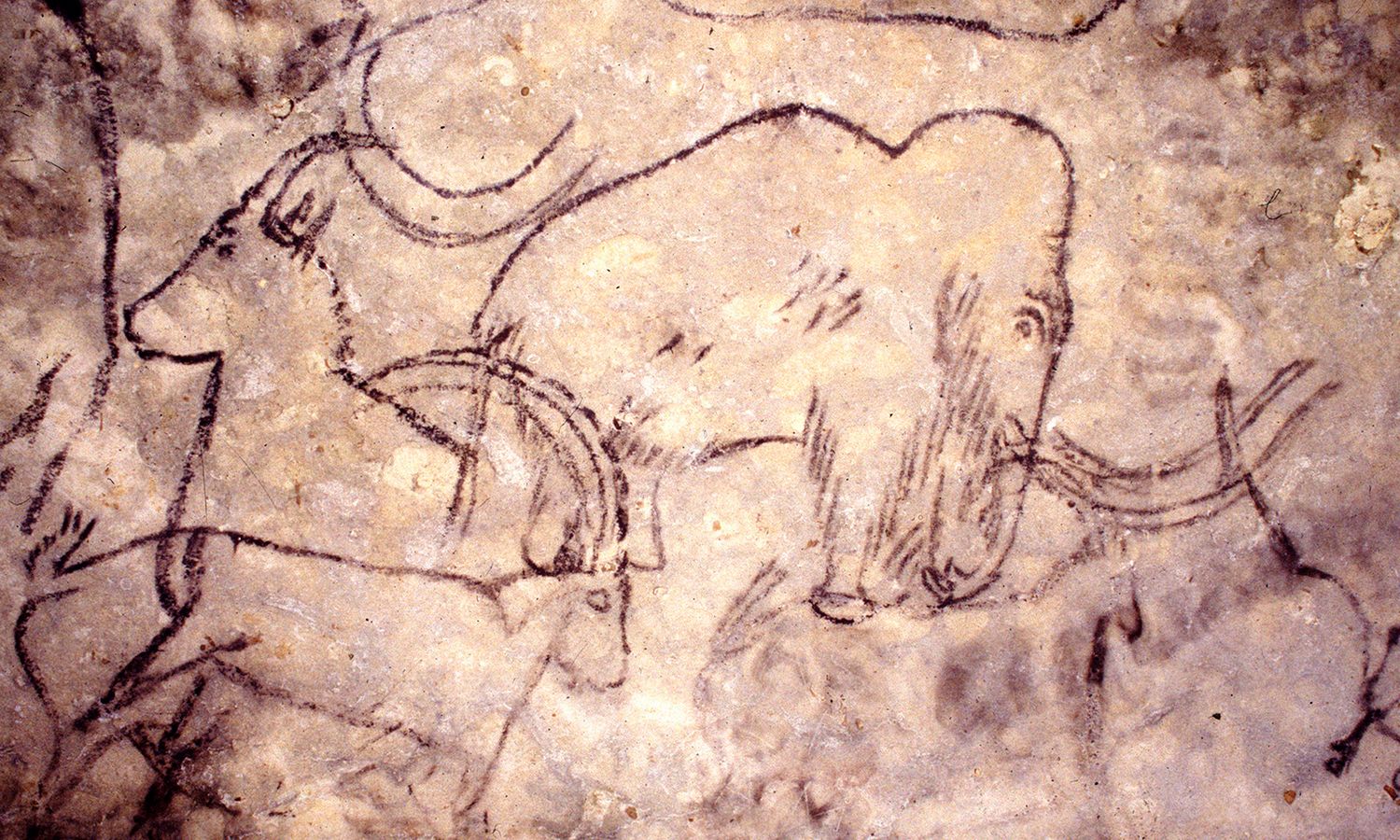
In 1901, French researchers studying the famous cave system at Les Combarelles discovered remarkably detailed Paleolithic mammoth depictions. At first glance, they appeared to be ordinary prehistoric drawings. Later, however, scientists realized those images preserved surprisingly accurate anatomical observations.
Several mammoths shown in the cave display long hanging hair extending along the sides of the body. This matched later evidence recovered from frozen Siberian mammoth remains.
That consistency impressed paleontologists for an important reason.
Ice Age artists clearly were not inventing random decorative features. They were reproducing details they repeatedly observed in living animals. The shape of the spine, fur placement, trunk structure, and even body proportions shown in those cave paintings later aligned closely with actual scientific discoveries.
The more researchers compared prehistoric artwork with preserved carcasses, the more obvious it became that ancient hunters understood mammoth appearance exceptionally well.
Seasonal Fur Changes Helped Mammoths Adapt To Arctic Conditions
Researchers studying preserved carcasses from Siberia and Alaska eventually concluded that mammoth fur likely changed depending on the season.
This was a major realization because it suggested mammoths possessed dynamic thermal adaptation rather than static insulation.
The fur probably served several functions simultaneously:
1. Winter insulation – protecting against extreme Arctic temperatures and strong wind exposure.
2. Moisture protection – preventing snow and ice accumulation directly against the skin.
3. Temperature regulation – allowing seasonal adaptation during warmer periods.
4. Protection for young animals – mammoth calves carried especially dense fur because they lacked the thick fat reserves of adults.
Young mammoths may actually have appeared even shaggier than fully mature animals. Their bodies needed additional insulation while growing in severe Ice Age climates.
The Original Color Of Mammoth Fur Remains Uncertain Today
Even today, researchers cannot state with complete certainty what color mammoth fur originally had during life.
Some scientists proposed that the primary coat color was black. Others believed the fur was dark brown with lighter or reddish variations. The disagreement exists because hair changes chemically over extremely long periods underground.
This creates a serious problem for paleontologists studying frozen mammoth discoveries.
Several eyewitness descriptions from historical excavations recorded different shades:
• dark brown fur with lighter patches;
• reddish-brown coloration mixed with black hairs;
• darker upper body regions combined with lighter tones elsewhere.
Mikhail Adams, who led the famous excavation of the mammoth discovered near the Lena River delta in Siberia, described the animal’s skin as dark gray covered with reddish fur containing black hairs.
Researchers later pointed out that fossil hair cannot always preserve its original biological color accurately. Similar chemical discoloration also appears in Egyptian mummies and other ancient organic remains preserved for long periods.
Because of that, the exact natural coloration of the woolly mammoth species remains uncertain even today.
The Mammoth “Hump” Debate Divided Paleontologists For Years
If you look at older illustrations of woolly mammoths, especially those created in the early twentieth century, one detail appears repeatedly: a huge hump rising above the shoulders almost like the hump of a camel. For many years people accepted this reconstruction without much doubt. The image became so widespread that it entered popular books, museum displays, and even scientific discussions.
Later research showed the situation was far more complicated.
The debate around the so-called mammoth hump became one of the more interesting examples of how fossil reconstruction errors can influence public understanding for decades. Some researchers insisted mammoths stored fat in a massive hump to survive severe Ice Age winters. Others strongly disagreed and argued the entire interpretation resulted from incorrectly assembled skeletons.
The disagreement continued for years because early paleontologists often worked with incomplete remains.
Why Early Mammoth Skeletons Created A False Impression
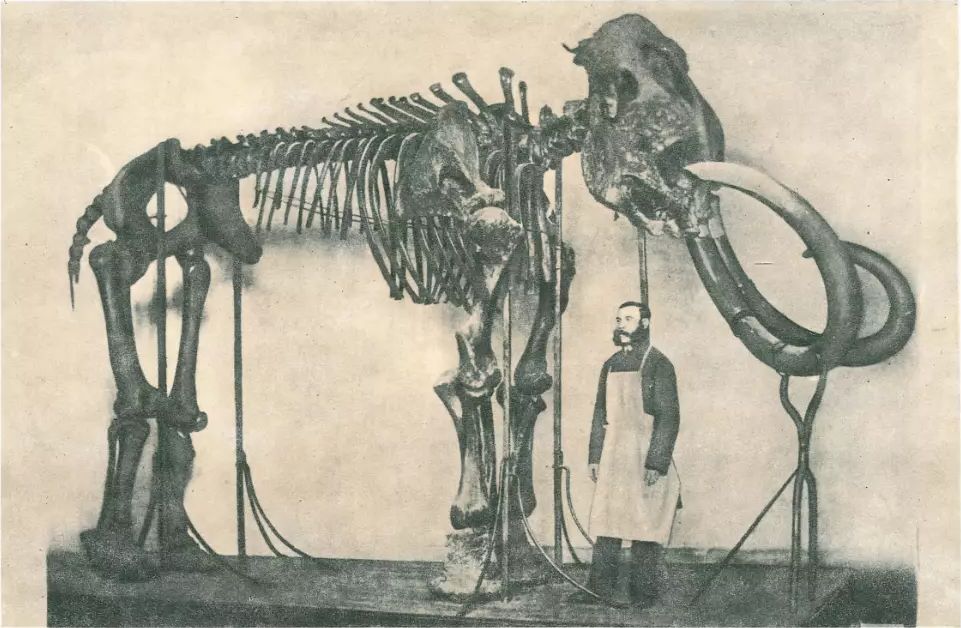
Many of the first mounted prehistoric mammoth skeletons displayed in museums were reconstructed using vertebrae positioned almost in a straight line. That arrangement distorted the natural curve of the animal’s spine.
As a result, the back appeared unnaturally elevated.
Researchers who later reexamined mammoth anatomy concluded that the characteristic body profile came primarily from spinal structure and muscular anatomy rather than concentrated fat storage.
Once the vertebral column was assembled more accurately, the mammoth’s silhouette changed noticeably:
• the back formed a high arch rather than a vertical hump;
• a deep depression appeared behind the head;
• the spine produced the characteristic sloping profile visible in prehistoric cave art;
• the overall body shape began matching Paleolithic mammoth depictions much more closely.
This detail became especially important because ancient cave artists from sites such as Les Combarelles had already illustrated that body shape thousands of years earlier.
Why A Giant Fat Hump Made Little Biological Sense
As researchers continued studying Ice Age mammal anatomy, another problem appeared.
Animals living in cold climates rarely concentrate fat in one isolated hump-like structure. Instead, they distribute insulating fat more evenly beneath the skin to reduce heat loss across the entire body surface.
This is exactly what scientists observed in preserved mammoth carcasses.
Frozen specimens from Siberia revealed thick subcutaneous fat spread relatively evenly throughout the body. The structure resembled thermal insulation rather than localized energy storage.
Researchers studying preserved tissue reported several important details:
1. Mammoth fat possessed a sponge-like internal structure – helping improve insulation efficiency in freezing temperatures.
2. The fat layer reached approximately 8–9 centimeters in thickness across much of the body.
3. No convincing evidence supported the existence of a giant camel-style fat hump.
4. The body profile aligned more naturally with muscular and skeletal anatomy.
This distinction matters because popular reconstructions often continue repeating outdated imagery despite later scientific corrections.
Why Mammoth Ears And Tails Became So Small
One of the clearest examples of cold climate adaptation in mammoths involved body extremities.
Compared with modern elephants, mammoths possessed noticeably smaller ears and shorter tails. At first glance, those differences may not seem dramatic. Biologically, however, they were extremely important.
Large exposed body parts lose heat rapidly in freezing environments.
African elephants survive in hot climates partly because their enormous ears help release excess body heat. Mammoths faced the opposite challenge. Conserving warmth mattered far more than cooling the body.
Because of that, evolution gradually favored:
• compact ears hidden beneath thick fur – minimizing frost exposure;
• short heavily insulated tails – reducing heat loss during Arctic winters;
• dense hair surrounding exposed areas – adding another protective layer.
Frozen carcasses also showed that the mammoth trunk itself carried hair, unlike the mostly bare trunks of modern elephants.
The Mammoth Trunk Had Features Modern Elephants No Longer Possess
For a long time, scientists could not fully determine the exact structure of the mammoth trunk tip.
The first preserved mammoth trunk was discovered in 1908 together with the Sanga-Yuryakh mammoth in Siberia. Unfortunately, the very end of the trunk was missing, leaving one important anatomical question unanswered.
Researchers wanted to know whether mammoths possessed:
• one finger-like trunk projection similar to Asian elephants;
• or two projections resembling the trunk structure of African elephants.
The answer remained uncertain until 1931.
That year, scientists described a preserved mammoth trunk tip discovered near the Bolshaya Baranikha River in Chukotka, Russia. The finding finally revealed the true structure of the mammoth trunk ending.
The discovery showed several unusual features:
1. The trunk surface carried both short and larger hairs – providing additional protection against cold.
2. The upper trunk lip formed a broad finger-like projection.
3. The lower portion developed into a shovel-shaped structure unlike modern elephant anatomy.
This meant the mammoth trunk differed noticeably from trunks seen in living elephant species today.
Remarkably, prehistoric artists had already depicted this detail long before modern science confirmed it. One mammoth drawing discovered in Les Combarelles Cave clearly showed the curved trunk ending with both the broad upper projection and the shovel-shaped lower structure.
That level of observational precision continues astonishing researchers even now.
Real Mammoth Size Was More Modest Than Popular Culture Suggests
The word “mammoth” eventually became associated with enormous size itself. Because of this, many people assume every mammoth towered far above modern elephants.
Scientific measurements tell a more restrained story.
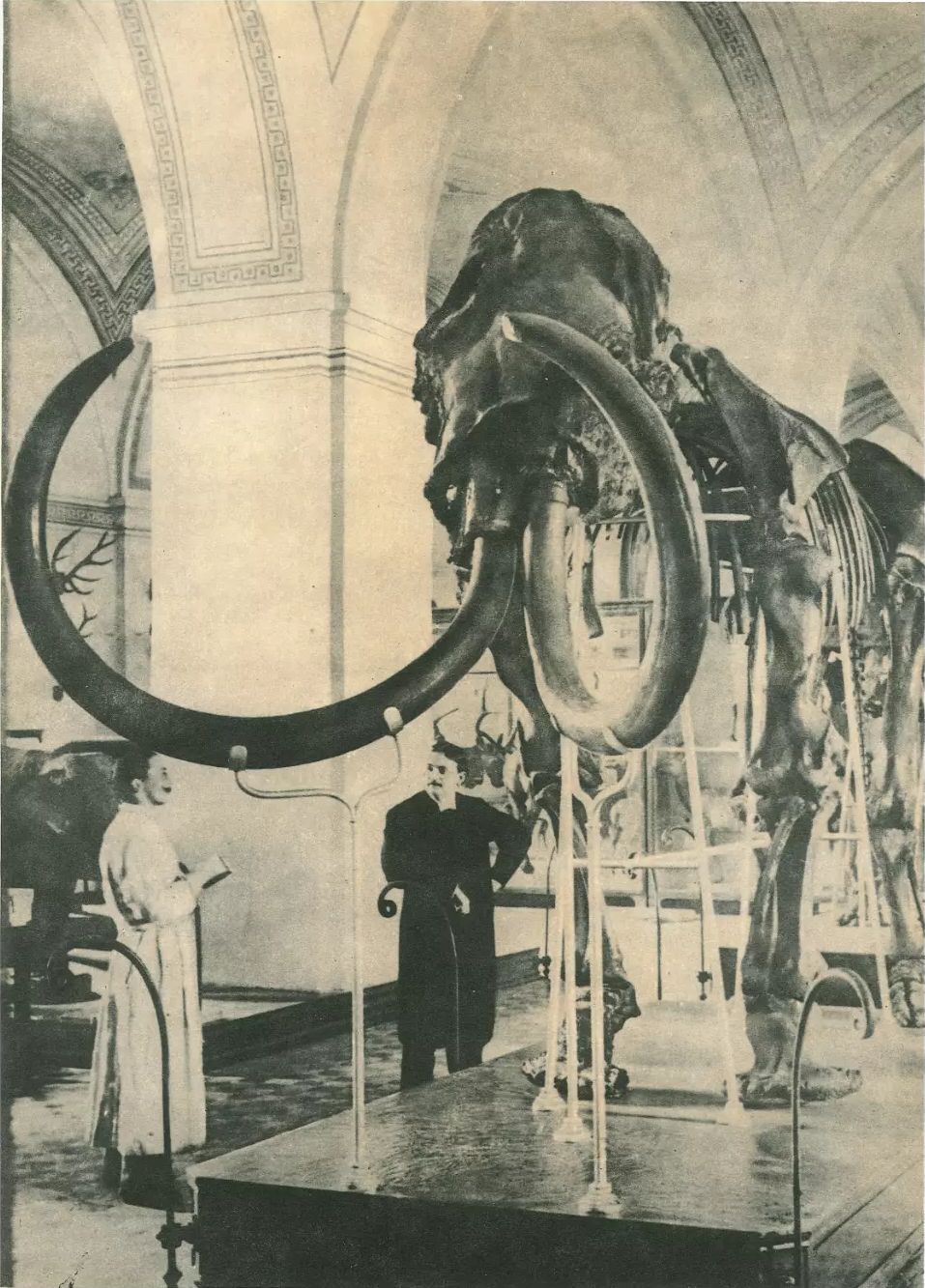
One of the most famous specimens, the Adams mammoth from the Lena River delta in Siberia, produced the following approximate measurements:
• shoulder height near the highest back point – around 320 centimeters (126 inch);
• body length – approximately 270 centimeters (106 inch);
• shoulder and front leg length – roughly 295 centimeters (116 inch);
• femur length – close to 120 centimeters (47.2 inch).
Those dimensions are impressive, but they do not dramatically exceed the size of modern Indian elephants, which can also reach about 320 centimeters (126 inch) in height.
Researchers later realized many exaggerated size claims came from confusion between true woolly mammoths (Mammuthus primigenius) and much larger prehistoric elephant relatives such as Parelephas trogontherii, whose height could reportedly reach around 450 centimeters (177 inhc).
That distinction became extremely important in paleontology because public imagination had merged several different giant proboscidean species into one oversized “mammoth” stereotype.
Still, genuine giant mammoths did occasionally exist.
One example involved Mammuthus primigenius fraasi, discovered near Steinheim in Germany, which reportedly reached approximately 430 centimeters in height. Even among mammoths, this individual represented an exceptional giant rather than the norm.
Mammoth Teeth Evolved To Handle Constant Grinding
For a very long time, scientists could not fully understand what mammoths actually ate. Early theories suggested these animals mainly consumed branches from coniferous and deciduous trees because mammoths were strongly associated with northern forests and cold climates.
Later discoveries changed that assumption quite dramatically.
Researchers examining preserved stomach contents and plant remains trapped between fossil teeth discovered that woolly mammoths depended heavily on grasses and herbaceous vegetation. This finding explained why their teeth looked so different from the teeth of predators or browsing animals.
Mammoths spent enormous portions of their lives grinding coarse vegetation containing abrasive mineral particles. Ordinary teeth would have worn down far too quickly under such conditions.
Their dental system evolved specifically for that challenge.
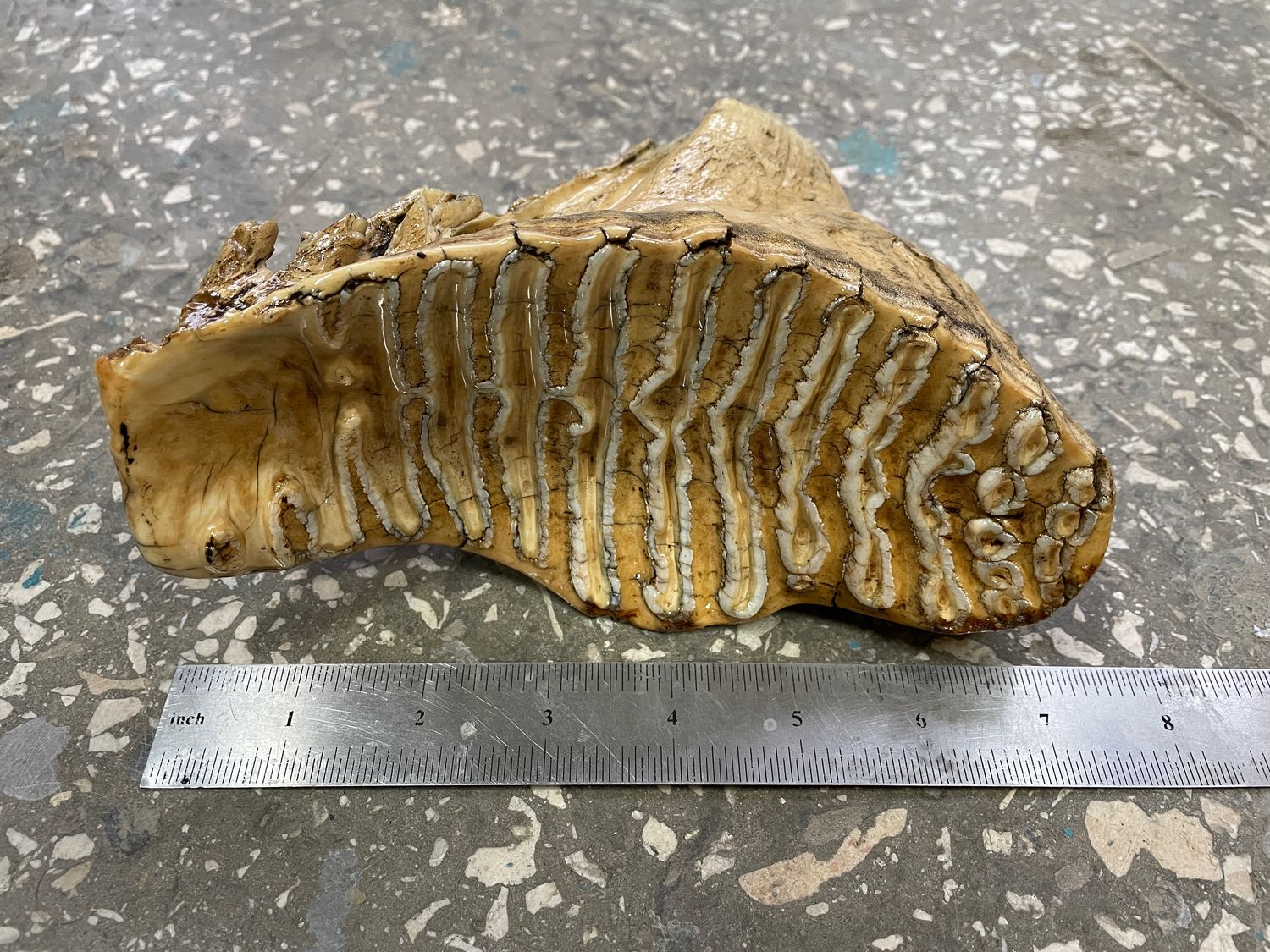

Why Mammoth Teeth Replaced Themselves Throughout Life
Unlike humans, mammoths did not rely on one permanent set of molars for adulthood.
Inside each half of the upper and lower jaw, mammoths developed a sequence of six major teeth over the course of life:
1. Three milk teeth appearing during early growth stages.
2. Three large replacement molars emerging later as earlier teeth became worn down.
At any given moment, a mammoth usually used four active grinding teeth simultaneously. During replacement phases, up to eight teeth could temporarily exist within the jaw.
This replacement system worked gradually rather than suddenly.
As older teeth became worn from years of crushing abrasive vegetation, newer molars slowly advanced forward from the back of the jaw. The replacement tooth did not begin functioning all at once. Instead, the front portion emerged first and gradually entered active use over time.
That process created several important survival advantages:
• continuous feeding ability – mammoths could keep eating even while teeth were being replaced;
• reduced starvation risk – essential for giant herbivores dependent on constant food intake;
• efficient grinding performance – newer teeth gradually took over as older ones deteriorated;
• adaptation to rough vegetation – especially important in Ice Age grassland ecosystems.
Eventually, the remains of completely worn teeth fell out from the dental socket after prolonged use.
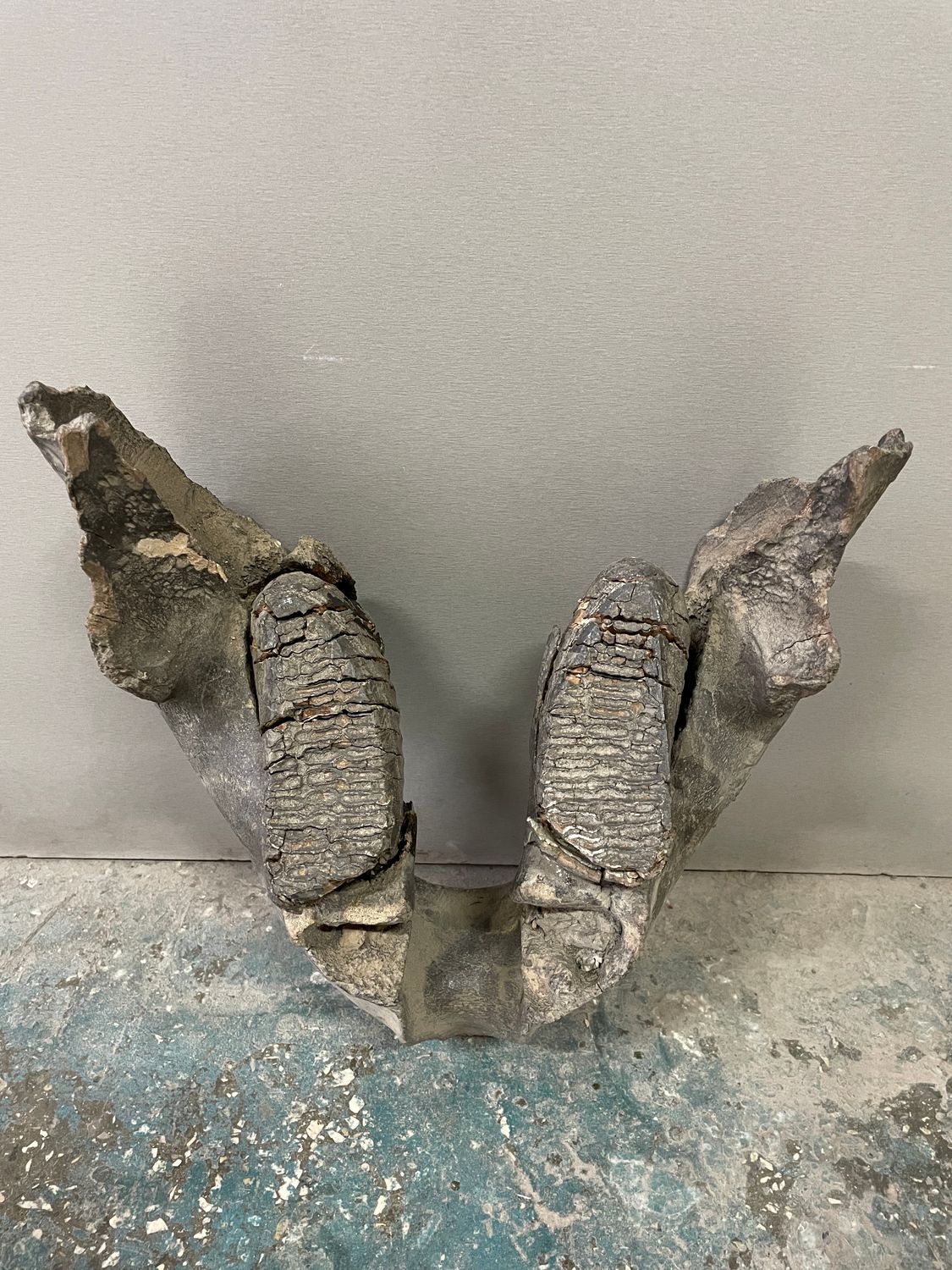
Why Mammoth Molars Looked So Unusual
A real mammoth tooth fossil looks very different from modern mammal teeth.
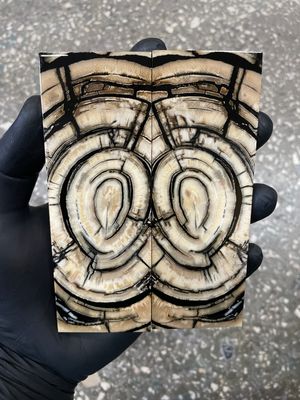
Instead of sharp cutting surfaces, mammoth molars contained numerous enamel plates separated by layers of dentin and cement-like material. These ridged grinding surfaces worked almost like industrial crushing mechanisms capable of processing huge quantities of fibrous plants every day.
As the chewing surface wore down, distinctive enamel patterns became visible.
Researchers studying mammoth teeth often observed:
• oval grinding patterns;
• circular enamel structures;
• layered plate formations;
• compressed dentin ridges.
Interestingly, paleontologists frequently identify extinct proboscidean species using teeth alone because complete skulls are comparatively rare in the fossil record.
Even isolated molars can reveal:
1. Approximate species classification.
2. Individual age.
3. Dietary adaptation.
4. Evolutionary relationships between species.
Scientists today possess mammoth teeth from nearly every stage of life, beginning with small juvenile milk teeth and ending with heavily worn molars from extremely old animals.
Mammoths Once Migrated Across Vast Regions Of Europe, Asia, And North America
During their existence, mammoths occupied enormous territories across Europe and Asia. From there, populations eventually reached North America using the land bridge that once connected Siberia and Alaska in the region now occupied by the Bering Strait.
This migration became one of the most important events in the history of prehistoric mammal migration.
For many thousands of years, mammoths adapted successfully to very different landscapes:
• open steppe environments;
• tundra ecosystems;
• forest tundra regions;
• sparse northern forests.
Scientists studying ancient climate conditions concluded that Ice Age Siberia was not identical to modern Arctic Siberia. In many periods, the climate remained somewhat milder, and forest tundra zones extended farther north than today.
Researchers believe mammoths likely changed migration patterns seasonally.
Several theories suggest:
• winter herds moved southward searching for more accessible vegetation;
• spring migrations carried animals northward again;
• northern movement also helped avoid enormous swarms of biting insects common during warmer seasons.
This constant movement required extraordinary endurance from animals already carrying massive body weight.
Mammoths Once Migrated Across Vast Regions Of Europe, Asia, And North America
One especially interesting detail concerns the timing of mammoth extinction.
European mammoth populations disappeared relatively early compared with some Siberian groups. While many mammoths vanished during or shortly after the last glacial period in Europe, isolated Siberian populations survived much longer.
This difference likely resulted from environmental conditions.
Large northern grassland ecosystems persisted longer in parts of Siberia, allowing mammoths to continue finding suitable feeding territory even after climate changes transformed much of Europe.
Still, survival gradually became more difficult.
Researchers believe several pressures eventually combined:
1. Shrinking grassland ecosystems – reducing food availability for giant herbivores.
2. Climate instability – disrupting seasonal migration and vegetation cycles.
3. Expanding human populations – increasing hunting pressure in key regions.
4. Slow reproduction rates – limiting population recovery after losses.
Eventually even the final isolated mammoth groups disappeared.
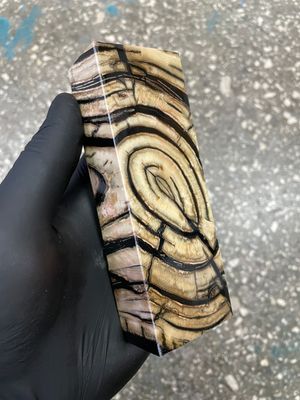
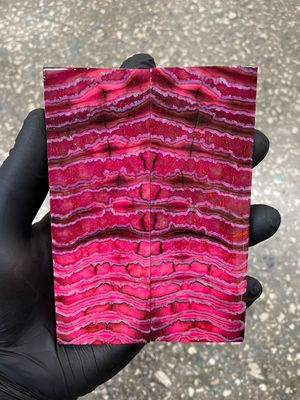
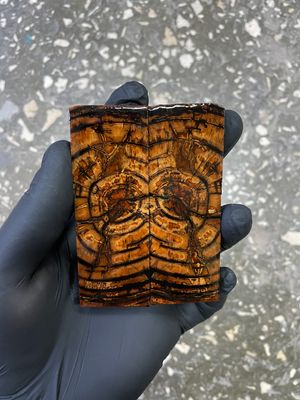
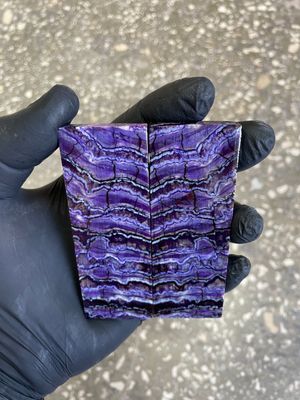
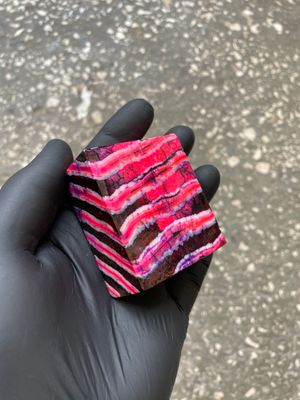
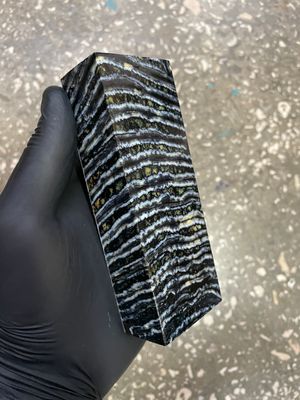
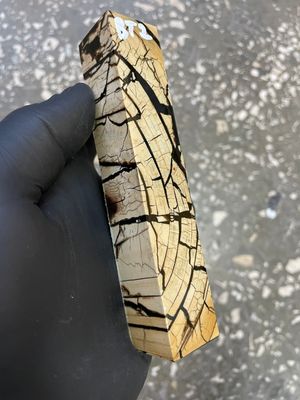
Why Mammoth Teeth And Tusks Still Attract Modern Craftsmen
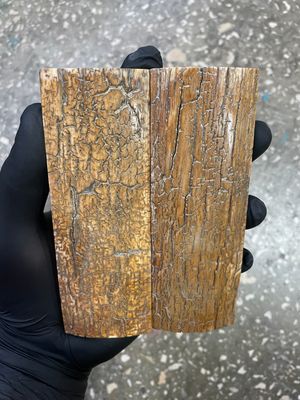
Once removed from frozen ground, fossilized mammoth teeth often begin deteriorating rapidly after contact with air. Cracking and structural damage can develop surprisingly fast.
Modern stabilization technologies changed that completely.
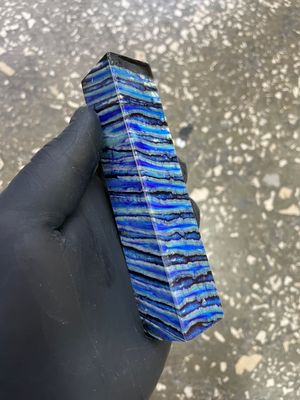
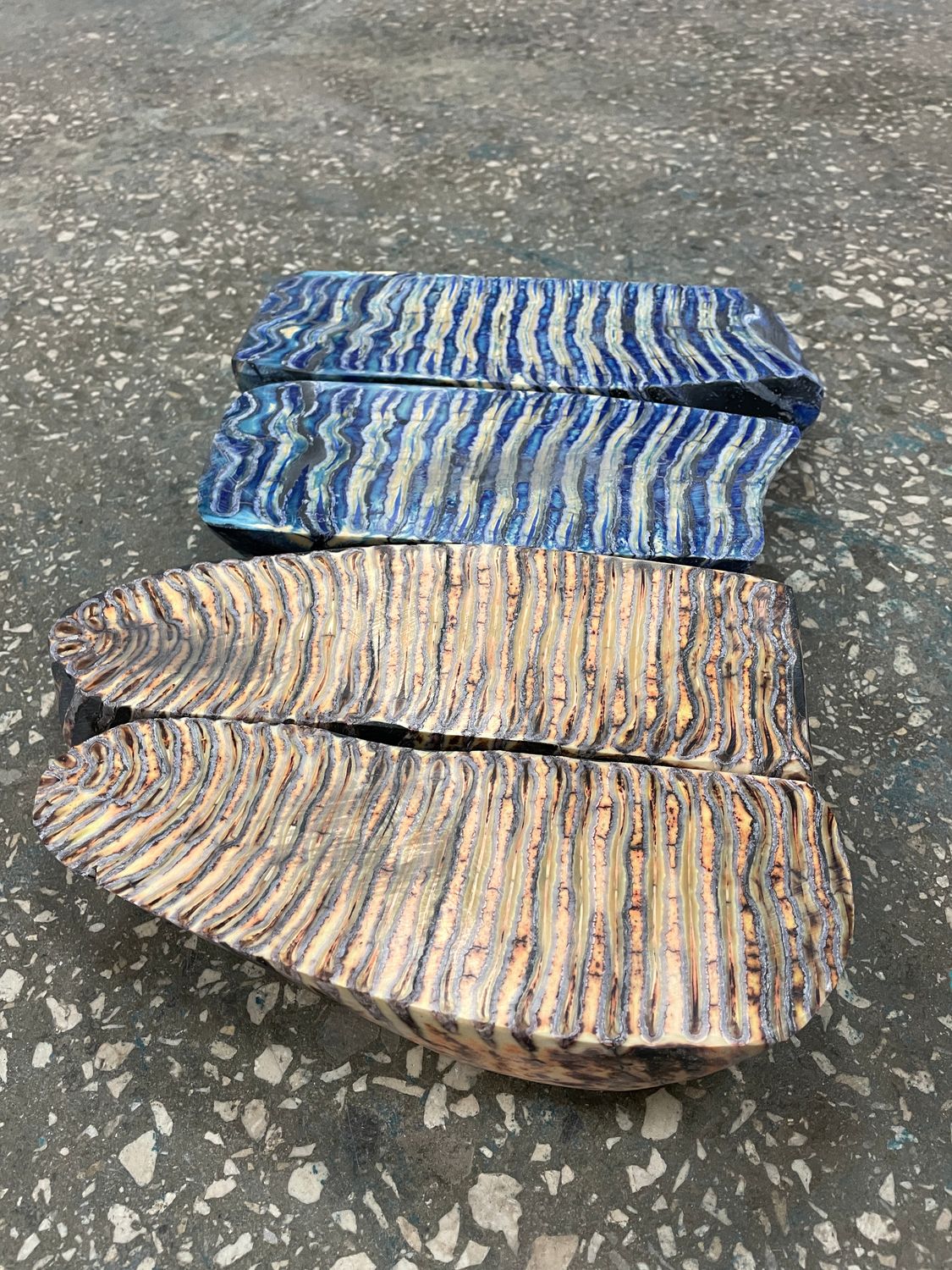
Using specialized polymer treatments, craftsmen can now preserve fragile mammoth tooth material that spent tens of thousands of years inside Arctic permafrost.
Today stabilized mammoth fossils are used in:
• knife handles – valued for their natural patterns and prehistoric origin;
• firearm grips – especially among collectors seeking rare organic materials;
• luxury writing pens – combining craftsmanship with Ice Age history;
• jewelry and decorative objects – appreciated for unique texture and coloration.
For many collectors, owning preserved ancient mammoth ivory or stabilized tooth material feels less like purchasing a decorative object and more like holding a physical fragment of a vanished prehistoric world.
If you would like to explore authentic stabilized mammoth tooth material, fossil tusks, and other carefully preserved Ice Age specimens, you can get acquainted with the full product selection in the catalog of goods.