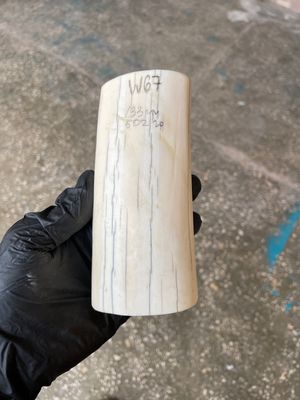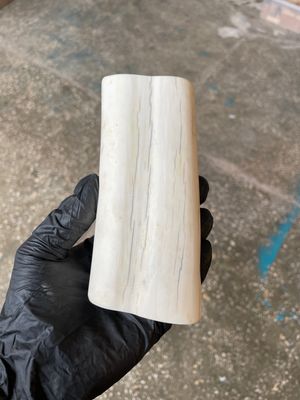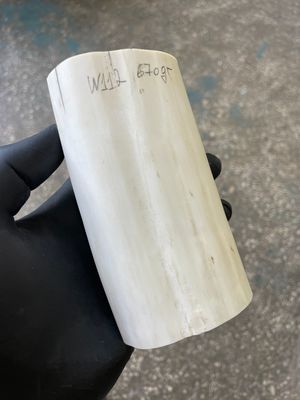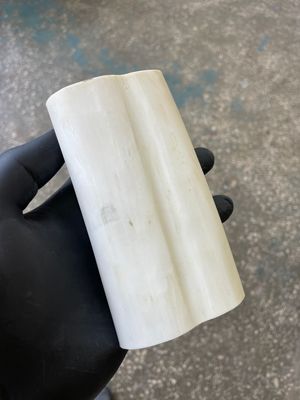
Walrus Tusk – A Rare Natural Material for Custom Knife Handles and Scrimshaw
05.25.2026
Walrus tusk has been prized for centuries as one of the most unique natural materials used in carving, decorative art, and custom craftsmanship. Today, genuine walrus ivory remains highly sought after by knife makers, collectors, and scrimshaw artists who value rare organic materials with history, character, and natural beauty.
From ancient Arctic cultures to modern custom knives, walrus tusk continues to hold a special place in the world of collectible craftsmanship.
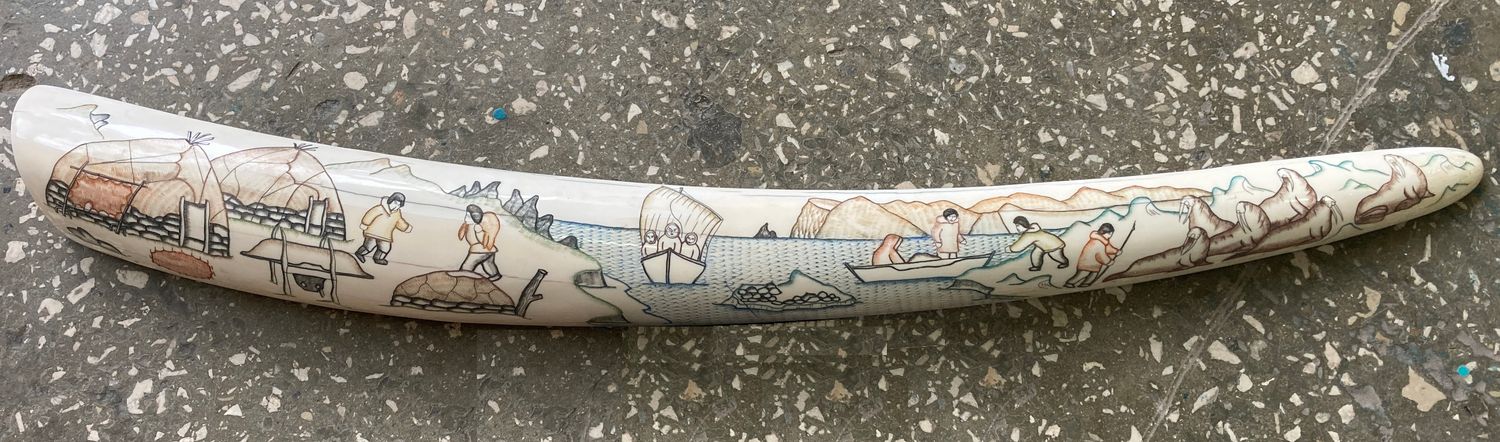
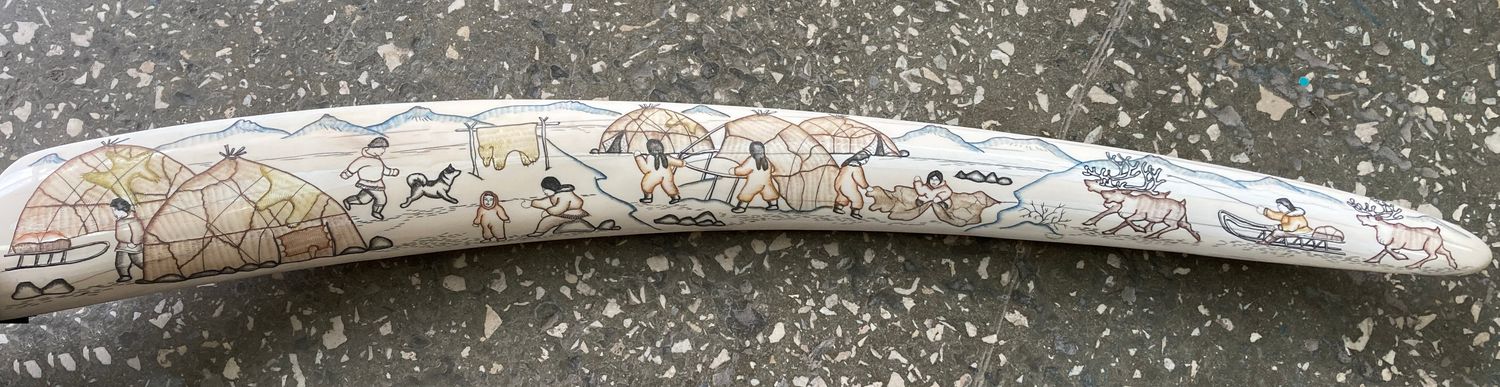
What Is a Walrus?
The walrus is a large marine mammal native to the Arctic regions of the Northern Hemisphere. Walruses live primarily around Alaska, the Bering Sea, Chukotka, northern Canada, and Greenland.
One of the most recognizable features of the walrus is its impressive tusks. Both males and females have tusks, although males usually develop larger ones. In some cases, walrus tusks can grow over 35 inches long.
Walruses use their tusks for survival in harsh Arctic conditions. Tusks help them:
• pull themselves onto ice;
• defend against predators;
• establish dominance;
• fight rival males;
• break breathing holes in ice.
The scientific name Odobenus even translates loosely to “walking on teeth,” referring to the way walruses use their tusks to climb onto ice.
What Makes Walrus Tusk Unique?
Walrus tusk is not simply a tooth — it is a continuously growing tusk with a complex internal structure. A cross-section reveals several layers:
• a thin outer enamel layer;
• dense ivory dentin;
• an inner porous pulp core.
This layered structure gives walrus tusk its distinctive appearance and makes every piece unique.
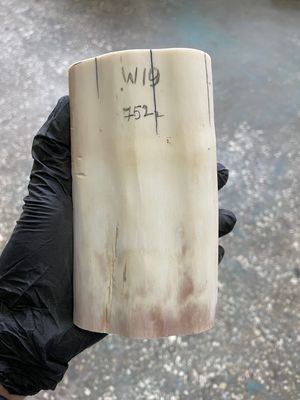
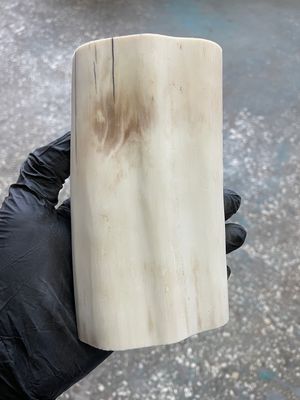
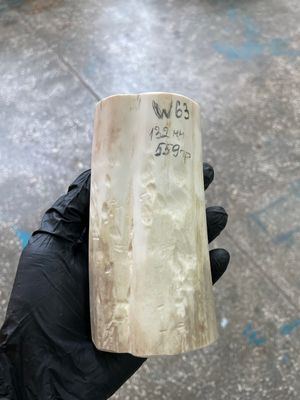
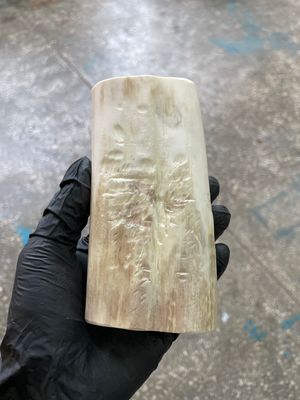
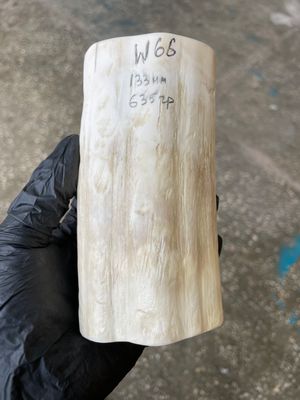
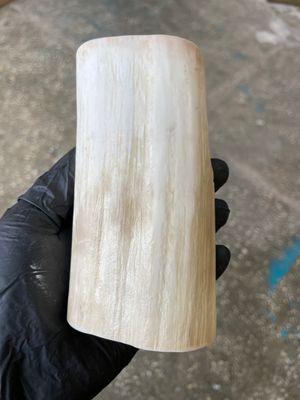
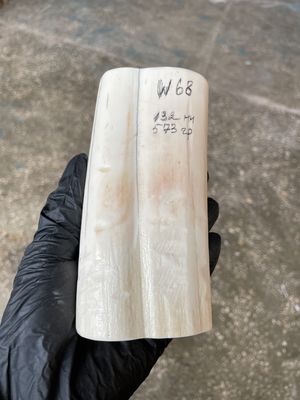
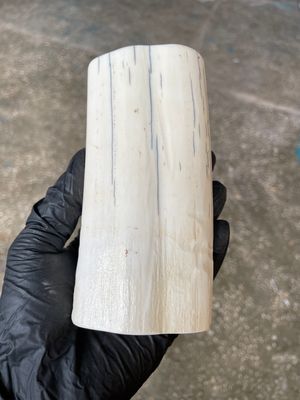
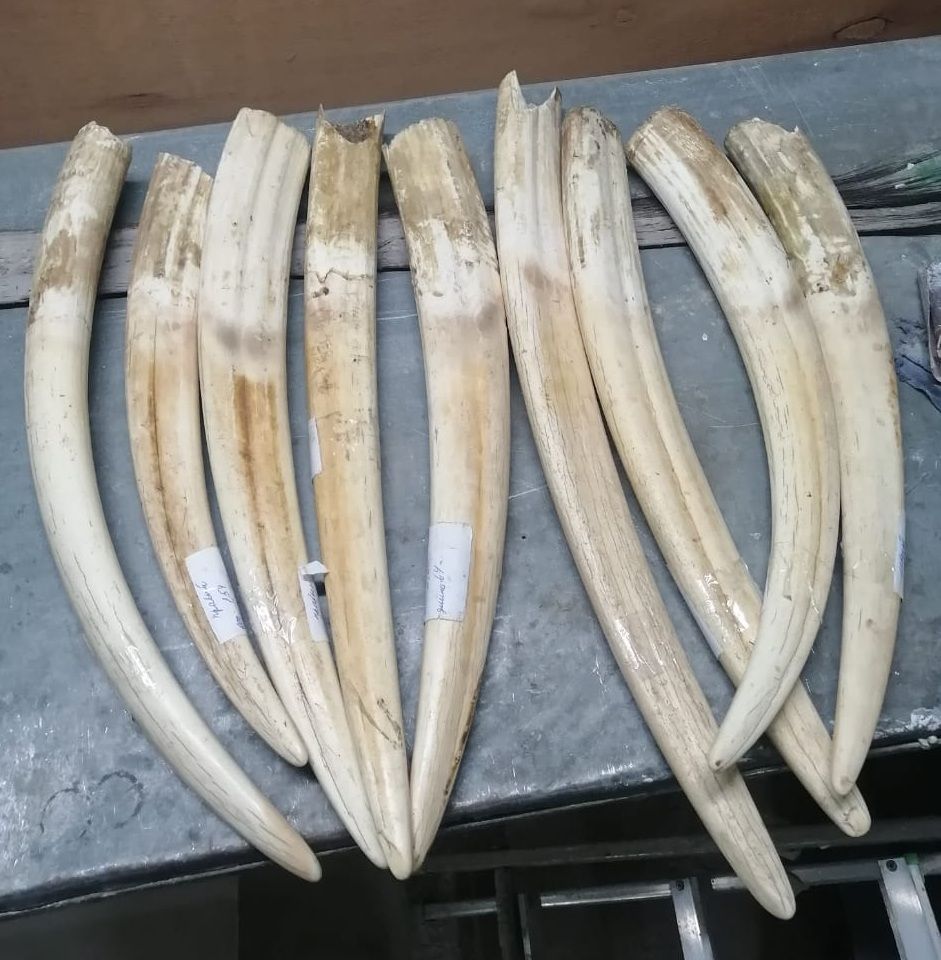
Fresh walrus tusk typically ranges from creamy white to soft yellow tones. Older buried or fossilized tusks can develop dramatic coloration, including olive, brown, green, and nearly black shades due to mineral absorption over decades or centuries underground.
These naturally aged “buried walrus tusks” are especially valued by collectors and custom makers because no two pieces ever look alike.
A Material Used for Centuries
Walrus ivory has been used by Arctic peoples and craftsmen for hundreds of years. Originally, it was used to create practical tools and household items before becoming a highly valued artistic material.
Historically, walrus tusk was used for:
• knife handles;
• combs;
• buttons;
• jewelry;
• carvings;
• ceremonial objects;
• decorative inlays;
• hunting equipment.
In Ancient Russia, walrus ivory was known as “fish tooth” and was considered a luxury material reserved for nobility and valuable trade.
Over time, walrus ivory became an important material in Arctic carving traditions and fine decorative arts.
Walrus Tusk in Decorative and Folk Art
Walrus tusk is highly respected among carvers because it combines hardness, durability, and workability.
The material has been used to create:
• statues and figurines;
• boxes and cases;
• miniature carvings;
• cups and decorative vessels;
• engraved artwork;
• fine jewelry;
• museum-quality folk art.
Unlike many modern synthetic materials, walrus ivory develops character with age and polishing, making older pieces even more visually appealing over time.
Why Knife Makers Value Walrus Tusk
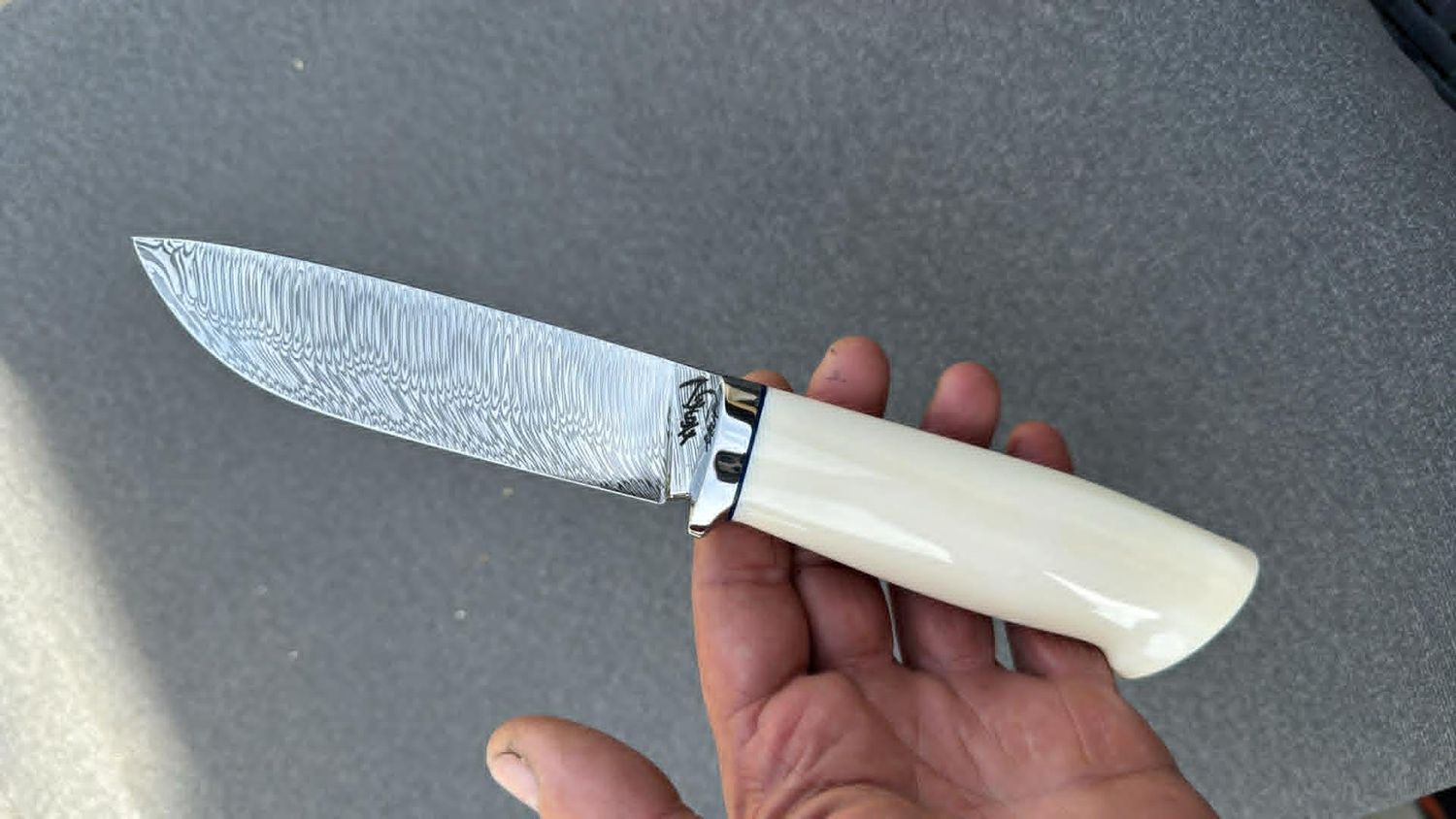
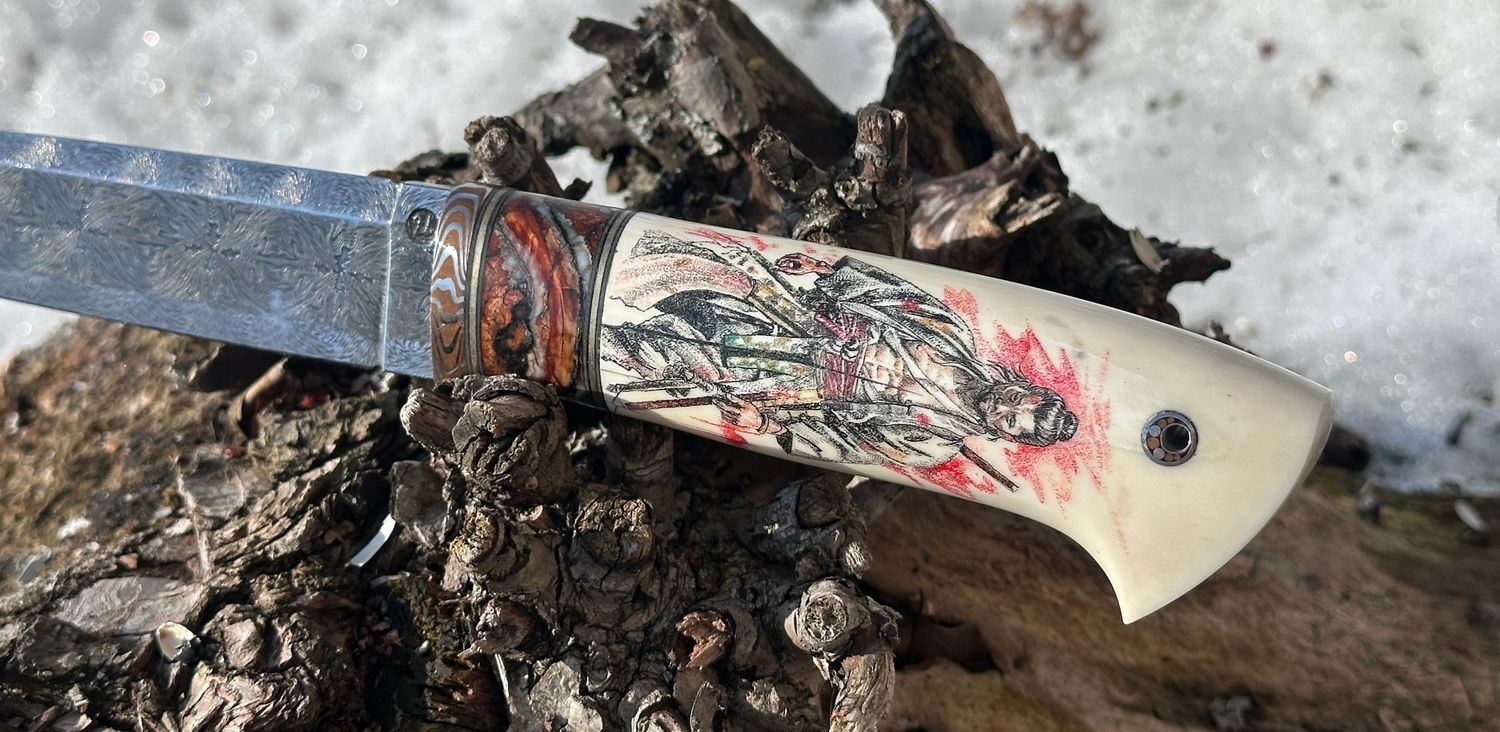
Among custom knife makers, walrus tusk is considered a premium handle material for high-end collectible knives.
Makers value walrus ivory because it offers:
• exceptional polishing qualities;
• natural warmth and texture;
• unique grain patterns;
• durability;
• rarity;
• historical significance.
Walrus tusk pairs beautifully with:
• Damascus steel;
• mosaic pins;
• precious metals;
• mammoth ivory;
• exotic hardwoods.
Each piece of walrus ivory has its own natural color transitions, grain, and internal structure, making every knife handle truly one of a kind.
For many collectors, a walrus tusk handle transforms a knife from a tool into functional art.
Walrus Tusk as a Premium Scrimshaw Material
Walrus ivory is also one of the finest materials available for scrimshaw.
Scrimshaw is the traditional art of engraving detailed imagery into ivory and filling the engraved lines with pigment or ink. Because walrus dentin has a smooth surface and slight translucency, it allows artists to create extremely fine detail and depth.
Popular scrimshaw themes include:
• Arctic wildlife;
• whales and walruses;
• maritime scenes;
• hunting imagery;
• Native Alaskan art;
• traditional Northern patterns.
A polished walrus tusk surface enhances contrast and gives scrimshaw artwork a timeless appearance prized by collectors.
Modern Walrus Tusk and Ethical Harvesting
An important fact often misunderstood is that walruses are not hunted solely for their tusks.
Today, walrus harvesting is heavily regulated. In Arctic regions, only Indigenous and local Native communities are allowed limited subsistence harvest quotas for traditional use, including meat, oil, and survival resources.
The tusk is considered a byproduct of this traditional subsistence harvest rather than the primary purpose.
Because of these regulations and limited legal supply, genuine walrus tusk remains rare and highly collectible in the custom knife world.
Buried and Fossil Walrus Tusk
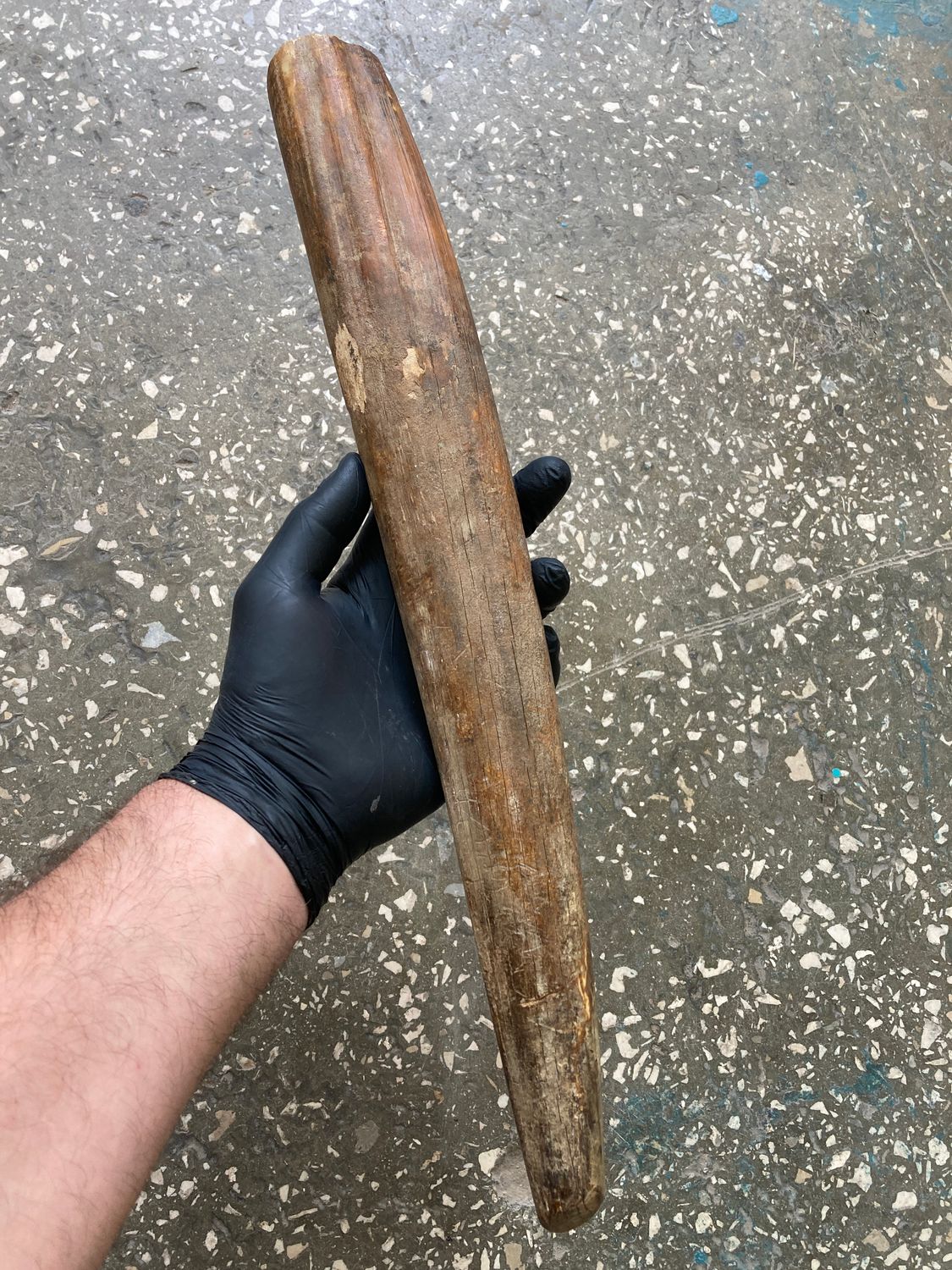
Some of the most valuable walrus tusks are buried or fossilized specimens recovered from Arctic coastal regions and permafrost areas.
Over long periods underground, natural minerals alter the color of the ivory, producing stunning shades ranging from olive green to dark brown and black.
These aged tusks are especially desirable for:
• high-end knife handles;
• scrimshaw;
• collectors’ art pieces;
• heirloom-grade custom projects.
The natural aging process creates patterns and coloration impossible to duplicate artificially.
Walrus Tusk in Modern Custom Knife Making
Today, walrus tusk remains one of the most respected natural materials in the world of custom knives and collectible craftsmanship.
For knife makers, scrimshaw artists, and collectors, walrus ivory represents:
• Arctic history;
• natural rarity;
• traditional craftsmanship;
• artistic individuality;
• premium collectible value.
Whether used for a museum-quality scrimshaw piece or a one-of-a-kind knife handle, walrus tusk continues to embody the connection between nature, history, and functional art.