Gray Whale Origins and Historical Value of Whale Materials
05.21.2026
Gray Whale History Across the Pacific Region
The gray whale remains one of the oldest marine mammals on Earth. Existing research places the age of this species at more than 30 million years, making it one of the oldest surviving whale lineages still present today.
The gray whale is also the only living representative of the gray whale family and is included in conservation records and protected species lists.
Gray whales preserved several anatomical characteristics associated with their distant land ancestors. One of the most unusual features is the presence of separated cervical vertebrae. Unlike many whale species with less flexible neck structures, gray whales retained greater head mobility. Other characteristics include facial vibrissae and feeding behavior in shallow coastal waters.
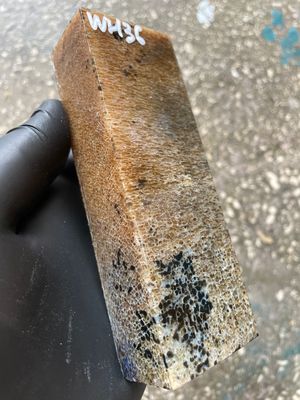
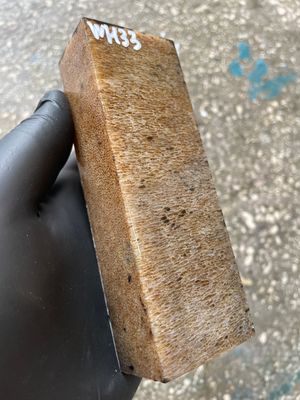
For collectors and knife makers, vertebra structure becomes particularly interesting because these biological characteristics eventually influence bone morphology and internal architecture of recovered skeletal material.
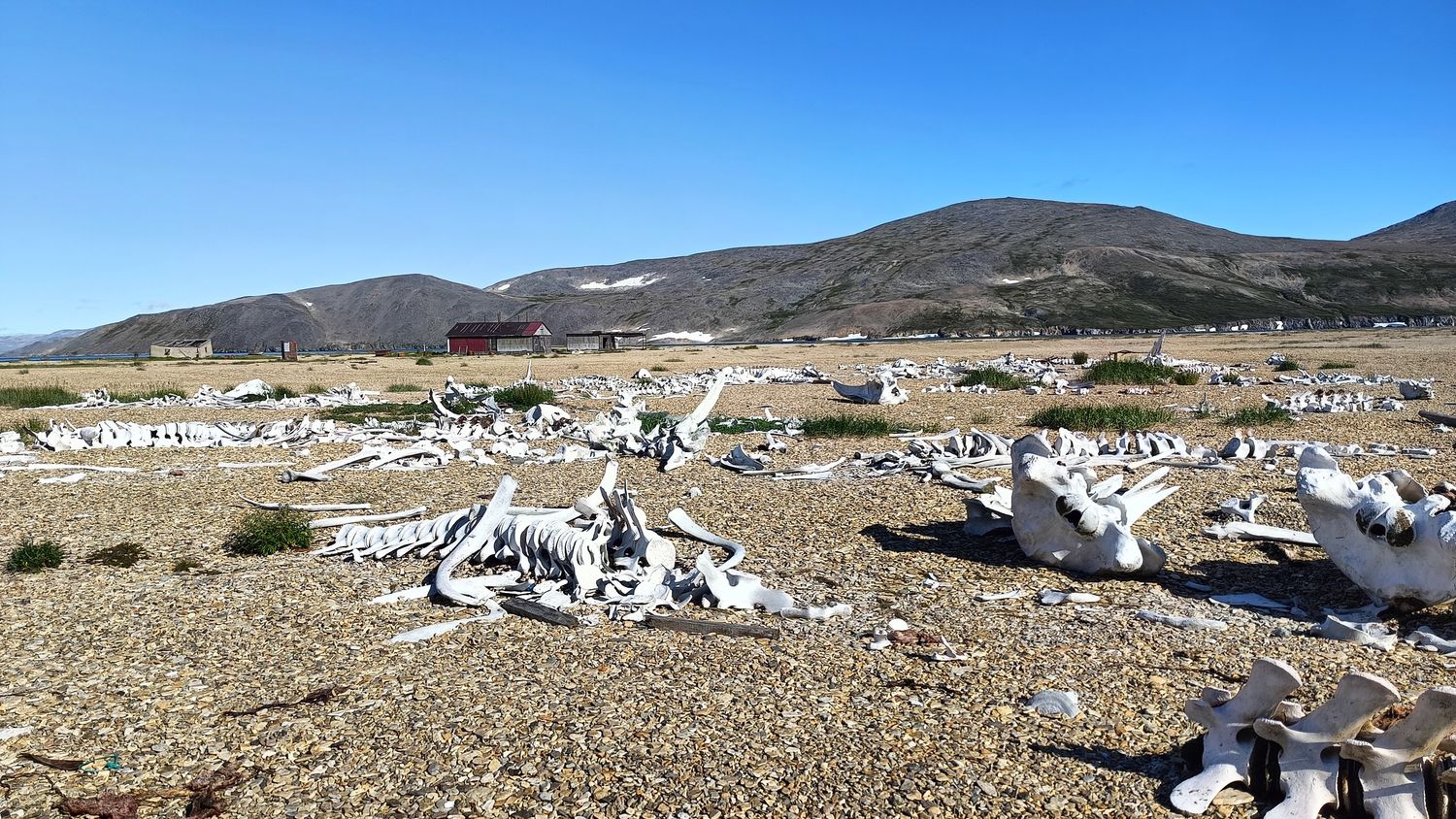
Gray whales historically occupied the eastern Pacific region and migrated between warm and cold-water environments. Winter migration areas included warm lagoons near the southern United States, especially California and Mexico, with possible migration activity near Japan and Korea where mating and calving occurred.
During spring migration, gray whales traveled toward feeding grounds located in colder territorial waters:
• Alaska coastal regions;
• Chukotka waters;
• Kamchatka coastal zones;
• Sakhalin areas;
• Kuril territories.
These shallow feeding zones contained benthic organisms living near or inside ocean floor sediments.
At the end of autumn, whales returned south either individually or in small groups. Total annual migration distance reached approximately 12,000–19,000 kilometers every year.
Before Petroleum: Whales as a Global Industrial Resource
Modern readers often associate whales primarily with conservation and marine ecosystems. During the nineteenth century, however, whales occupied a very different position within the global economy.
Before petroleum, plastics, synthetic lubricants, and industrial polymers existed, whales supplied raw materials used throughout everyday life.
Whale resources supported:
1. lighting systems in homes and workshops;
2. lighthouse fuel systems;
3. industrial lubrication;
4. textile manufacturing;
5. furniture production;
6. decorative carving;
7. maritime industries;
8. cosmetics and medical products.
Whales were not viewed simply as animals during this period. They functioned as complete material sources that supplied multiple industries simultaneously. Entire ports, commercial fleets, and maritime economies expanded around whale harvesting operations.
Whale Oil, Spermaceti, Baleen, and the Global Material Economy
Long before electrical infrastructure appeared across cities and households, lighting remained expensive and technically limited. Candles burned unevenly, produced smoke, and required constant replacement. Various oils created unpleasant odors, thickened during cold weather, and damaged lamp systems over time.
Against this background, whale oil became one of the most important commercial materials of the nineteenth century. Whale blubber was processed into oil that became known as whale oil or train oil. This material gradually evolved into a strategic industrial resource rather than simply another fuel source.
At the peak of the American whaling industry during the middle of the nineteenth century, the United States harvested approximately 200,000 barrels of whale oil annually, with one barrel equal to roughly 159 liters. Market prices ranged from 50 cents to 2 dollars per gallon, approximately 3.8 liters, representing significant commercial value during that period.
Whale oil was used in numerous industries:
• residential lamps and household lighting;
• workshops and industrial spaces;
• public street lighting;
• maritime lighting systems;
• lighthouse illumination;
• clock lubrication;
• sewing machine mechanisms;
• industrial machinery;
• leather treatment;
• wood preservation;
• rope protection against deterioration.
For nineteenth-century society, improved lighting meant more than comfort. Better illumination increased productivity and extended daily activity beyond sunset.
People could:
1. continue manufacturing work;
2. read after dark;
3. perform medical procedures;
4. maintain records;
5. operate businesses longer.
Demand for cleaner and brighter lighting increased rapidly, and whale oil became central to that expansion.
Spermaceti and High-Precision Industrial Applications
While whale oil represented mass industrial consumption, spermaceti occupied a different market category.
Spermaceti, derived from the head cavity of sperm whales, represented one of the most valuable whale-derived substances of the era. Despite its historical name, the material itself is a wax-like compound rather than biological reproductive material. Adult sperm whales contained up to 3–4 tons of spermaceti material within specialized head structures.
The material became valuable because of its remarkable physical characteristics.
Primary applications included:
High-quality candles
During the 1820s, French chemist Michel Eugène Chevreul identified spermaceti composition and improved methods for manufacturing purified spermaceti candles. These candles:
• produced brighter light;
• generated almost no smoke;
• created little residue;
• lacked unpleasant odors;
• burned approximately twice as long as ordinary wax candles.
Precision mechanical lubrication
Unlike many oils available during that period, spermaceti oil remained stable under changing temperatures.
It did not:
• thicken significantly in cold conditions;
• become excessively fluid in heat;
• lose consistency during long operation cycles.
As a result, it became useful in:
• watches;
• chronometers;
• sextants;
• Singer sewing machines;
• navigation equipment.
A historical example involved the 1858 transatlantic telegraph cable project, where installation mechanisms used spermaceti-based lubricants because of their reliability in ocean conditions.
Medical and cosmetic formulations
Spermaceti also entered pharmaceutical and cosmetic markets:
• creams;
• balms;
• medicinal ointments;
• skincare products.
Some pharmacies even sold specialized spermaceti ointments intended for burns and frostbite treatment.
Spermaceti and High-Precision Industrial Applications
If whale oil shaped the history of lighting, whale baleen shaped the history of flexible material engineering.
Whale baleen was not bone. Instead, it consisted of keratin plates used by baleen whales for filtering food from seawater. Some whales possessed approximately 300–400 plates, while individual plates from bowhead whales reached 4–5 meters in length.
Before plastics existed, baleen functioned as a highly adaptable natural engineering material.
Industries used whale baleen for:
• corset structures;
• crinolines;
• umbrella frames;
• canes;
• whips;
• brushes;
• furniture springs;
• rulers;
• musical picks.
During 1850–1880, approximately 80% of harvested baleen was directed toward women's corsets. A single bowhead whale could provide approximately 500 kilograms of baleen, and by the 1850s, London prices reached approximately $5,000 per ton.
For nineteenth-century manufacturing, whale baleen essentially functioned as an early flexible industrial material long before synthetic polymers entered the market.
Ambergris and the Luxury Market Around Whale Materials
Not every whale-derived material entered industrial production. Some products moved in a completely different direction and became associated with luxury, medicine, and high-value trade. Ambergris belongs to that category.
Ambergris formed inside sperm whales and likely developed as a natural reaction to hard squid beaks entering the digestive system. Fresh material reportedly had a strong unpleasant smell. Over time, after exposure to ocean water and air, that odor changed dramatically and developed into a sweet, earthy scent valued by perfumers.
Unlike whale oil or baleen, ambergris was not important because of volume. It was important because of rarity.
Historically it found several very different uses:
• Perfume production – ambergris worked as a natural fixative and slowed down fragrance evaporation, allowing scents to remain stable much longer.
• Medical applications – medieval European medicine sometimes treated ambergris as a remedy for disease, including heart conditions and severe infections.
• Luxury culinary use – historical records mention aristocratic confectionery and chocolate recipes where small quantities of ambergris were added for aroma.
Its price reflected that rarity. Historical references mention values reaching approximately $10,000 per pound (around 450 grams) using modern equivalents. One documented find near New Zealand in 1860 reportedly weighed around 450 kilograms and received an estimated value of 50,000 pounds sterling.
Whale Teeth and the Birth of Scrimshaw Art
Whale materials were not limited to industrial use. Sailors and whalers eventually turned some of them into objects that had little to do with manufacturing and much more to do with craftsmanship.
Sperm whale teeth sometimes reached approximately 1–2 kilograms in weight, making them suitable for carving work and decorative applications.
Long voyages often meant weeks or months at sea with repetitive routines and long periods of waiting. Sailors filled that time by carving scenes and patterns into whale teeth and bones. Over time this evolved into a recognizable art form known as scrimshaw.
Some of the most common scrimshaw pieces included:
• Decorative objects and personal items – carved boxes, jewelry, buttons and walking cane handles became common examples of detailed whale bone work.
• Maritime scenes and portraits – many carvings showed ships, maps, hunting scenes or portraits created directly from memories and daily life at sea.
• Collectible artistic pieces – some objects moved far beyond practical use and became collector items valued for craftsmanship.
The Nantucket Museum in Massachusetts reportedly preserves more than 3,000 scrimshaw objects, from simple tools to highly detailed carved ship models.
Why Whale Vertebrae Were Rarely Used Historically
Whale teeth adapted well to carving. Vertebrae followed a very different path.
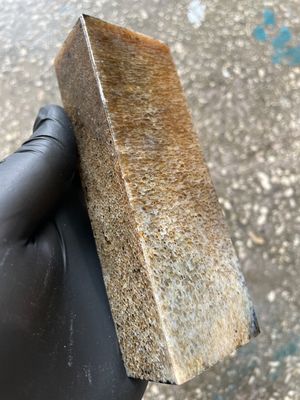
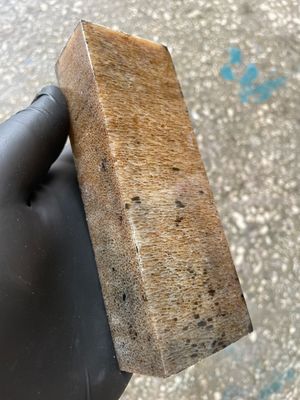
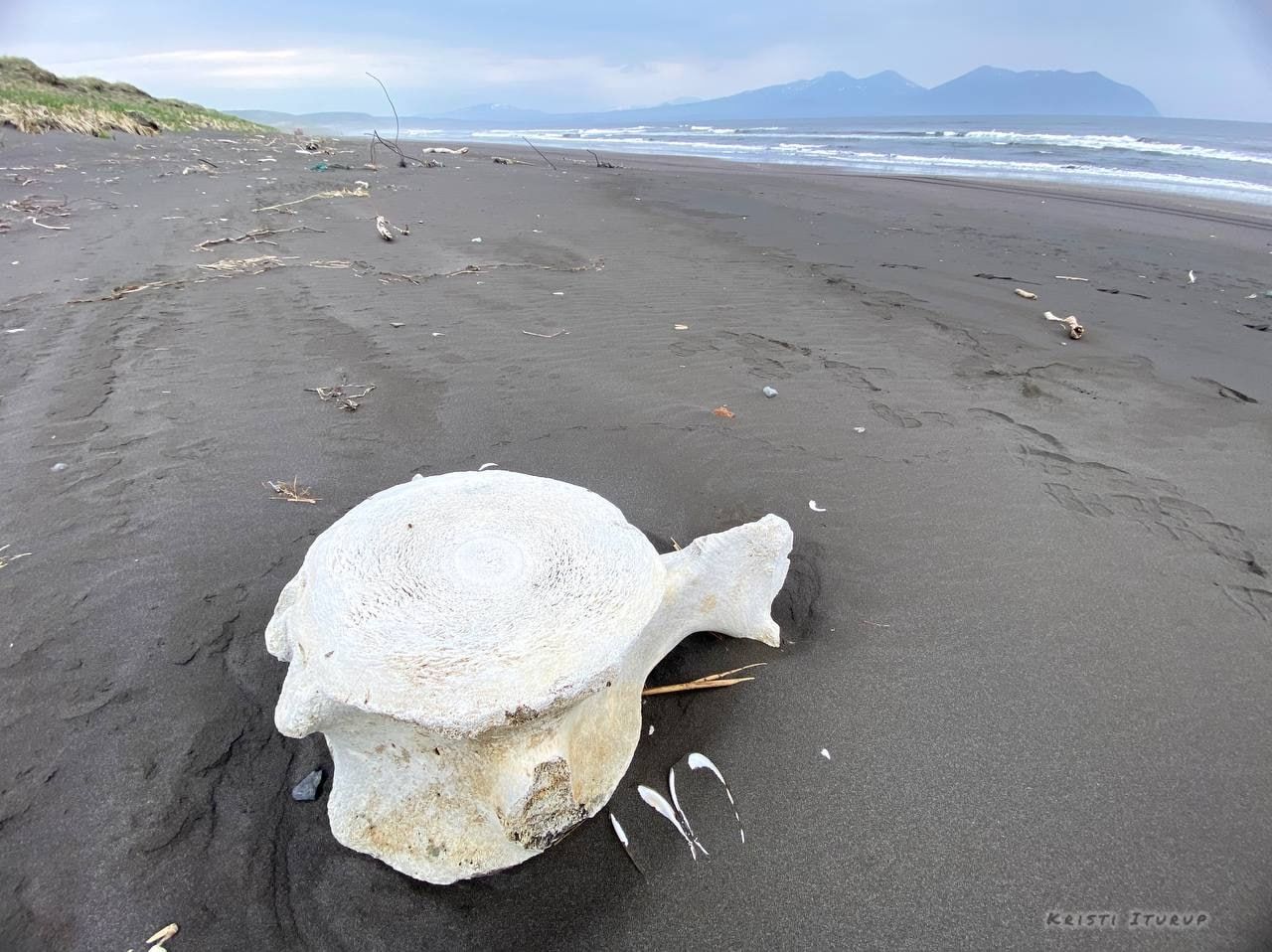
Their internal structure created problems for detailed work. Large pores, uneven density and internal cavities made vertebrae difficult to process using historical tools. Even when large bones survived in good condition, they rarely became decorative materials.
Most practical uses remained simple:
• Workshop and utility applications – large vertebrae sometimes worked as seats, supports or heavy-use objects rather than decorative pieces.
• Functional maritime use – bone sections occasionally served as improvised work surfaces because they tolerated rough handling.
• Large structural objects – unlike teeth, vertebrae worked better in situations where appearance and fine detail were not critical.
At that time there was no process capable of strengthening the internal structure without destroying the natural material itself. Only modern stabilization methods would eventually change that situation completely.
How Modern Stabilization Changed Whale Vertebra Material
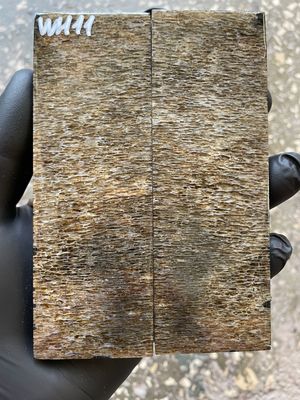
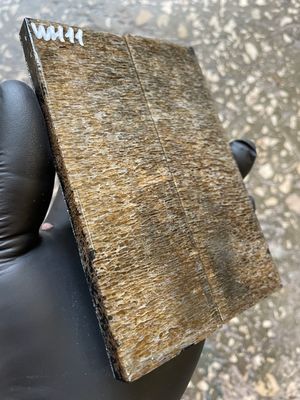
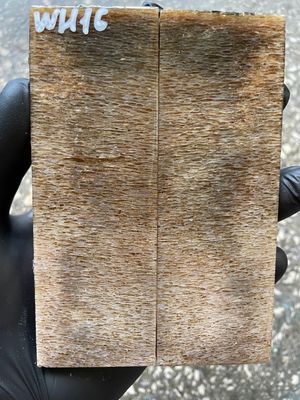
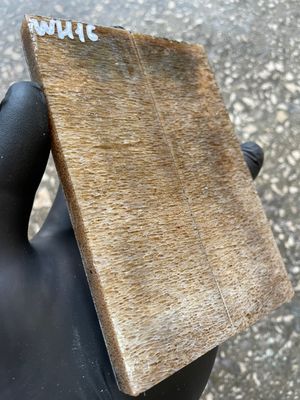
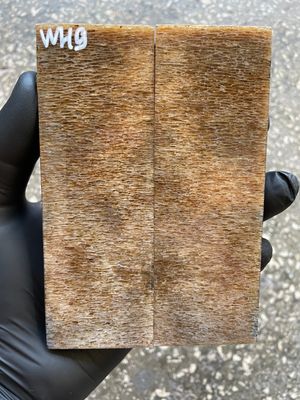
For decades whale vertebrae remained outside serious knife production. Collectors and craftsmen could appreciate the unusual appearance of the material, but practical use created obvious limitations. Natural vertebrae contained internal pores and uneven density zones that complicated processing. A material could look interesting from the outside and crack during shaping.
The situation changed after stabilization technology became available.
Modern stabilization does not simply coat the surface. The process works much deeper. Polymer compounds penetrate internal cavities and porous structures, changing how the material behaves during machining and finishing operations. The external appearance remains natural, but the internal characteristics become far more predictable during knife production.
For knife makers in the USA, that became important because handle materials must combine two requirements that rarely exist together – visual uniqueness and practical reliability.
Stabilized whale vertebra material now offers:
• Higher structural stability – internal weak points become reinforced, reducing the risk of fractures during grinding and shaping.
• Lower moisture absorption – stabilized bone becomes less sensitive to environmental changes and daily use conditions.
• Improved machining performance – cutting, sanding and polishing become more controlled compared with untreated material.
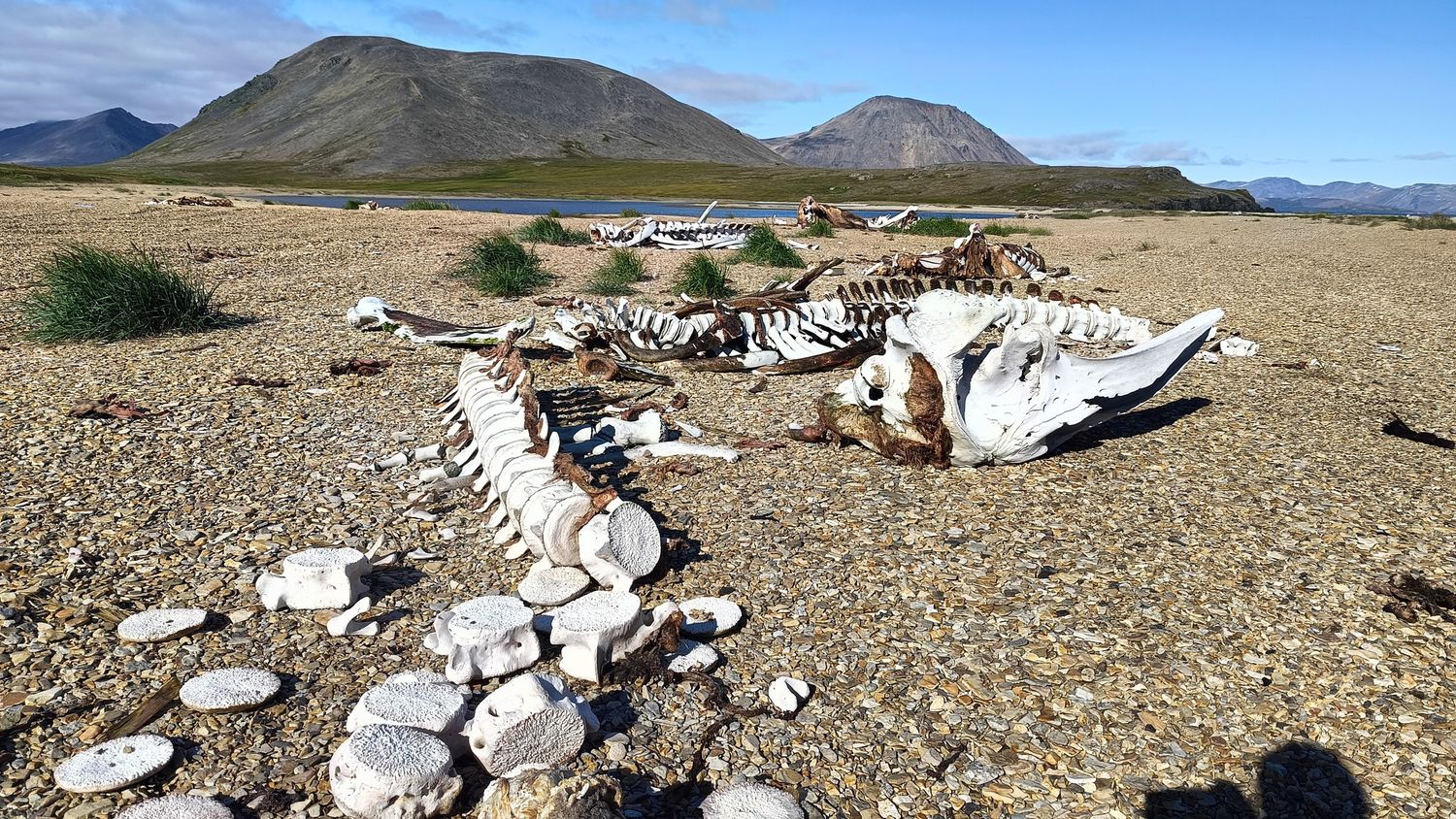
Whale Vertebra Knife Handle Material for Custom Builds
The custom knife market has changed significantly over the last several years. Buyers increasingly search for materials that look different from standard woods, synthetic composites or conventional bone scales.
This is one reason why whale vertebra knife handle material, whale bone knife scales, and stabilized whale vertebra scales continue attracting attention from collectors and custom knife makers in the United States.
The material is regularly used for:
• Collector knife projects – unique internal structures make every handle visually different from another.
• Premium handmade knives – artisans often combine whale vertebra with Damascus steel and high-end blade finishes.
• Luxury presentation builds – exclusive materials create additional value for display pieces and custom commissions.
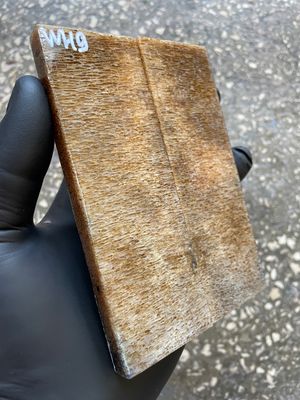
Natural structure plays an important role here. Unlike artificial materials with repeating patterns, whale vertebra develops irregular internal details that cannot be duplicated.
Even two scales cut from neighboring areas may look completely different after polishing.
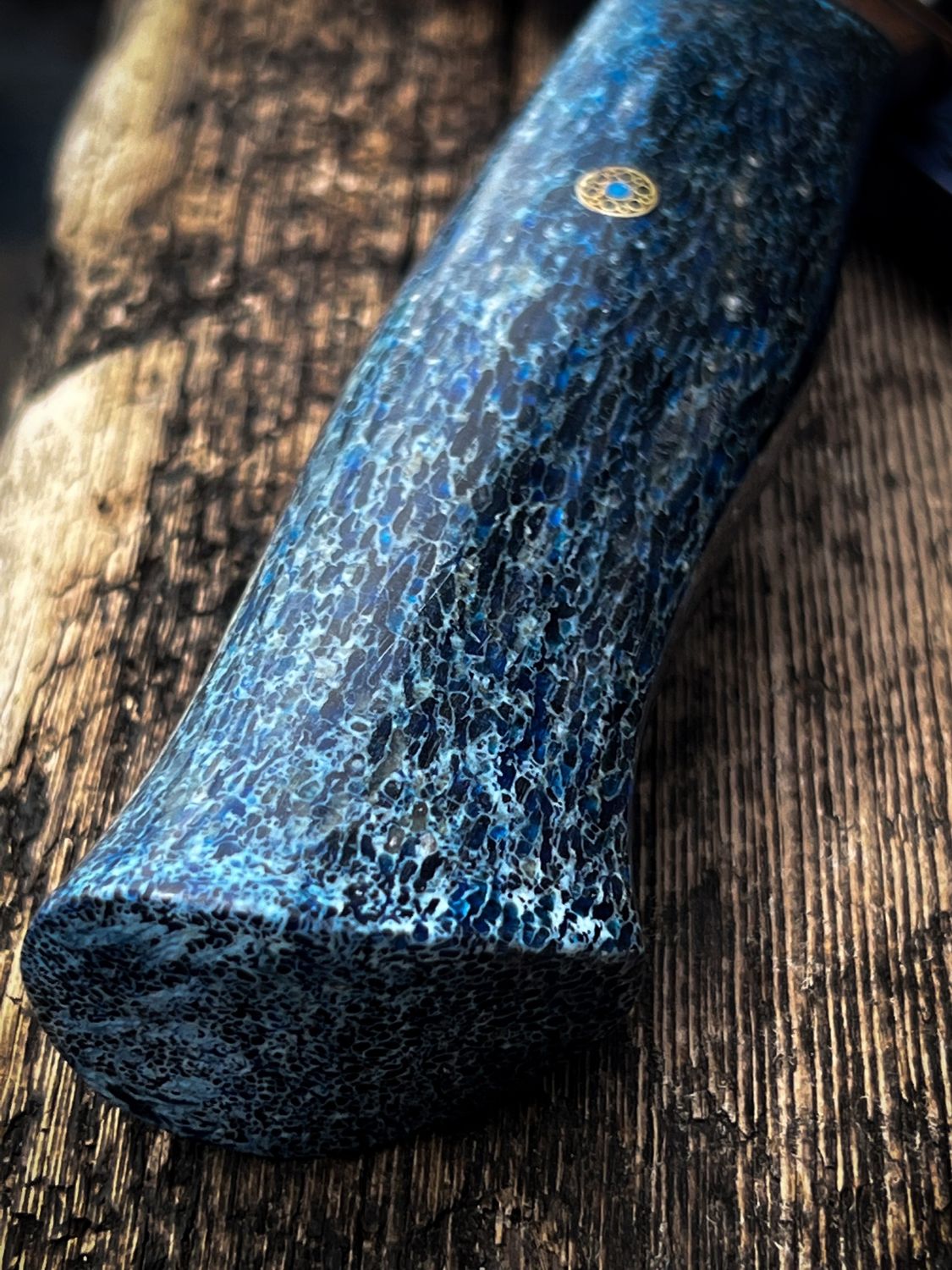
Whale Bone Blocks and Knife Scales for USA Makers
Today whale vertebra blocks, whale bone scales, and custom knife handle materials are used by makers looking for something beyond traditional options.
American knife collectors often pay attention to several factors:
1. material origin and history – uncommon materials typically generate stronger collector interest;
2. appearance after finishing – organic texture creates patterns that do not repeat;
3. rarity – limited availability increases long-term value for custom projects.
For many knife makers, materials are not simply functional components. The handle becomes part of the story behind the knife itself.
A blade can be technically perfect, but unusual handle material often becomes the detail people remember first.
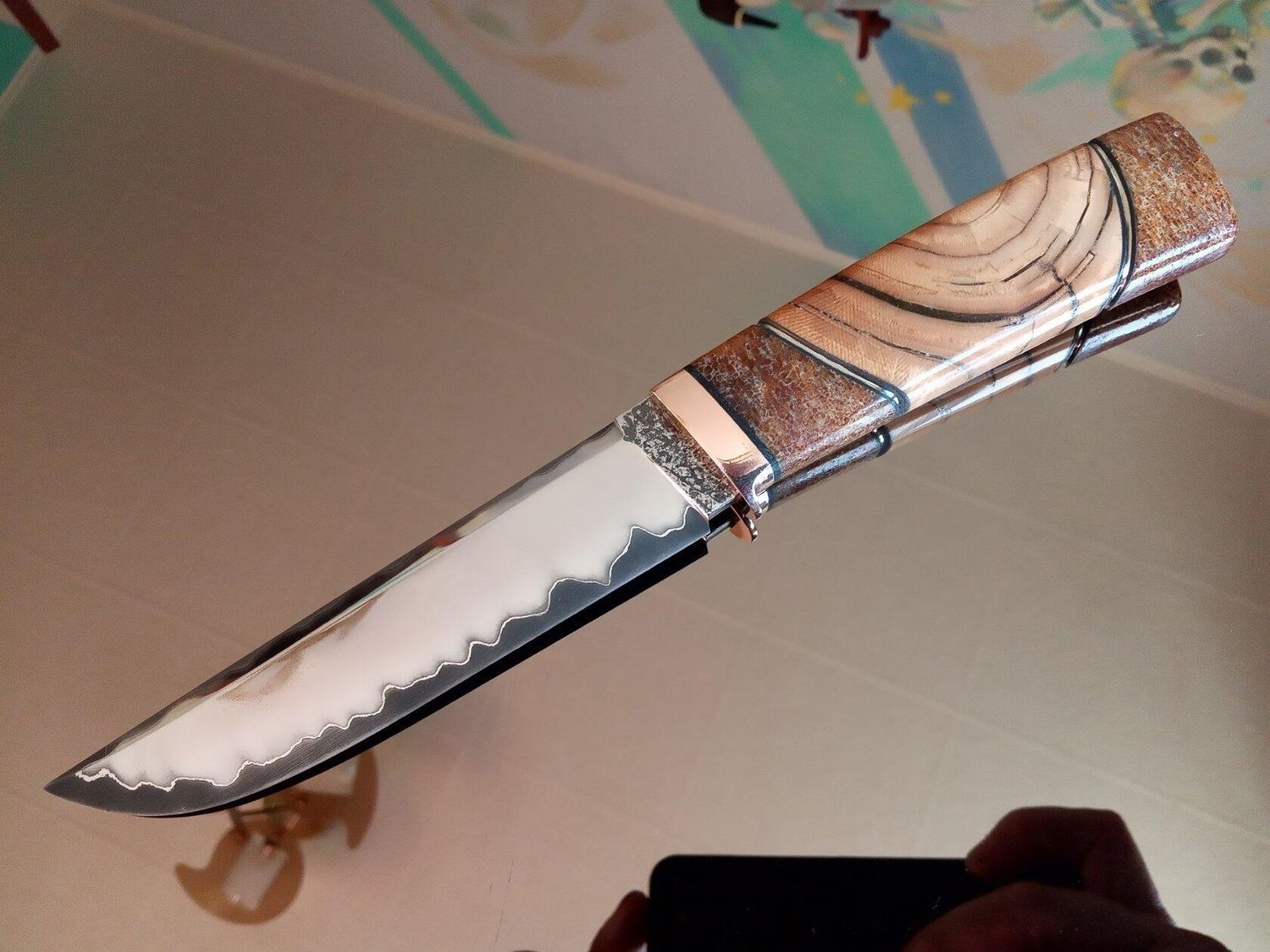
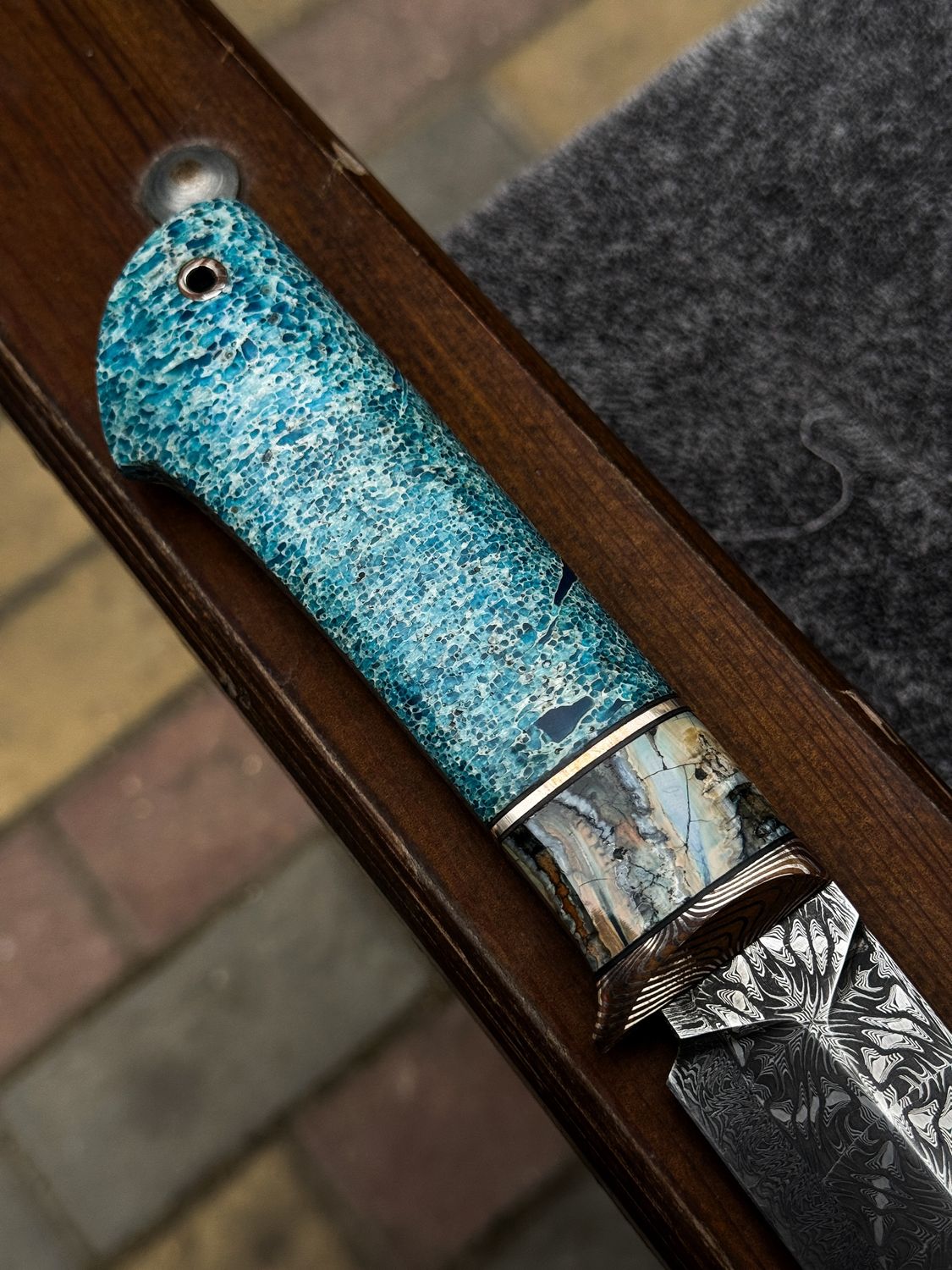
Rare Natural Material for Modern Knife Craftsmanship
Whale vertebra traveled an unusual path. Historically it had limited practical use because the material itself created too many difficulties for detailed work. Modern stabilization changed that completely.
Today stabilized whale bone, whale vertebra scales, and premium knife handle material categories continue growing inside the custom knife market. For collectors and makers looking for rare natural materials with a real historical connection, whale vertebra remains one of the more distinctive options available.